Different tissues in humans and three other mammalian species share common gene expression changes as they age, a team led by Harvard Medical School investigators at Brigham and Women’s Hospital has discovered.
The research, published May 27 in Nature, reveals conserved signatures of aging and health decline and introduces new computational tools dubbed “transcriptomic clocks” that could be used in the laboratory to measure an organism’s age, predict its expected mortality, and identify processes that contribute to disease and health deterioration.
“We found that most cell types share these conserved molecular changes with age, despite having very different origins and functions — from immune cells and stem cells to liver cells and muscle cells,” said first author Alexander Tyshkovskiy, HMS instructor in medicine at Brigham and Women’s and an investigator in the laboratory of Vadim Gladyshev, which focuses on aging, lifespan control, and rejuvenation.
The same gene expression changes were also “predictive of prospective time to death in humans,” Tyshkovskiy said. In mice, these expression patterns changed in response to chronic diseases and lifespan-modulating interventions, such as calorie restriction. In laboratory-grown cells, they changed in response to stresses such as radiation and prolonged culturing, linking cellular damage to tissue and organismal aging.
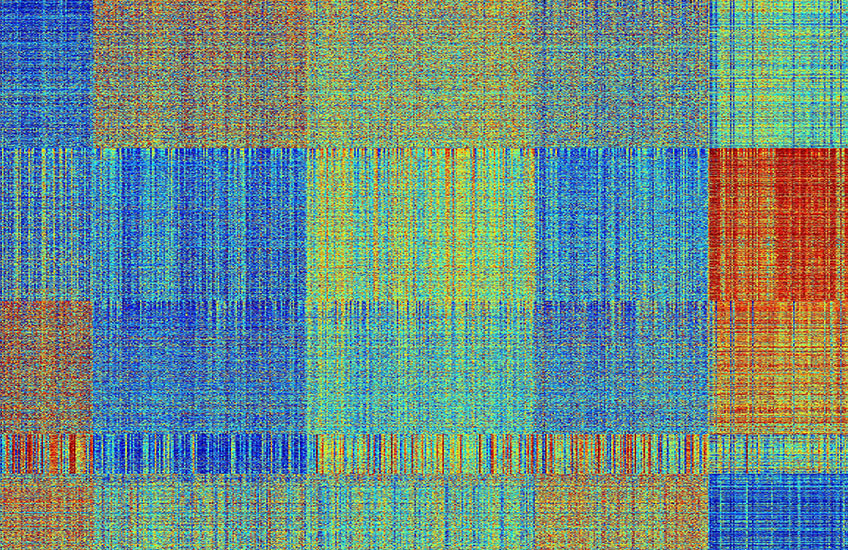
To conduct the work, the investigators, including collaborators at Tohoku University in Japan, drew on more than 11,000 gene expression profiles, or transcriptomes. They analyzed which genes were turned on in more than 25 tissues across four mammal species (mouse, rat, macaque, and human) during aging and in response to interventions known to shorten or extend lifespan.
Using this resource, the team developed accurate multi-species, multi-tissue clocks that estimate chronological age and expected mortality based on gene activity. The transcriptomic clocks thus provide a toolkit for assessing biological age — a way of gauging age based on cell function rather than time since birth — across tissues and species.

Other tools exist to estimate chronological age and lifespan-related outcomes, including epigenetic clocks based on DNA methylation. Tyshkovskiy and colleagues showed that their transcriptomic clocks achieve comparable performance while also offering greater biological interpretability.
The team separated the gene expression changes into modules that represent different biological processes, such as inflammation, energy production, and extracellular matrix organization. The authors developed individual transcriptomic clocks for each module. They then showed that different diseases and medical or lifestyle interventions may affect biological age through distinct primary processes.
“These aging clocks represent a potential new way to measure aging in greater detail and could help predict disease and mortality risk, characterize treatment effects, and personalize care based on biological age,” said Gladyshev, HMS professor of medicine at Brigham and Women’s and senior author of the study.
“Future therapies could target both specific aging-related processes — like inflammation or metabolism — and aging as a whole,” he added.
The authors emphasize that the clocks are currently research tools rather than clinical tests, and additional validation in human studies will be needed before they can be used in patient care.
Researchers could use the clocks to track transcriptomic markers of aging and mortality in mouse models or human cell cultures, gauging how a disease or intervention affects molecular biomarkers associated with shorter or longer life without needing to wait months or years to confirm the actual lifespan.
Future work will also need to confirm whether the transcriptomic changes represent causes of aging or consequences of it.
The investigators have made their tools available to the scientific community for non-commercial use through an interactive web platform called TACO (Transcriptomic Age Calculator Online) and an R package called tAge.
Adapted from a Mass General Brigham news release.
Authorship, funding, disclosures
Additional authors include Daria Kholdina, Maria Davitadze, Adrian Molière, Alibek Moldakozhayev, Yoshiyasu Tongu, Tomoko Kasahara, Dmitrii Glubokov, Alec Eames, Leonid M. Kats, Anastasiya Vladimirova, Kejun Ying, Hanna Liu, Bohan Zhang, Uma Khasanova, Mahdi Moqri, Jeremy M. Van Raamsdonk, David E. Harrison, Randy Strong, Takaaki Abe, and Sergey E. Dmitriev.
The study was supported by funding from the National Institutes of Health/National Institute on Aging; the Hevolution Foundation; James Fickel and Michael Antonov Foundations; Department of Veterans Affairs Office of Research and Development (senior research career scientist award); Japan Agency for Medical Research and Development (AMED) (JP21zf0127001), JST, ACT-X (JPMJAX24L4), JSPS KAKENHI (grant-in-aid for early-career scientists JP22K15354); Takeda Science Foundation; Uehara Memorial Foundation; Naito Foundation; Astellas Foundation for Research on Metabolic Disorders; and Okinaka Memorial Institute for Medical Research.
Tyshkovskiy and Gladyshev are the inventors on a U.S. patent application related to this work.