Massachusetts General Hospital has been awarded up to $39.2 million from the Advanced Research Projects Agency for Health (ARPA-H) to launch the FUSE (Fast Unified Synthesis and Evaluation) project, a research effort to develop new technology to make personalized genetic medicines faster to produce, more affordable, and more accessible to patients.
The project will be led by Harvard Medical School investigators in the Gene and Cell Therapy Institute at Mass General Brigham in collaboration with industry and academic partners.
FUSE is part of ARPA-H’s Genetic Medicines and Individualized Manufacturing for Everyone GIVE (Genetic Medicines and Individualized Manufacturing for Everyone) program, which is aimed at transforming how RNA-based medicines are produced. RNA therapeutics have shown promise for treating cancer, rare genetic disorders, infectious diseases, and other serious conditions, but current manufacturing methods are complex, expensive, and largely centralized.
Expanding access to personalized medicine
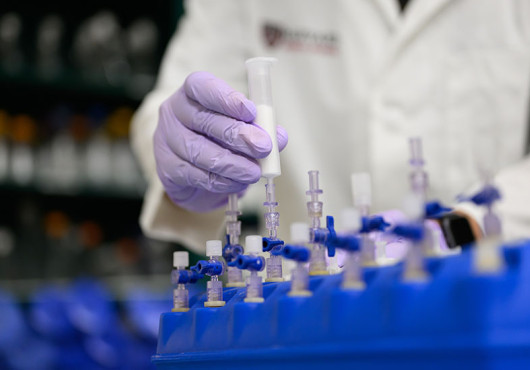
GIVE seeks to enable new, more widely distributed manufacturing platforms that could bring production closer to patients and expand access to these therapies. As part of that overarching effort, the investigators in the FUSE project will develop a compact, automated system capable of producing and analyzing RNA medicines within a single integrated platform.
The technology combines manufacturing and quality-control processes that are typically performed across multiple facilities, with the goal of reducing production timelines and simplifying the path from design to treatment. The platform is designed to support a range of emerging genetic medicines, including RNA therapies and personalized cancer treatments.

“We envision a future in which genetic medicines can be manufactured where and when they are needed, rather than requiring complex production and shipping networks,” said lead and principal investigator Robert Alexander Wesselhoeft, HMS instructor in medicine at Brigham and Women’s Hospital and director of the RNA Therapeutics Core in the Gene and Cell Therapy Institute.
“Support from ARPA-H will allow our team to bring together experts from across academia and industry to develop technologies that could make personalized RNA medicines more accessible to patients and help accelerate the next generation of precision therapies,” he said.
Academic medical centers and industry working together
The multidisciplinary team includes collaborators Mark Poznansky, HMS professor of medicine at Mass General, and Ann Sluder, both of the Vaccine and Immunotherapy Institute at Mass General, as well as Avanish Mishra, HMS assistant professor of surgery at Mass General, a researcher at the Center for Engineering in Medicine and Surgery and Krantz Family Center for Cancer Research at Mass General Brigham. The team also includes Anubhav Tripathi from Brown University along with industry partners NanoMosaic, DINYA DNA, and Lilac Biosciences.
Together, these researchers will combine expertise in DNA synthesis, RNA manufacturing, microfluidics, analytical testing, and device development to create an integrated system that can be deployed in hospitals and other settings that are near patients.
Adapted from a Mass General Brigham news release.