At a glance
Researchers have filled in a missing detail of how the immune system is able to respond to an invading virus within one hour of infection.
Insights could help fine-tune viral vectors that are used for immunizations, gene therapies, and to fight cancer.
The future of federally funded research at Harvard Medical School — supported by taxpayers and done in service to humanity — remains uncertain. Learn more.
Researchers have figured out a missing piece of the puzzle of how human cells detect invading viruses and mount an immune response within an hour.
This new insight into the mechanics of the battle between viruses and hosts could provide important clues for improving vaccines, gene therapies, and other treatments that use viruses to deliver medicines or fight disease themselves, the researchers said.
The findings published Aug. 18 in PNAS.
“It’s important to understand the details of how viruses and the body’s immune system interact, because those details give us a better idea of how we can use the same techniques to build better medicines,” said senior author David Knipe, the Higgins Professor of Microbiology and Molecular Genetics in the Blavatnik Institute at Harvard Medical School.
“Answering chains of puzzling questions without obvious, immediate utility enables us to engineer unexpected mechanisms we wouldn’t have been able to conceive of otherwise,” added Knipe, who has been studying the contest between herpesvirus and the immune system at the cellular and molecular level for decades.
Knipe and colleagues found that when a class of viruses known as enveloped viruses enter a cell by fusion at the plasma membrane, tremors in the cell scaffolding cause ruptures in the membrane of the cell nucleus, allowing DNA to leak out into the cell body. DNA-detecting proteins known as cGAS then initiate an immune response to fight the virus.
How does the body detect viruses so quickly?
Researchers who study viruses that are coated in a fatty envelope, like herpes simplex virus, have long known that the body sends interferon to fight off the infection within an hour of the virus entering a cell. They have also known that a protein known as cGAS, which detects loose segments of DNA in the cell body, activates the response, but many important details of the process have remained mysterious.
First, where does the DNA come from that triggers the response? There were many hypotheses. One held that some virus particles burst once they enter the cell but before they reach their destination in the cell nucleus, where they can hijack the cell’s genetic machinery to replicate themselves.

Second, if viral DNA is the trigger, how to explain cGAS’s response to infection by RNA viruses, which don’t even have DNA? Could it be host-cell DNA? If so, what causes DNA to spill out of the nucleus during viral entry?
The researchers — led by first author Nicolás Romero, at the time a postdoctoral fellow in the Knipe Lab, now at Tufts University — conducted a series of experiments using herpesvirus modified so that it cannot replicate independently and human cell cultures. They concluded that when the virus merges its encapsulating membrane with the membrane that surrounds the cell and enters the cytoplasm, turbulent contractions occur in the actin microfilaments that make up the scaffolding that gives cells a stable structure.
The team found that these contractions then cause a break in the nuclear membrane, which allows cellular DNA fragments to be expelled into the body of the cell. Once in the cytoplasm, the loose DNA fragments are detected by cGAS, which raises an alarm to recruit interferon, which in turn recruits other protective molecules to block the invading virus from establishing infection.
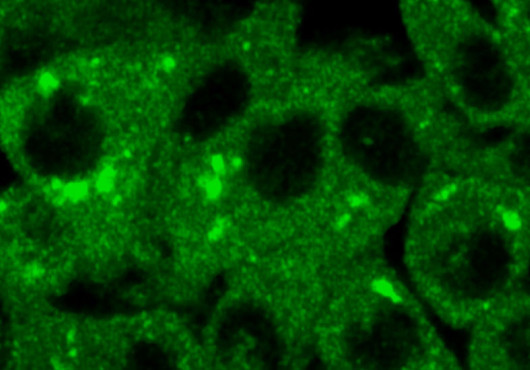
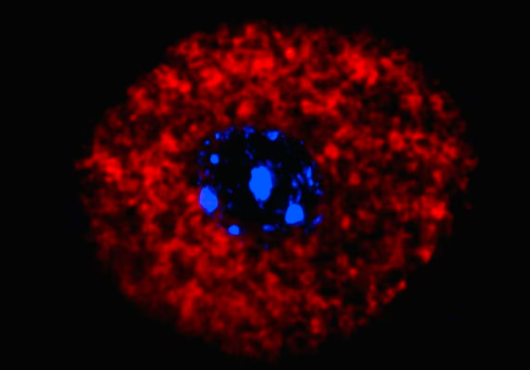
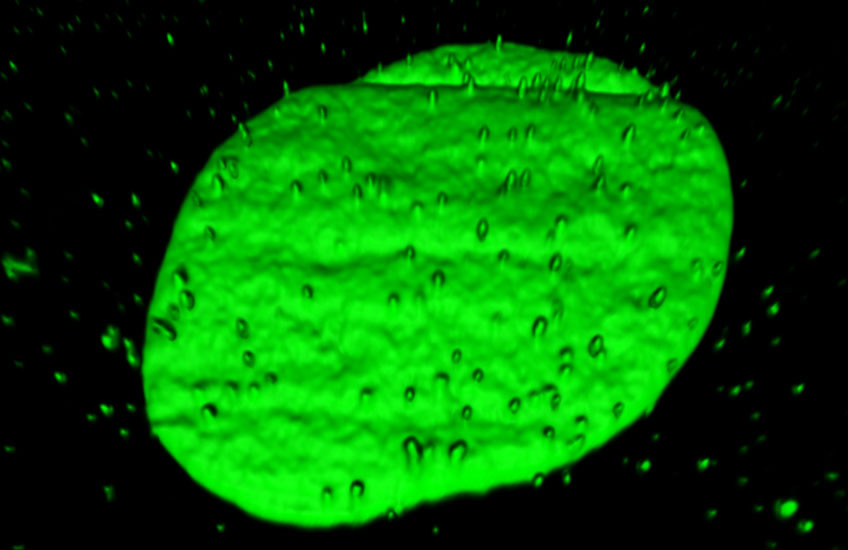
The researchers confirmed their findings with light microscopy, transmission electron microscopy, and immunogold labeling, including images taken at HMS’ MicRoN core and Electron Microscopy Facility.
To confirm that this mechanism isn’t unique to herpesvirus, the researchers followed up with experiments with other enveloped viruses and concluded that any virus that enters the cell by fusing with the cell membrane triggers this response. This includes parainfluenza virus and other viruses of significant concern for human health.
The team also tested two non-enveloped viruses that enter by endocytosis — hijacking the process that cells use to transport materials into the cell. This did not trigger the expulsion of DNA from the nucleus or the interferon response.
How this research can help improve human health
Understanding the details of how the immune system responds to viruses can help researchers optimize that response, Knipe said.
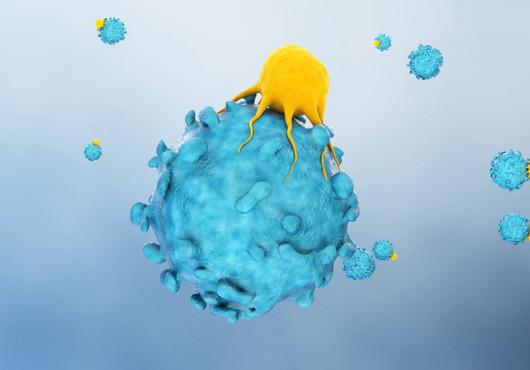
Insights from this study could eventually be used to improve the protection patients receive from vaccines or make it easier for treatments known as therapeutic oncolytic viruses to infect and kill cancer cells, he said.
He noted that there is already an engineered oncolytic herpesvirus licensed for medical use against melanoma that was designed to take advantage of other immune-response mechanisms to improve its ability to target cancer cells without having to fight the patient’s immune system.
Similar techniques have been used to minimize the body’s innate immune responses to inactivated herpes simplex virus when it is used as a gene therapy vector and to optimize vaccines.
Fundamental studies in virology are important building blocks for making better medicine, Knipe said.
“By understanding how cells and viruses operate, we can crank up the immune response or dampen it, depending on how we want the virus and the body to behave,” Knipe said. “It may sound farfetched, but it’s already starting to happen.”
Authorship, funding, disclosures
Additional authors include Hyung Suk Oh, Max E. Mertens, Maria Ericsson, Kyle N. Stearns, and Anne Moscona.
This research was supported by the National Institutes of Health (grants R56 AI106934, R21 AI188827, and R01 AI175362).