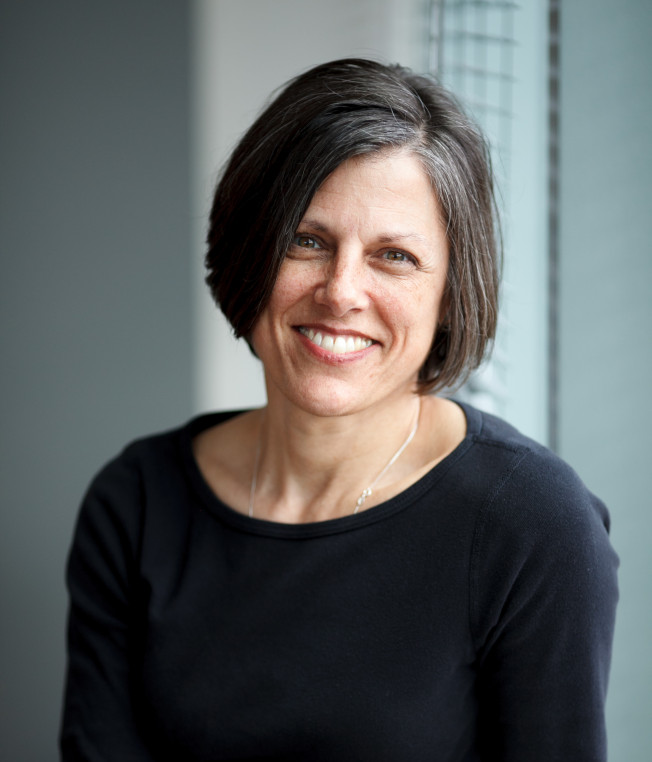
Susan Dymecki, the George Fabyan Professor of Genetics in the Field of Comparative Pathology in the Blavatnik Institute at Harvard Medical School, has been named the next chair of the HMS Department of Genetics, effective Jan. 2, 2027.
She will become only the third chair of the department, which was founded in 1981 under inaugural chair Philip Leder and for which Dymecki has served as one of two vice-chairs since 2024 alongside Jeannie Lee, HMS professor of genetics and chair of molecular biology at Massachusetts General Hospital.
“I know that Susan will excel in this position and will lead our preeminent genetics department with vision, energy, and optimism,” HMS Dean George Q. Daley wrote in an email to the community on Oct. 2 that highlighted some of Dymecki’s numerous achievements in research, teaching, mentorship, and academic leadership.
Dymecki’s lab works at the interface of genetics and neurobiology, studying how the brain develops, controls critical functions, and can go awry in brain disorders, with particular focus on the brainstem and its serotonin-producing (serotonergic) neurons. Techniques Dymecki pioneered for precisely controlling genes and transgenes have enabled her and biologists around the world to uncover how the serotonergic system drives functions as varied as circadian rhythms, emotional balance, breathing, memory, and body temperature — work that is shedding light on conditions including bipolar disorder, sleep apnea, and sudden infant death syndrome (SIDS).

As she prepares to take the reins from current department chair Clifford Tabin — the George Jacob and Jacqueline Hazel Leder Professor of Genetics, who announced in March that he would be stepping down as chair in January after 20 years of distinguished service — Dymecki shared her hopes and vision with Harvard Medicine News.
Harvard Medicine News: How are you feeling about being named the new chair?
Susan Dymecki: Honored. Energized. And ready.
The Department of Genetics has been my professional home for over two decades. I care deeply about where we’re headed and just as deeply about the people who will take us there: their science, their growth, who they are beyond the four walls of the lab. Nurturing the legacies built here while catalyzing new directions for research and teaching is work I find genuinely worthy, and I will give it my all.
HMNews: What are you looking forward to in the job and the department?
Dymecki: The people. Walk through our halls and you’ll feel it immediately: a devotion — to discovery, to teaching, to one another — that runs through our faculty, staff, and trainees. Put people first, and great science follows. That philosophy traces back to the department’s founding chair, Philip Leder, and has continued under current chair Cliff Tabin. It will be my north star as well.
Our greatest asset isn’t any single discovery or grant. It’s our ethos — our commitment to how science should be done, how we should treat one another, what we refuse to compromise. This ethos has been built over decades through the chemistry among our faculty and departmental leadership and the commitment to research and teaching; it cannot be written into policy or mandated from above. It lives in practice, in expectation, and in example. It lives in the small moments: how we mentor a struggling trainee, how we celebrate a colleague’s breakthrough, how we show up for each other when things get hard. This ethos must continue to be our anchor; I intend to protect and strengthen it.
I’m also eager to serve as a connective thread, linking genetic and genomic research across HMS, Harvard University, and our affiliated hospitals. Acting together, we are greater, can go farther, and can achieve more and lasting advances. I hope to be a catalyst for that kind of collaboration.
HMNews: What are you looking forward to in the field?
Dymecki: What an extraordinary trajectory over the past decades for genetics and genomics. We’ve moved from thinking about the genome as a fixed, linear instruction manual to understanding it as a dynamic, spatially organized, chemically annotated information system. It’s folded, it’s marked, it carries a repurposed evolutionary history, and its RNA products are doing all sorts of active work in the cell. We are no longer just reading the genome; we’re learning how it remembers its past, organizes its present, and rewires itself over time. Our researchers will keep leading this revolution — from human and computational genetics to genomic technologies, from developmental biology to cancer to synthetic biology and genetic medicine.
HMNews: What challenges or worries are you facing?
Dymecki: The ground beneath research funding is shifting — slowing and shrinking. Our faculty are producing extraordinary science despite extraordinary funding pressure. This moment calls for creative solutions, generous listening, and an open mindset, because different but equally valuable paths forward may emerge. I worry most about our young scientists — junior faculty and trainees — who are especially vulnerable in uncertain funding climates. Supporting and mentoring them must be a priority.
Funding challenges also call for community. In times like these, community isn’t a nice-to-have — it’s essential. Renewing our shared sense of purpose, celebrating scientific curiosity, and investing in one another — these aren’t luxuries. They are how we’ll move forward, together.
HMNews: Beyond what your lab website says about you, are there things you want people to know about you at this point?
Dymecki: I try to be outward-facing and collaborative. I try to listen generously, and I consider championing others one of my core responsibilities as a leader. I welcome feedback and believe deeply in the power of personal growth. I try to stay introspective enough to know when I need to grow, change, or reach out for the good of a person, a situation, or an institution.
Beyond the lab, I’m a proud mother and spouse with two adult daughters passionate about their endeavors. Parenthood has taught me much about advocacy, about the many different paths to success, about finding one’s voice, and about making a difference for others.