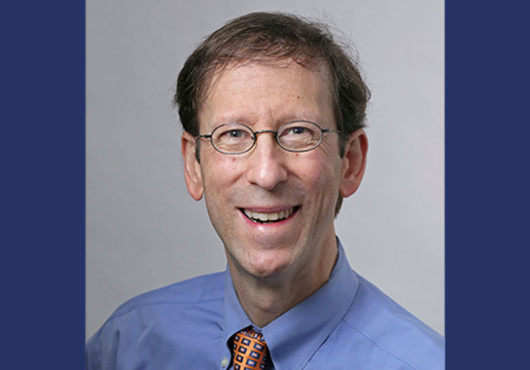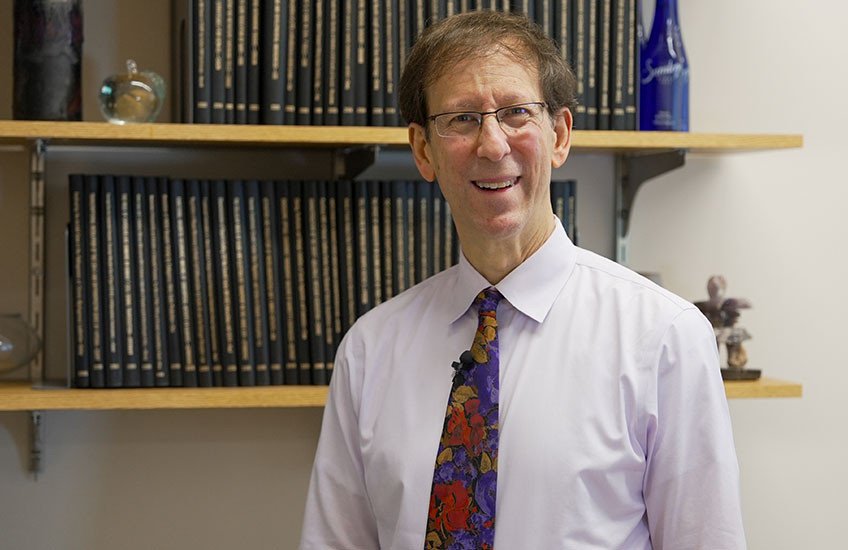
On Aug. 1, David Hirsh was named Harvard Medical School co-director of the Harvard–MIT Program in Health Sciences and Technology (HST) and advisory dean and director of the Irving M. London Society, the one of five HMS academic advising communities to which all HST students are assigned.
He succeeds Wolfram Goessling, who led the program during academic years 2017-2025, and co-leads HST with Collin Stultz, the Nina T. and Robert H. Rubin Professor of Electrical Engineering and Computer Science at MIT and a cardiologist at Massachusetts General Hospital.
Throughout its 55-year history, HST, one of the world’s oldest interdisciplinary educational programs focused on translational medical science, has brought engineering and the basic and social sciences together to cultivate physician-scientists who save and improve lives through discovery and innovation.
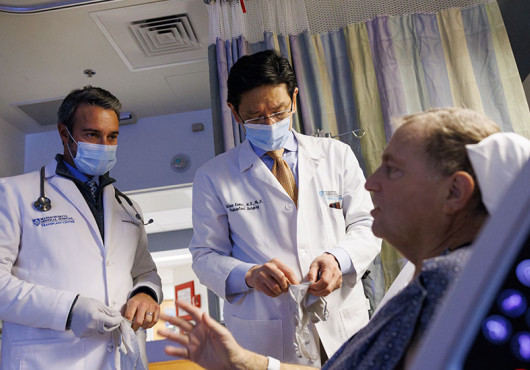
HST students and alumni not only have the dedication and intellectual rigor to advance science and medicine but also have the deep humanism to understand what it means to be a healer and to authentically connect with patients and their families, said Hirsh.
Hirsh comes to the role with decades of experience studying, designing, and leading medical education programs.
He co-founded and directed the Harvard Medical School-Cambridge Integrated Clerkship and co-founded the international Consortium of Longitudinal Integrated Clerkships. He co-edited a book on educational transformation and has directed, collaborated on, and authored clinical cases for objective structured clinical examinations for medical schools and for national exams.
At HMS, Hirsh serves as an associate dean for undergraduate medical education, co-directs the HMS Academy Fellowship in Medical Education and Scholarship, and has served as associate director of the HMS Academy and the inaugural George E. Thibault Academy Associate Professor.

Hirsh is HMS professor of medicine at Cambridge Health Alliance. He received a bachelor’s degree in history from Dartmouth College and an MD from the University of Virginia School of Medicine. He completed his residency at the University of Michigan.
Harvard Medicine News spoke with Hirsh about the culture and community of HST and what he’s looking forward to about co-leading the program.
Harvard Medicine News: What do you look forward to in your new role?
David Hirsh: The most fun and most interesting part of leading HST is the bridge building. You’re bridging among the nation’s premier academic institutions — Harvard and MIT, and specifically Harvard Medical School — and connecting to some of the world’s best hospitals, bringing together scholastics, research, and care.
Within HMS, you’ve got bridges between the Pathways MD program and HST, especially during the principal clinical experience, where HST students learn alongside Pathways students. You’ve also got bridges between the Harvard/MIT MD-PhD Program and HST.
Then you’re bridging between the students and the faculty, the students and the administration, and the younger faculty and the senior faculty.
Through scientific, clinical, and educational collaborations, HST bridges all of our institutions and all the people we serve.
HMNews: What do you like most about working with HST students?
Hirsh: HST students are incredibly committed to patients and to bringing the very best of science to help them. They bring positive energy, deep thinking, rigor, resilience, and just the spark of life to what they do. They fully believe that through this learning and this pathway of their life, they’ll be able to bend the arc on human healing. And I agree with them, they will.
HMNews: What is your overarching philosophy of education, and specifically regarding physician-scientists?
Hirsh: If individual humans flourish, they will do great things. So we should help them. The great physician-scientists hold open possibility and possess great intellectual flexibility. They find joy in facing tough and important questions. They use multiple lenses and are nourished by broad perspectives, within and far beyond their disciplines and fields. They relentlessly learn and do whatever it takes to see anew and advance their and our understanding. They live on the frontiers — shimmering with interest, ideas, and fascination.
HMNews: How do you help them flourish?
Hirsh: People develop individually and collectively through functional relationships. That is how great and good things happen. Relationships are a fundamental force of learning, and learning is the fundamental force of science. I am energized when words like “relationships” and “community” are recognized as foundational to advancing science, health, and healing.
If we can foster the best of relationships — teamwork, collaboration, discourse, and dialogue — to push one another, take on challenges, face a storm together, and face the light together, we’ll go further, including in our caregiving. That’s better for our patients. That’s better for all.
I am extremely excited by the power of our collaborative relationships in HST.
HMNews: HST began a multiyear effort to reinvigorate its curriculum. What are your goals for curriculum innovation?
Hirsh: Over the past couple of years, we have incorporated more clinical relevance into the first-year foundational science courses, such as Growth of the Physician-Scientist and Integrations and Innovations in Medical Sciences I and II. By adding more nuance and perspective, the science can flourish more than if it is just done in its own space without a close connection to the actual patient.
As we build the clinical connection into the science year, the science should continue into the core clinical and post-clinical years, right? We are now beginning to look at innovating the clinical curriculum to maintain HST’s unique flavor and scientific focus. A great example of this is the highly successful Maturation of the Physician-Scientist pilot. We’re pulling the translational skills developed in the preclerkship into the PCE and beyond, while also having the flexibility, inclusiveness, and connectedness with Pathways.
HMNews: What long-standing or newer challenges, like AI, do you see yourself taking on as the new HST co-director?
Hirsh: The challenge we’re facing from AI offers us this question: How do we advance science to the utmost in service to humankind but not let science outrun or outpace the human, moral, and ethical nature of our very being?
HST students are taught elegant courses on AI, beginning at the outset of their arrival at HMS, so they have a full understanding of AI’s power and potential to create healing and how to use it for the good for humanity. The students are both humanly and intellectually equipped to do so.
Advancing science and healing commensurate with our soulful attention to the humanity of each patient is our North Star. I think we can do our darn best to design for the learning that addresses that challenge.
HMNews: Tell us about the HST office and its staff: What should students know about your team and what they can do for them?

Hirsh: The space attracts the learners, affects the learners, and should uplift the learners, and that space is the space of the staff. It goes back to collaborative relationships, including with our HST alumni and faculty.
The staff are “all in” for each student in the program. Many of the staff have years and years of experience in education generally, at HMS in particular, and at HST most particularly. That kind of brain trust is very hard to find. These people are very experienced and very committed. It’s exceedingly special, and the students recognize it.
HMNews: Harvard and MIT are both large, complex institutions. How does HST leadership and staff help students connect with scientists in the universities’ many labs and departments and with the thousands of clinical faculty at HMS’ affiliated hospitals and research institutions?
Hirsh: One of the long-standing and greatest strengths of HST is the generations of faculty and alumni mentors. I think it’s a wonderful, generous web without compare, and it’s incredibly important. Although some parts of life are serendipity or knowing exactly when to jump at opportunity, life is much more about the people who helped get us here.
HST ensures that students connect with faculty and lab leaders by holding sessions that are intentional and curricular and time that is plainly social. HST builds community intentionally, and the HST community is extraordinary and deeply valued.
HMNews: What’s something about yourself that you would like to share with our readers and students?
Hirsh: I love waterskiing, books, travel, all sorts of music, studies of history, foreign policy. I like so many things. But most of all, I like learning and sharing ideas with other people.
One other thing I feel proud to mention — though to be clear, this is not about something that I have done — is that throughout the generations of my family, many have served in the U.S. armed forces. I’m not suggesting that they had particularly important roles. I’m just saying they were committed to serving, and they served. This notion of what it means to give of yourself and serve, I would describe as a foremost family value. I aspire to have that same value and level of commitment.
I want to do all I can to help staff, faculty, and alumni uplift these beautiful students today to become the most effective and caring and healing people of tomorrow.
This interview was edited for length and clarity.