Harvard Medical School researchers at Boston Children’s Hospital and Dana-Farber Cancer Institute have identified a new pathway that regulates the production of fetal hemoglobin, a form of hemoglobin that normally gets replaced soon after birth by adult hemoglobin.
Two FDA-approved gene therapies reactivate the production of fetal hemoglobin as a treatment for sickle cell disease and beta-thalassemia, which are caused by mutations in adult hemoglobin. Both therapies target a gene called BCL11A, one of a few genes known to regulate the switch from fetal to adult hemoglobin.
The newly discovered pathway relies on the BACH2 gene and acts independently of BCL11A.
The discovery, published Sept. 30 in Nature, fills in some of the missing picture of how the body switches between the fetal and adult forms of hemoglobin. If this new pathway can be targeted safely and effectively, it may provide a foundation for future gene-editing or drug-based treatments for sickle cell disease, beta-thalassemia, and other hemoglobin disorders, which can cause severe pain, organ damage, and premature death.
“Nearly 20 years ago, human genetics pointed us to BCL11A and ultimately helped open a path to gene therapies,” said senior author Vijay Sankaran, the HMS Jan Ellen Paradise, MD Professor of Pediatrics at Boston Children’s and a physician-scientist at the Dana-Farber/Boston Children’s Cancer and Blood Disorders Center. “The same approach is still revealing entirely new ways to turn fetal hemoglobin back on.”

Sankaran — along with mentor Stuart Orkin, the HMS David G. Nathan Distinguished Professor of Pediatrics at Boston Children’s and Dana-Farber; colleague Daniel Bauer, the HMS Donald S. Fredrickson, MD Associate Professor of Pediatrics at Boston Children’s; and others — helped reveal the role of BCL11A in sickle cell disease and made additional discoveries that enabled the development of gene therapies.
A new brake
For the new study, an international team of researchers conducted a large genome-wide association study analyzing fetal hemoglobin levels and potentially related genes in more than 28,000 people from diverse populations, including European, African, and Asian ancestries.
They identified a new pathway involving the BACH2 gene, which was known for its association with autoimmune and allergic diseases but had not been connected to fetal hemoglobin. They found that BACH2 acts as a brake on fetal hemoglobin production and that reducing BACH2 allows a transcription factor called NRF2 to activate fetal hemoglobin genes.
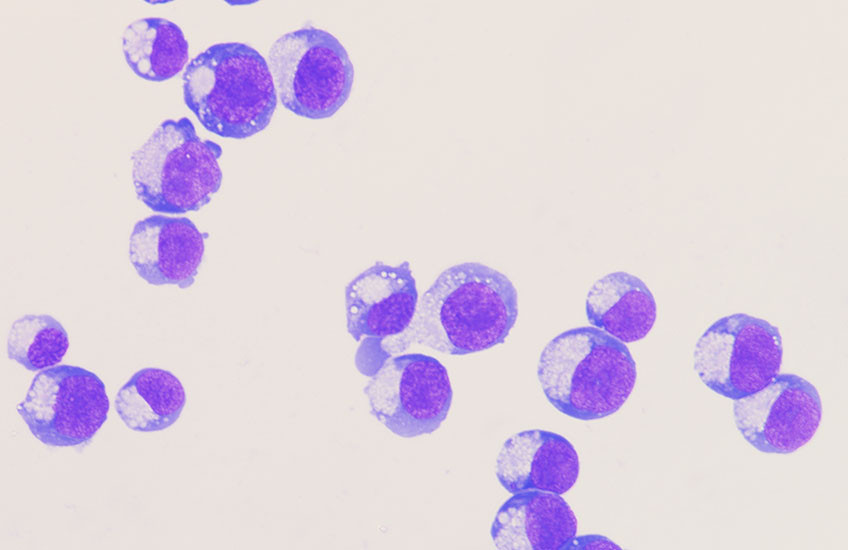
In lab experiments using blood stem cells isolated from bone marrow, the researchers showed that inhibiting BACH2 increased fetal hemoglobin levels, while over-expressing BACH2 reduced fetal hemoglobin.

“We show proof-of-principle that pharmacologic inhibition of BACH2 can increase fetal hemoglobin in human blood cells,” said Sankaran, who is also an associate member of the Broad Institute of MIT and Harvard and an investigator at the Howard Hughes Medical Institute. “Because this pathway works independently of BCL11A, it provides another potential route for therapeutic development.”
A boost to existing therapies
Because BACH2-NRF2 and BCL11A operate independently, it is possible that targeting both simultaneously could induce greater fetal hemoglobin production and offer additional benefit to patients, the authors said.
The first step, though, is to determine whether BACH2 can be targeted safely and effectively — and to build upon the genetic insights gained through this study to better understand the regulators of fetal hemoglobin switching, possibly helping to identify additional new therapeutic opportunities.
“There is much more biology to learn,” Sankaran said.
Adapted from a Dana-Farber/Boston Children’s news story.
Authorship, funding, disclosures
Study co-authors hailed from countries including Tanzania, Thailand, Sweden, the United Kingdom, the United States, the Netherlands, Brazil, and Italy. Chun-Jie Guo and Uma P. Arora are co-first authors. Additional authors include Xiaoheng Cheng, Wanying Xu, Liam D. Cato, Rick Li, Henry Y. Lu, Andrew J. Lee, Fulong Yu, Gaurav Agarwal, Peng Lyu, Tianyi Ye, Mateusz Antoszewski, Mariel Wissmann, Baraka S. Mkumbe, Supachai Ekwattanakit, Patrick Deelen, Liberata Mwita, Raphael Sangeda, Thidarat Suksangpleng, Suchada Riolueang, Paola G. Bronson, Dirk S. Paul, Emily Kawabata, William J. Astle, Francois Aguet, Kristin Ardlie, Aitzkoa Lopez de Lapuente Portilla, Guolian Kang, Yingze Zhang, Seyed Mehdi Nouraie, Victor R. Gordeuk, Mark T. Gladwin, Melanie E. Garrett, Allison Ashley-Koch, Marilyn J. Telen, Brian Custer, Shannon Kelly, Carla Luana Dinardo, Ester C. Sabino, Paula Loureiro, Anna Bárbara Carneiro-Proietti, Cláudia Maximo, Adriana Méndez, Angelika Hammerer-Lercher, Julie Makani, Vivien A. Sheehan, Mitchell J. Weiss, Lude Franke, Björn Nilsson, Adam S. Butterworth, Vip Viprakasit, and Siana Nkya.
This work is supported by the Howard Hughes Medical Institute, the New York Stem Cell Foundation, the National Institutes of Health (grants R01 DK103794, R01 DK101989, R01 HL146500, R01 CA265726, and R01 CA292941), the Gates Foundation, the Edward P. Evans Foundation, Alex’s Lemonade Stand Foundation, Blood Cancer United, and the Leona and Harry Helmsley Charitable Trust.
During the drafting of the manuscript, Paul became a full-time employee of AstraZeneca. Aguet is an employee and shareholder of Illumina. Gladwin has financial interests in Globin Solutions, Inc. and serves as a consultant for Synhale Therapeutics and Third Pole Therapeutics. Hammerer-Lercher reports speaker honoraria from Siemens Healthineers and Beckman Coulter Diagnostics as well as participation on an advisory board of Roche Diagnostics, all unrelated to the present work. Butterworth reports institutional grants from AstraZeneca, Bayer, Biogen, BioMarin Pharmaceutical, Bioverativ, Novartis, Regeneron, and Sanofi. Sankaran serves as an advisor to Ensoma, Cellarity, and Beam Therapeutics, all unrelated to the present work.