Researchers have developed a new method for predicting tissue age and screening for genes that affect the aging process.
Using these methods, the team — led by George Church, the Robert Winthrop Professor of Genetics in the Blavatnik Institute at Harvard Medical School and a core faculty member at the Wyss Institute for Biologically Inspired Engineering at Harvard University, in collaboration with a group at the Basque Research and Technology Alliance in Spain — identified a gene that demonstrated age-reversal effects in lab experiments.
The findings, published Oct 14 in Nature Aging, offer a new way to search for genetic factors that could be manipulated to turn back the clock on aging cells and rejuvenate tissue.
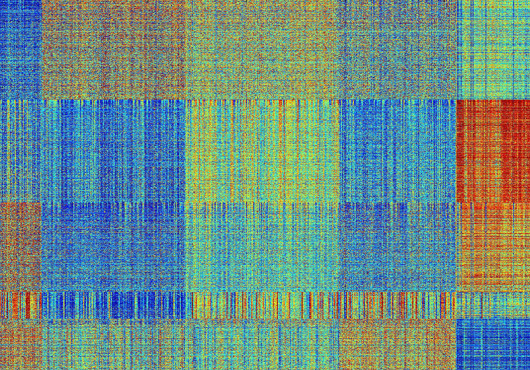
The team first designed a machine-learning algorithm to predict the “transcriptomic age” — measured by changes in gene activity, also known as gene expression — of skin cells. They then used it to screen a focused collection of genes predicted to affect aging processes.

An RNA-regulating gene called SRSF1 scored highest for its ability to rejuvenate fibroblast cells when overexpressed. In lab experiments, SRSF1 reduced features that corresponded to several hallmarks of aging, such as cellular senescence (a biological process in which damaged cells stop dividing but do not die), proteostatic stress (disruptions in the normal balance and turnover of proteins), and “inflammaging” (chronic low-grade inflammation).
When SRSF1 was delivered to aging mice, it reduced the animals’ rate of aging and extended their lifespan by 14 percent.
“It has been a long-standing goal of my lab to devise clinically useful de-aging strategies by identifying genes that, when engineered in the genome for under- or overexpression in aging target tissues, extend human healthspan,” said Church. “Our platform and findings on SRSF1 are an important step on that quest.”
Authorship, funding, disclosures
Alexandru M. Plesa and Sascha Jung are co-first authors of this work. Antonio del Sol is co-corresponding author. Additional authors include Helen H. Wang, Fawad Omar, Michael Shadpour, David Choy Buentello, Maria C. Perez-Matos, Naftali Horwitz, George Cai, Zhen Kai Ngian, Carol Magalhaes, Amy J. Wagers, and William B. Mair.
The study was funded by the Aging and Longevity-Related Research Fund, the Astera Fund at the Silicon Valley Community Foundation, the Wyss Institute Synthetic Biology Platform, and the Spanish Ministry of Science and Innovation (grant PID2020-118605RB-I00).
Plesa, Jung, Wang, del Sol, and Church are listed as inventors on patent application US20250313599A1, which covers the use of SRSF1 and other factors. Plesa and Church are cofounders of and hold equity in RegulaBio, an early-stage company developing therapeutics for age-related diseases. Additional aging-related disclosures for Church can be found in the paper.