Advances in treatment have transformed pediatric leukemia from a largely fatal diagnosis into one of the most curable childhood cancers — survival rates in acute lymphoblastic leukemia now exceed 90 percent. But these advances come with a cost: The same treatments that save a child’s life can also affect how that child learns and remembers.
To prevent their cancer from spreading into the brain and central nervous system, where it is potentially deadly, most newly diagnosed children receive drugs delivered directly to the cerebrospinal fluid. These treatments are effective but can also damage the brain. As a result, survivors of pediatric leukemia may experience lasting cognitive challenges that affect how they learn, process information, and navigate daily life.
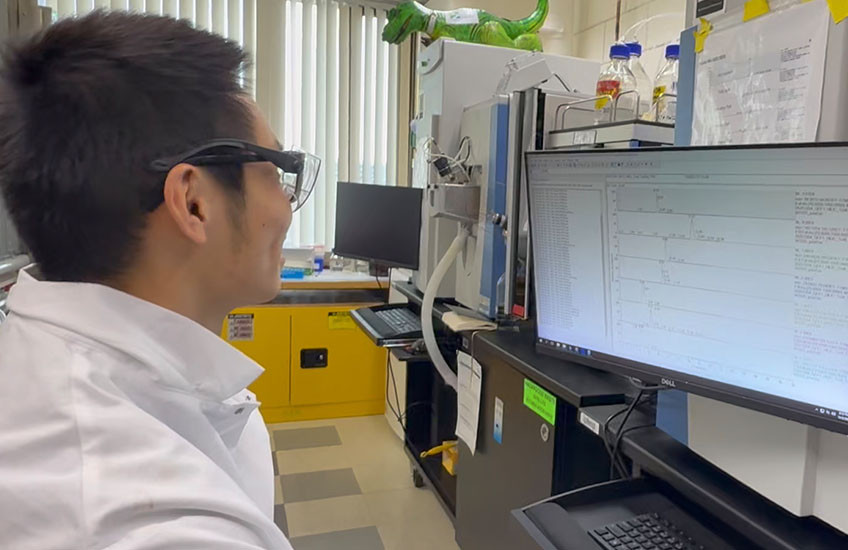
Stopping cancerous cells without damaging the brain requires a deeper understanding of how leukemia cells survive and the nutrients on which they depend. In the Kanarek Laboratory at Boston Children’s Hospital, Alan Wong, a Harvard Kenneth C. Griffin Graduate School of Arts and Sciences doctoral student in biological and biomedical sciences at Harvard Medical School, focuses on developing new approaches to treat pediatric leukemia while reducing harm to healthy cells.
Wong, who is a student in the Harvard-MIT Program in Health Sciences and Technology, will be returning to HMS this fall after completing his doctoral work.
Starving cancer of specific nutrients
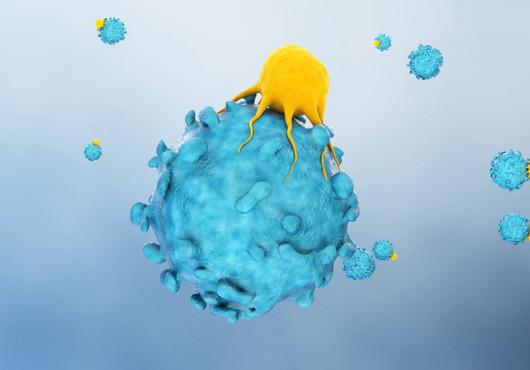
Using metabolomic techniques — the means of identifying small molecules called metabolites found in biological samples — and mouse models, Wong identified a key vulnerability: Leukemia cells depend on copper to grow, both in the body and in the brain.
“By depriving mice that have leukemia of copper, you can actually slow the growth rate of the cancer,” Wong said. “You can boost the effect of existing chemotherapies.”
Wong’s findings are part of a broader shift in how scientists approach cancer treatment. Rather than focusing only on killing cancer cells directly, researchers are increasingly asking what those cells depend on to survive and how we can target those vulnerabilities. Wong’s identification of copper as a necessity for cancer cells in mice but not for the healthy cells around them shows that subtle changes in nutrient availability could help create more precise and less harmful therapies.
Naama Kanarek, HMS assistant professor of pathology at Boston Children’s and Wong’s PhD advisor, emphasizes that the findings deepen our understanding of how leukemia cells survive in the brain and can help accelerate the development of more personalized treatments.
The work shows how fundamental understanding of cancer metabolism, including the metabolic vulnerability of cancer cells, can lead to discoveries that can be implemented in the clinic, she said.
Kanarek’s mentorship helped Wong through this project and the rest of doctoral studies, especially as cuts to federal research funding increased.

“Naama always thinks the best of her students. She always thinks everything’s going to work the first time and that the data’s going to turn out in a really exciting way,” Wong said. “I’m a bit more reserved, but now I appreciate the optimism — [especially when] you’re getting another grant rejection or cancelation — that the work that you do is important.”
The implications of Wong’s findings could extend beyond leukemia. Wong and his colleagues are considering whether similar approaches might be applied to other cancers, including brain tumors, where cells face similarly distinct metabolic environments.
Reflecting on the scientific process
Growing up in Vancouver, Canada, Wong was always interested in science and biology.
“I remember doing the biology labs in school — extracting DNA from strawberries or doing worm or animal dissections — and just thinking it was such an amazing process,” Wong said.
As a high school student, he shadowed a research lab at a local university, where he quickly took to the world of science and research. He loved the excitement of asking novel questions and the puzzle of trying to figure out how things work.
Then, as an undergraduate at Harvard College, Wong got involved in studying the regenerative abilities of axolotls — a unique Mexican salamander — with Jessica Whited, associate professor of stem cell and regenerative biology at HMS and Harvard University.
“Axolotls have the incredible ability to regrow any organ in their body — their limbs, their hearts, their nervous system,” Wong said. “We were trying to understand how they could regrow their limbs, to better understand how humans might be able to regain function of lost limbs or perhaps one day regrow them.”
Wong’s experience working with Whited fueled his interest in using lab work to improve human health and benefit the broader community. Today, he channels that dedication both in his research and as an MD student.
As he wraps up his remaining PhD projects, Wong prepares to start his third year of medical school. He’ll spend the next year on medical clerkships at Beth Israel Deaconess Medical Center.
Long-term, Wong sees himself keeping a foot in the world of research while also staying firmly rooted in clinical practice, part of his broader goal to develop more precise and effective cancer treatments.
“I truly believe that seeing patients keeps you grounded in understanding the problems that people experience,” Wong said. “At the end of the day, I want my research to be driven by the needs of my patients.”
Adapted from a Harvard Griffin GSAS news article.
Answering the Call to Improve Health
Celebrating the accomplishments of the Class of 2026