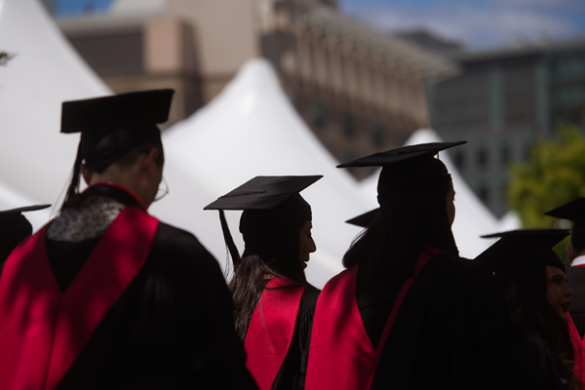
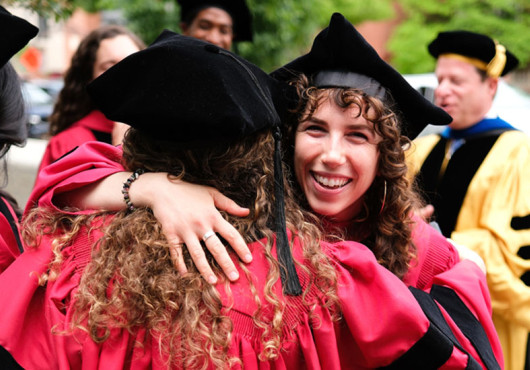
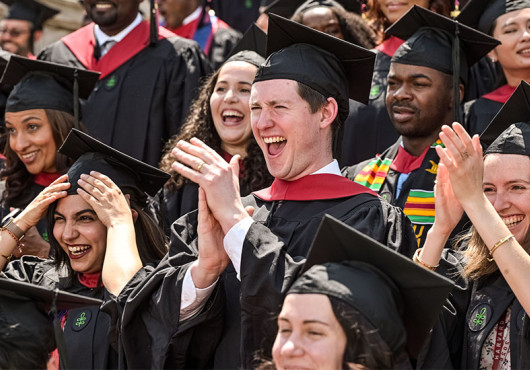
Despite a brief downpour, the sun shone on the newest graduates of Harvard Medical School and Harvard School of Dental Medicine on May 28. The new physicians and dentists received their diplomas on the HMS Quad, cheered on by friends, family, and faculty.
In addition to their academic achievements, the Class of 2026 has already begun making contributions to the world of medicine. In their time at HMS, members of the graduating class shaped national conversations about values embedded in medical education, surveyed gaps in mental health and substance use care systems to help inform policy recommendations, and worked to optimize the delivery of multiple sclerosis (MS) therapies while also running a support group for women living with MS.
And this is just the beginning, the speakers reminded them.
“We know that your most impressive contributions lie ahead in your careers,” said HMS Dean George Q. Daley.
The paradox of modern medicine
Members of the Class of 2026 are embarking on their medical careers at a moment marked by incredible advancement and innovation, speakers said. Previously terminal illnesses such as HIV, childhood leukemia, and sickle cell disease can be managed, treated, and in many cases cured. Gene-editing technology is opening the door to new treatments and AI is accelerating the pace of drug discovery.
But graduates are also starting their medical careers in a world marked by incredible inequality, said keynote speaker Monica Bharel, clinical lead for global health, public health, and public sector health at Google Health.
“We have the technology to map a protein in two minutes but, globally, a woman still dies every two minutes in childbirth,” she said. “Not enough has changed.”
Bharel — who is vice chair of the Harvard University board of overseers and a former HMS instructor in medicine at Massachusetts General Hospital as well as previously serving as commissioner of the Massachusetts Department of Public Health — encouraged the graduates to take a public health approach to medical practice and help build a system that is fairer for everyone.

“In this age of advanced technology, now more than ever, we need your humanity,” she told the Class of 2026.
Daley also spoke of the cognitive dissonance that the new physicians will face, as they are surrounded by the promise of new diagnostic and treatment possibilities but also entrenched health disparities and a growing mistrust in medicine.
But holding that tension, and finding ways to resolve it, is part of a physician’s role, he said.
“In the space between what is and what ought to be, between the limitations of our health care systems and the unlimited needs of our patients, we serve, we bring our best selves, and we do all that we can do,” Daley said.
Presenting the Class of 2026
The Class of 2026 includes 156 MDs and 35 DMDs. Among the medical students, 18 also earned PhDs and another 16 earned master’s degrees during their time at Harvard.
Graduates hailed from all over the United States, as well as from Brazil, Canada, China, Colombia, Germany, India, Japan, Korea, Lebanon, and Turkey.
Graduates celebrated the day with people who helped them reach this point — professors who believed in them, relatives who inspired them, friends who helped them through the hardest moments.
“The aspect of community, and the kindness and the love I feel from all the members here — the staff, the faculty, and my friends — I will forever remember this place because the community feel was so strong,” said Si Kun (Eddie) Wang, DMD graduate and the dental class marshal.
Wang said he was born with a cleft lip and required a lot of dental care growing up. As a dentist, he wants to provide that care to others. He is heading to the University of Pennsylvania for a six-year dental residency during which he will also earn his MD.
“My whole goal is to contribute to cleft care, through doing oral and maxillofacial surgery,” he said.
MD graduate and speaker Lois Owolabi was drawn to Harvard because of the University’s global health emphasis. Owolabi grew up in Texas but was born in Nigeria, and she was able to return to Nigeria for her research year studying heart failure.
“I was so excited to be a part of that, to learn from those surgeons and to meet patients,” she said. It was also her first time hearing her home language of Yoruba in the operating room.
Owolabi will pursue her residency in general surgery at Beth Israel Deaconess Medical Center. When she finishes her training, she intends to bring her skills to Nigeria to help close gaps in access to care.
MD graduate Zhi Lin, who will be doing his residency in internal medicine at Columbia University Medical Center, reflected on the moments during his time at HMS when he felt that didn’t know enough. Those moments drove his learning, he said, for the betterment of himself and the teams he worked with.
“It made me push myself to be more curious,” he said. “That self-directed learning, lifelong learning, is something that I’ll take with me.”
MD-PhD graduate Brittany Petros attended the Class Day celebration with her infant son Milo in her arms. During her time at HMS, Petros developed CRISPR-based diagnostics and studied SARS-CoV-2 transmission on university campuses. She will do her residency in internal medicine at Brigham and Women’s Hospital.
“Having Milo has made me more proud to provide care for patients in a way that allows them to experience more moments like this,” Petros said, with her son happily resting against her graduation regalia. “It’s brought a lot of joy to my life and also made me realize what my patients have at stake.”
Images: Steve Lipofsky and Steve Gilbert
Answering the Call to Improve Health
Celebrating the accomplishments of the Class of 2026