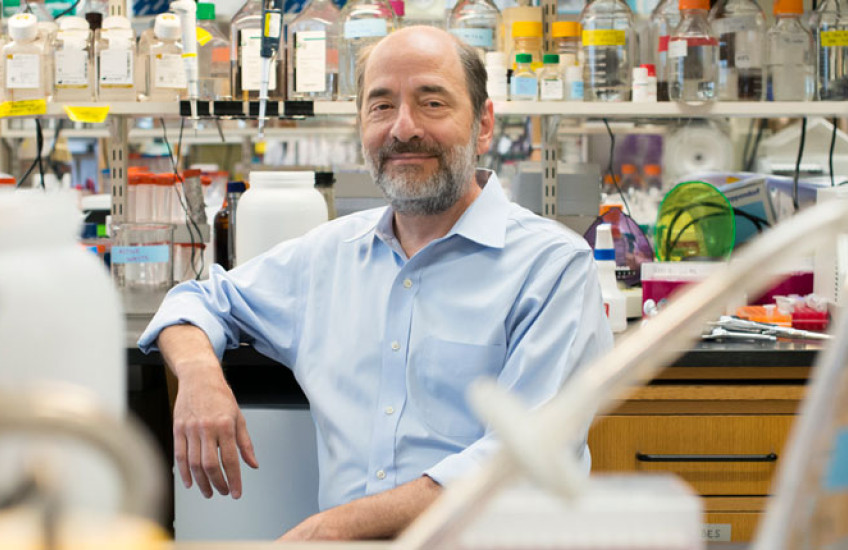
Using less than a drop of blood, a new test can reveal nearly every virus a person has ever been exposed to, scientists recently reported. Stephen Elledge, Gregor Mendel Professor of Genetics and of Medicine at Brigham and Women’s Hospital, is the senior author of the report.
In Africa, Ebola may have receded, but it is still exacting a heavy toll. Now, as the virus ebbs, the governments of Liberia, Sierra Leone, and Guinea—racked for years by civil wars, coups, and unrest—are joining forces to heal from the crisis. Paul Farmer, Kolokotrones University Professor of Global Health and Social Medicine and head of the Department of Global Health and Social Medicine, is quoted.
Can a robotic teddy bear help alleviate anxiety, pain and isolation for children in a hospital? Peter Weinstock, associate professor of anaesthesia at Boston Children’s Hospital, is quoted.
Life-threatening complications from bacterial infections are on the rise among hospital patients, increasing at a double-digit rate as the population ages and costing U.S. health-care programs billions of dollars a year. Adrienne Randolph, professor of anaesthesia at Boston Children’s Hospital, is quoted.
Federal health authorities, who are seeking ways to reduce hospital-acquired complications, are pondering what actions to take to reduce the incidence of delirium, which is not among the complications for which Medicare withholds payment or for which it penalizes hospitals. Delirium is estimated to cost more than $143 billion annually, mostly in longer hospital stays and follow-up care in nursing homes. Sharon Inouye, professor of medicine at Hebrew SeniorLife, is quoted.
Use of antidepressants late in pregnancy may be associated with an increased risk of babies born with a serious respiratory disorder, but the increased risk appears to be less than previous research has suggested, according to a new study. Krista Huybrechts, assistant professor of medicine at Brigham and Women’s Hospital, led the research.
Brad Manor, assistant professor of medicine at Beth Israel Deaconess Medical Center, participated in an interview about the links between cognitive function, balance and falls.