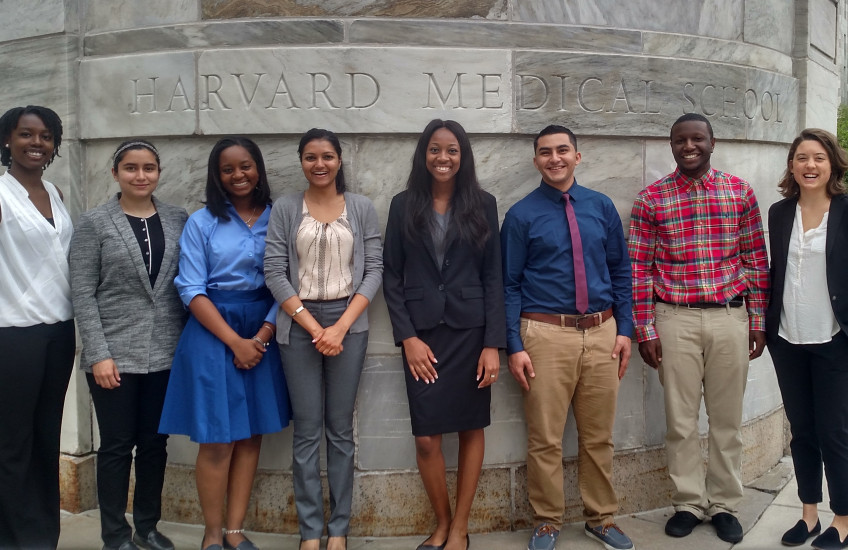
Harvard Medical School launched this summer the first major redesign of its early curriculum since the 1980s, integrating multiple disciplines into single courses and introducing earlier clinical immersion and flipped classrooms. Richard Schwartzstein, professor of medical education at Beth Israel Deaconess Medical Center; Randall King, professor of cell biology; Haiden Huskamp, professor of health care policy; and Bernard Chang, associate professor of neurology at Beth Israel Deaconess Medical Center, are quoted.
Gov. Charlie Baker met with the deans of the state’s four medical schools on Wednesday to enlist their help in fighting the opioid addiction crisis here. Monica Bharel, instructor in medicine at Massachusetts General Hospital, is quoted.
The British National Health Service has recommended healthy women with low-risk pregnancies are better off out of the hospital, giving birth at home or at a midwife-led birthing center. Neel Shah, assistant professor of obstetrics, gynecology and reproductive biology at Beth Israel Deaconess Medical Center, is quoted.
For decades, the only remedies for hearing loss were devices such as hearing aids or cochlear implants. Now, the first pharmaceutical treatments may be on the way. Jeffrey Holt from Boston Children’s Hospital, and Albert Edge, Charles Liberman, and Sharon Kujawa from Mass. Eye and Ear, are mentioned.
A new study warns that people who survive a brain hemorrhage, also known as a bleeding stroke, may be at higher risk for another one if they don’t control their blood pressure, a new study warns. Jonathan Rosand, professor of neurology at Massachusetts General Hospital.
A strain of healthy bacteria can kill harmful bacteria in lab tests. Andrew Onderdonk, professor of pathology at Brigham and Women’s Hospital, is quoted.
In less than 20 percent of family meetings in the intensive care unit do doctors and other health care providers discuss religion or spirituality, a new study finds. Tracy Balboni, associate professor of radiation oncology at Dana-Farber Cancer Institute, co-authored an accompanying editorial.
Drug retailers have found a source of growth in retail health clinics, which have been proliferating across the U.S. for the last few years. Ateev Mehrotra, associate professor of health care policy, is mentioned.