In a month when Americans have taken to the streets to protest police brutality following the deaths of George Floyd and other Black Americans, and as many U.S. communities weigh the fate of divisive Confederate statues and symbols and major corporations retire products with racist packaging, Harvard Medical School marked the Juneteenth holiday with a first-ever virtual breakfast to unite, celebrate, and according to HMS Dean George Q. Daley, “to commit together to making Harvard Medical School a better place.”
Juneteenth, celebrated for 155 years in the African American community, is not the day that enslaved people were freed in the U.S. nor the day that slavery ended following the Civil War, but it’s the day in 1865 when enslaved Texans found out they had been free for more than two years following the Emancipation Proclamation.
Traditionally observed within Black communities with festive family and community gatherings, barbeques and pageants, the holiday—a portmanteau of June and nineteenth—arrives this year to a country divided, isolated by the coronavirus and grappling anew with its enduring history of systemic racism.
HMS/HSDM Student Council President LaShyra “Lash” Nolen, who performed a spoken word piece at the HMS Juneteenth breakfast, wrote in a MedPage Today commentary prior to the event, “Though it took the rest of America far too long to celebrate the most important commemoration of our liberation, I am elated the time has finally arrived. Now it is up to our allies to ensure that this moment of celebration grows into a movement—a movement that spans beyond Juneteenth and into the rest of their lives as advocates for justice.”
The march must continue
Introducing the speaking program and virtual forum, HMS Dean for Diversity and Community Partnership Joan Y. Reede said that, although she has attended many Juneteenth celebrations in Boston over the years, this was the first time the HMS community had come together for the holiday and the occasion “marks a new dawn, a time for opening awareness, for dialogue… a time for advancing racial justice with and through community … Juneteenth serves as a reminder of the freedoms that are yet to be reached by people of color … The march is necessary and the march must continue.”
The event included insights and words of inspiration from current and former Harvard students: Tiara Lacey, PhD candidate in the Harvard Biological and Biomedical Sciences program, LaShyra “Lash” Nolen, MD candidate and president of the HMS/HSDM Student Council, and Rhea Boyd, pediatrician, child health advocate and Harvard Chan School alumna. A historical perspective of the School’s pitfalls and progress toward equity and inclusion was given by HMS alumnus and Indiana gubernatorial candidate Woodrow “Woody” Myers Jr.
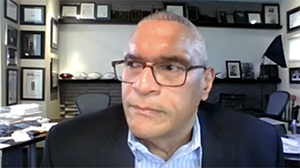
Myers spoke of the lessons of action and advocacy he learned while at HMS: to take risks, to pursue the unconventional, to use his voice when his “heart and gut” insisted.
“You’ve got to turn frustration into action steps,” Myers said. “That means that when there is an opportunity to raise your voice appropriately, using your knowledge of the system as it exists today, then you’ve got to do. Use the opportunity that you have to talk to ‘the system’ because the faculty of Harvard Medical School and the people that are associated with the faculty are ‘the system,’ as you will be one day. … You will be the people responsible for making the decisions as to where dollars are spent, what priorities are made. Those are the decisions of the system … From wherever you are, move things forward, set yourself some goals up and push.”
In their own words
Tiara Lacey
PhD Candidate, Harvard Biological and Biomedical Sciences Program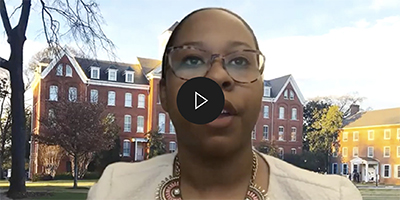
"Struggle is a never ending process. Freedom is never really won, you earn it and win it in every generation."
-Coretta Scott King
LaShyra “Lash” Nolen
MD Candidate, HMS/HSDM Student Council President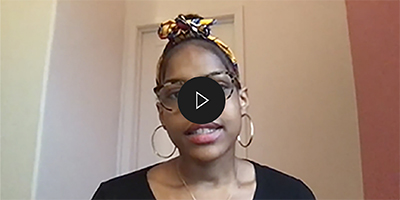
Fourth of July used to be my favorite holiday.
Hues of red, white and blue, watermelon triangles, and barbeque were the highlights of my day. Fireworks would light the night sky and I would feel alive, that was until I learned it was all a lie. Because the celebration that filled the air was not for me, just like it wasn’t 400 years ago for my ancestors during chattel slavery.
Or the Indigenous peoples, whose land we occupy as I speak.
I’ll never understand why this country fails to acknowledge those they mistreat.
See July 4th, 1776 was the day they taught me to celebrate.
By they I mean my white schoolteachers and textbooks, let’s get that straight.
It was my family who taught me that freedom for them and us, did not equate.
Even if it was to the same God to whom we both prayed.
Because while white families scheduled grand dinners to commemorate their freedom, it was my ancestors who were the ones forced to feed them.
For some the constitution was their solution, for my people it only solidified their inferior stature in this institution. For example, 16 years later they were forced to build the White House. The same one 45 lives in, along with the hate so readily espoused.
June 19, 1865 was the true start of our freedom story. Today we celebrate Juneteenth, as if it’s okay we waited 155 years to ignore it. Like we ignore the disruption of families, children left alone their guardians deported. This level of erasure we can no longer condone it.
While today is one of a celebratory mood. I mean it’s Juneteenth, I know my grandparents gone get they groove. We still must remember that for true Black liberation to be achieved there is still so much work to do. These names will remind of us of that, as I conclude:
The Charleston 9
Ahmaud Arbery
Brionna Taylor
George Floyd
Tony Mcdade
Rayshard Brooks
Robert Fuller
Malcolm Harsch
Oluwatoyin Ruth "Toyin" Salau
Today needs to be a movement not a moment, because July 4th never gave us our freedom and we’re still waiting on it.
Rhea Boyd
Pediatrician and child health advocate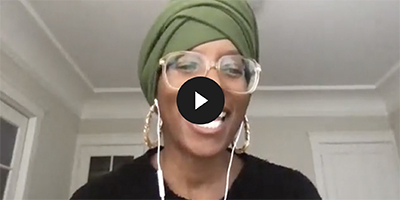
On freedom
Ask me about my grandmother and I’ll tell you about her hands
How they crinkled like pillows under the weight of our heads
How they fed me into womanhood and covered my future in prayer
How they carried me
And cared for me
And carved space for me - in this world
Ask me about my mother and I’ll tell you about her side
How I fit in there
How it covered me
How warm it is
How I belong to it
Ask me about my sister and I’ll tell you about her arms
How they fought for me
And pushed for me
How they stretched over me like umbrellas and under me like a swing
How they protect me
Ask me about my father and I’ll tell you about his chest
How it rises to greet me
And swells to guard me
And softens to hear me
And hardens to support my feet - in this world
This moment of freedom - this joyous occasion which we now celebrate
This freedom that was carried down to the shores of Texas on the back of our nation’s patriots
This freedom was not granted
It was taken
By hands like my grandmothers, and from sides like my mothers,
This freedom was lifted in arms like my sisters, and floated on chests like my fathers
Ask me about this freedom and I’ll tell you about the people who have
nourished me, and guided me,
protected me and prayed for me,
And loved me - into this time, now
Into this freedom, here
This freedom was sown in the long nights of darkness by the wise people who knew
Joy,
O joy, always comes in the morning.
Woke up this morning with my mind, stayed on freedom…hallelu hallelu, hallelujah
‘A new beginning’
For the first time, the entire university closed on June 19 and gave faculty and staff a day off to observe Juneteenth, the oldest nationally celebrated commemoration of the ending of slavery in the United States.
In a letter to the community announcing the addition of Juneteenth to the University’s calendar, Harvard University President Lawrence S. Bacow said the day, “offers a moment to acknowledge and celebrate the promise of a new beginning, and I cannot imagine a better year for Harvard to begin recognizing its significance.”
On June 19, 1865—two and a half years after President Lincoln’s Emancipation Proclamation—Union soldiers led by Maj. Gen. Gordon Granger, arrived in Galveston, Texas, with news that the war had ended and that the enslaved people were now free.
A year later in 1866, the “‘freed’” black men and women of Texas rallied around June 19 as “an occasion for gathering lost family members, measuring progress against freedom and inculcating rising generations with the values of self-improvement and racial uplift,” according to Henry Louis Gates, Jr., the Alphonse Fletcher, Jr. University Professor and director of the Hutchins Center for African and African American Research at Harvard University, in an essay he wrote.
Gates described Juneteenth as “one of the most inspiring grassroots efforts of the post-Civil War period,” beginning a tradition that has lasted generations.
“These days, Juneteenth is an opportunity not only to celebrate but also to speak out,” he wrote.
Juneteenth festivities eventually crossed Texas borders, which, as reported in The Washington Post, was the first state to make it a holiday in 1980. Most states and the District of Columbia now recognize Juneteenth as a state holiday or day of recognition.
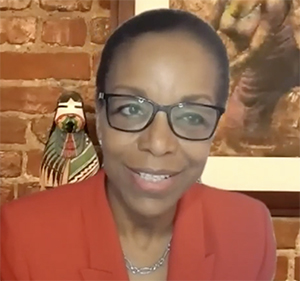
In 2007, Massachusetts became the 25th state to recognize Juneteenth,” Reede said, “The proclamation was signed by Gov. Deval Patrick, the first black governor of the Commonwealth and the only sitting black governor at that time in the United States.”
“Juneteeth has become not only a time to commemorate black liberation from the institution of slavery in the United States but also a time to highlight the resilience, solidarity and culture of the black community,” Reede said. “It is a time for black Americans to reflect on their ancestral roots and celebrate the freedoms in their lives that generations have fought to secure. … And a reminder of the work yet to come, work that is necessary to ensure a brighter, more equitable world.”