Learning how to conduct scientific research is hard enough. Figuring out how to explain that research to various audiences, including nonscientists, is an entirely different challenge.
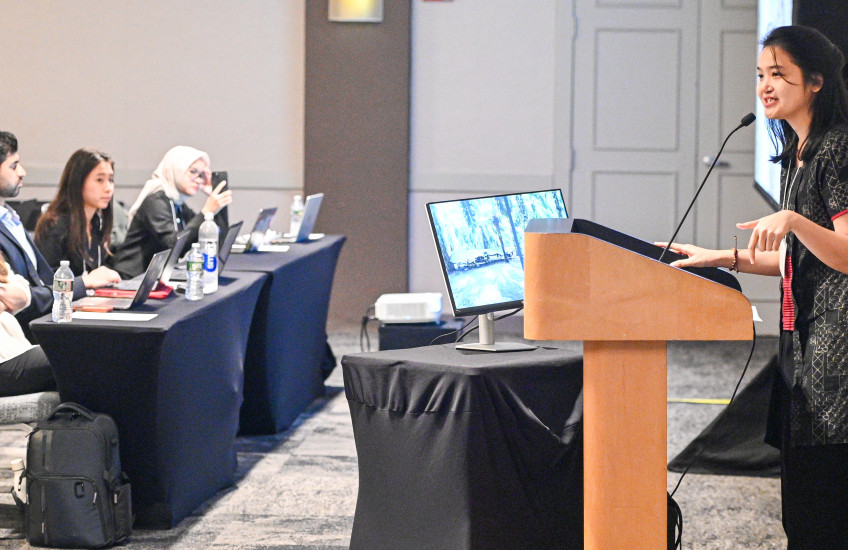
A new way that Harvard Medical School is strengthening students’ science communication skills is by holding a Three Minute Thesis (3MT) competition, a fast‑paced contest developed by the University of Queensland and used worldwide where presenters have just three minutes and one illustrative slide to summarize their investigations.
This year, leaders in HMS graduate education adapted the format — originally designed for PhD students to present their dissertations, like the 3MT competition held each spring by the Harvard Kenneth C. Griffin Graduate School of Arts and Sciences — for master’s degree students to share findings from their capstone research projects.
Roz Segal, HMS dean for graduate education, remarked that the competition provided students an opportunity to “present their wonderful research in a manner that is accessible to our entire community” and said that she expects it to continue being held in future years.
3MT competition presentation excerpt
“We all like to think getting a diagnosis is like a calculator: plug in the data and get the right diagnosis. But medicine is messier than that.”
—Sandra Taves Bhutto, on improving how doctors make decisions amid uncertainty
The inaugural competition opened with a call for submissions in January; 21 applicants were selected to compete, representing seven of the 11 HMS master’s programs.
On April 10, these finalists presented their research to five judges during a 3MT matchup held at the Longwood Inn, just down the street from the HMS campus and several of the School’s affiliated hospitals. Sixteen students gave in‑person talks, and five presented virtually.
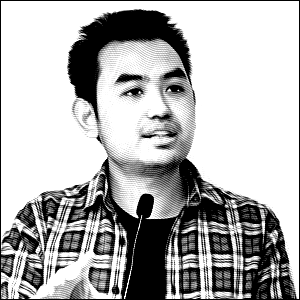
3MT competition presentation excerpt
“Aging is inevitable but frailty before time runs out does not have to be.”
—Valdi Ven Japranata, on blocking a protein to prevent and treat disease
Winning the competition — and their audiences
Preparing for and participating in the 3MT competition gave students an opportunity to develop the increasingly vital skill of explaining their research and its significance in succinct, clear language that audiences such as members of the public, the media, corporate industry, nonprofit organizations, and government institutions can understand.
“Communicating research is equally as important as doing the research itself,” said Rohan Pancharatnam, student in the Master of Science in Clinical Research program.
The competition can serve as a precursor to preparing a 30‑second elevator pitch when networking for employment or other professional opportunities, said Jason Heustis, HMS assistant dean for student development and evaluation for graduate education and a competition judge.
This kind of pitch can also be necessary for securing funding from donors and grant agencies, explaining how new knowledge and innovations can be translated for use in industry or patient care, strengthening public and policymaker support of science, and demonstrating accountability for publicly funded research.
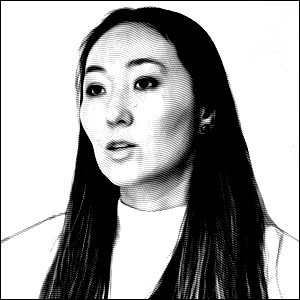
3MT competition presentation excerpt
“In diabetic macular edema, the center of the retina (the macula) becomes swollen with fluid, like a sponge that’s been soaked with too much water. Just like that wet sponge loses its shape and clarity, the swollen macula can’t process images sharply.”
—Assel Talaspayeva, on research for treatment of diabetic eye disease
“It’s vital that the public understand how their funds are being used and the benefits to society that would come out of the research,” said Ashwini Jambhekar, HMS teaching associate in graduate education in science communication and competition judge.
Participants can also gain a new perspective on their work and how it serves society at large, as well as what concerns the public may have around scientific research.
“Being able to succinctly explain what you’re doing in a three‑minute pitch is a life skill that everybody should know,” said Katherine Santos, HMS co‑associate director in graduate education and competition judge.
Learning to pitch
For many students, preparing their presentations meant rethinking how they usually talk about their work. Because of their full workloads, some competitors said they had not had much practice speaking beyond the walls of their department.
“It took an effort to think about how to convey the same message to leaders in industry and to the general public, who might not have as much information about deep learning and the specific data modality I’m working with,” said John Jun, student in the Master of Medical Science in Biomedical Informatics program who uses AI to predict recurrence of early‑stage skin cancer.

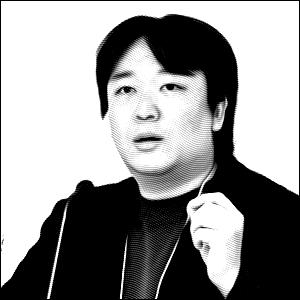
3MT competition presentation excerpt
“[Stage 1 and Stage 2 classifications] were designed to predict survival across populations, not to tell you whether the patient sitting in front of you will be the one who comes back.”
—John Jun, on predicting melanoma recurrence
For Chi Wing Kandace Chan, student in the Master of Science in Clinical Research program who studied an anesthesia delivery system, the main hurdle was simplifying basic science.
As she prepared her talk, she sought to use language that was not too complex and full of jargon.
Uppermost in her thoughts was explaining her work “in a way that resonates with what people care about — being human and being healthy,” Chan said.
Coming together in community
Finalists said they appreciated how the competition brought them together. Because they spend most of their time in HMS classrooms, labs, and clinics across Boston, they said they rarely intersect with students in the other master’s degree programs.
“It’s important and instructive to bring students from different programs together,” said Jambhekar.
Before the competition, finalists met during a virtual workshop designed to help them prepare their presentations. Led by Jovana Milosavljevic Ardeljan, who has organized 3MT competitions at the University of New Hampshire for 10 years, the finalists learned tips and best practices for delivering their talks and shared challenges they encountered when communicating their research.
“It was very interactive,” said Chan. She learned from her classmates and valued getting perspectives from students in fields unlike her own, like medical education or bioethics.
“I was really happy that I could make friends,” she added.
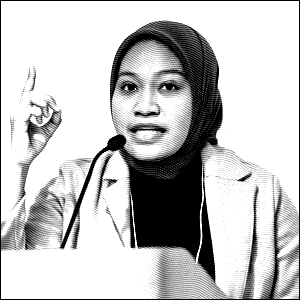
3MT competition presentation excerpt
“The problem was never [the patient]. The problem was a chain — distance, transportation, infrastructure, referral systems — all broken at once.”
—Nur Furu, on care for TB patients in West Papua, Indonesia
At the competition, they enjoyed getting to know one another in person and learning about their varied interests, backgrounds, and research.
Pancharatnam studied how the severity of kidney damage during cardiopulmonary bypass surgery is dependent on the length of time oxygen levels are low. He said he enjoyed hearing about so many topics in such a short amount of time, especially ones he was not familiar with, like AI.
“It was very accessible to everyone,” he said.
Sophia Villa, student in the Master of Medical Sciences in Immunology program, studied how the body’s T cells help B cells, which she said offers a way of thinking beyond methods that are limiting the ability to create vaccines and treatments. She said the competition reminded her of the reach of the HMS master’s programs.
“It was super refreshing and enriched the sense of pride in what our school is able to accomplish and contribute,” she said.
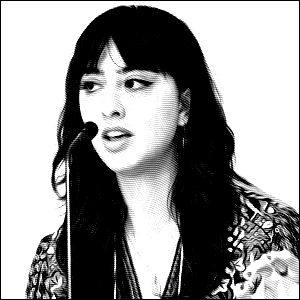
3MT competition presentation excerpt
“This forces us to rethink a long-standing assumption in immunology: that one cell type owns one function…. My work shifts the focus from what cells look like to what they actually do.”
—Sophia Villa, on how a healthy immune system fights pathogens
Come graduation in May, the competitors will be well‑equipped to not only lead innovative research but also to share how and why their work will make a difference in people’s health and well‑being.
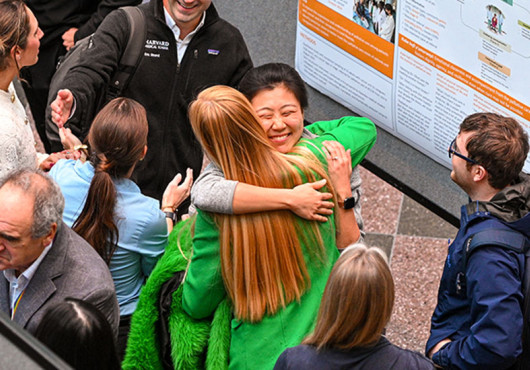
At a reception after the competition, students, judges, and guests mingled and talked about how much they learned from each other.
“You were really great teachers,” said Johanna Gutlerner, HMS senior associate dean for graduate education and competition emcee.
Additional competition judges included Deepali Ravel, HMS director of curricular initiatives in graduate education, and Jason Bryan Silverstein, co‑director of the Master of Science in Media, Medicine, and Health program.
Three Minute Thesis competition prize winners
Each competitor received a certificate designating them as a finalist and a Harvard-branded baseball cap.
Three unranked winners received a certificate for top place and a prize of their choosing from a selection of Harvard-branded items.
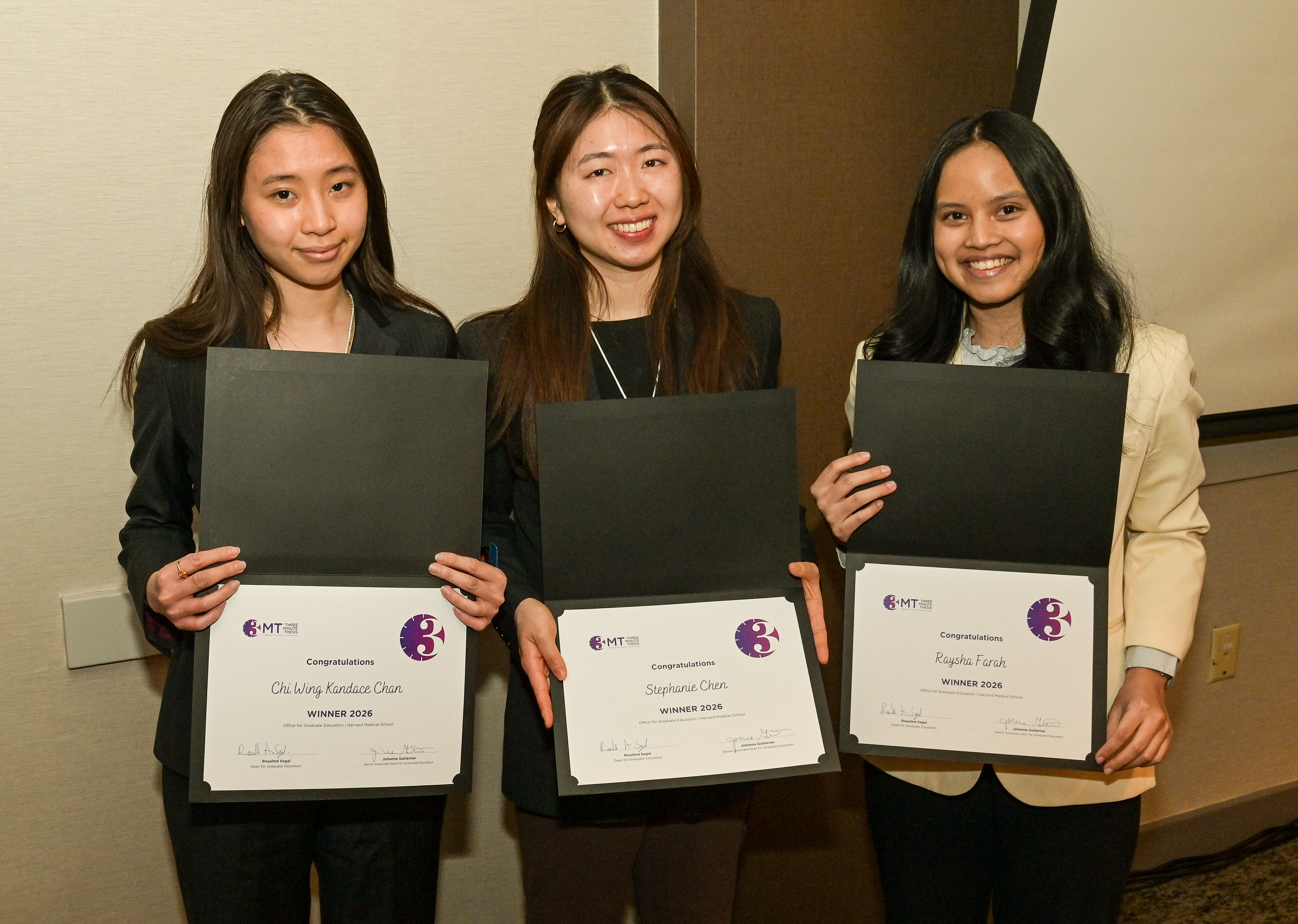
Chi Wing Kandace Chan, MS candidate in clinical research, “Smarter Anesthesia: Building an automated system for brain monitoring and dynamic dose control”
Stephanie Chen, MMSc candidate in biomedical informatics, “Before Memory Fades: Predicting Alzheimer’s disease risk earlier”
Raysha Farah, MMSc candidate in clinical investigation, “Predicting the risk of heart attack from birth with four biomarkers”
Answering the Call to Improve Health
Celebrating the accomplishments of the Class of 2026