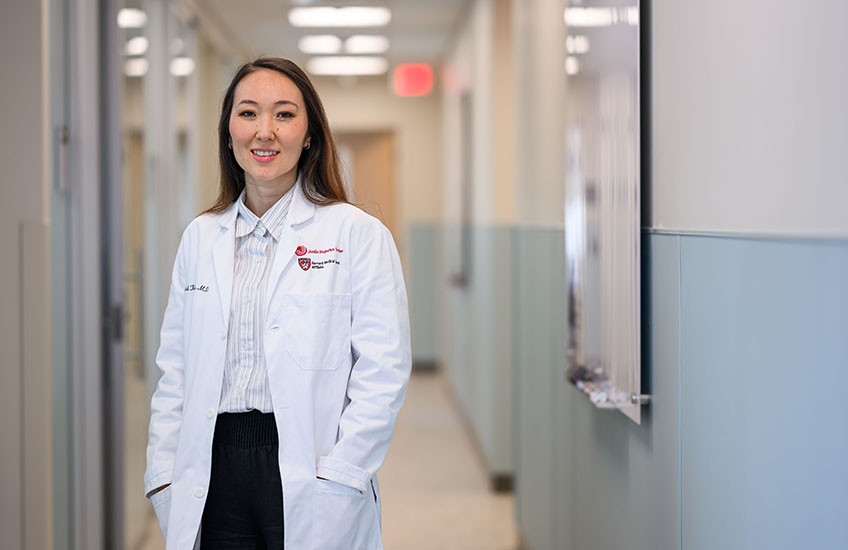
From cookery to clinical trials, Assel Talaspayeva likes to experiment.
Back in her home country of Kazakhstan, when cooking for her church community, she tried out cuisines from around the world.
Here in the United States, she runs clinical trials to evaluate treatments for diabetic retinopathy, a diabetes complication in which high blood sugar levels damage blood vessels in the retina. If not managed adequately, diabetic retinopathy can cause vision loss and blindness.
Talaspayeva became interested in clinical trials when she helped run them for two years as a Harvard Medical School clinical fellow in ophthalmology at the Beetham Eye Institute at Joslin Diabetes Center. After she finished the fellowship in July 2025, she wanted to lead her own clinical research studies, but she knew she needed formal training to strengthen her trial-running skills.
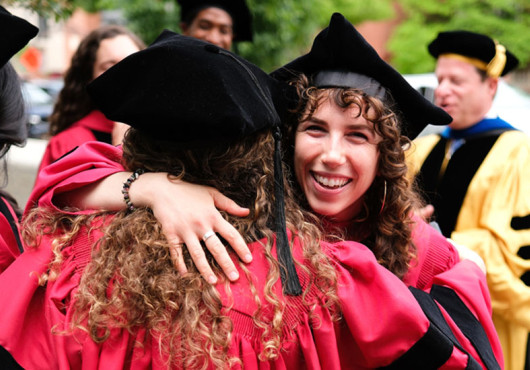
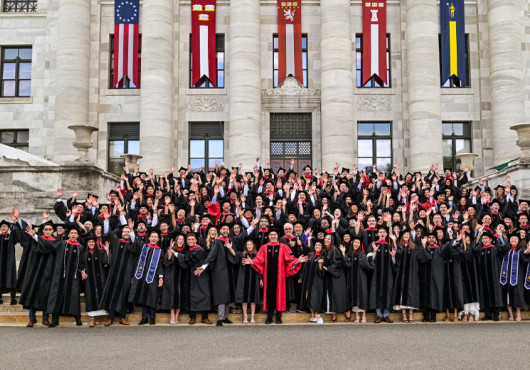
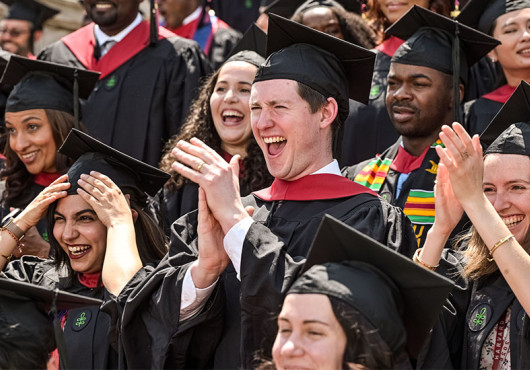
She found out about the new HMS master of medical science in clinical research program and enrolled. This May, she and her classmates will be the program’s first graduates.
Talaspayeva said she has gained the knowledge she needs to investigate new treatments for diabetic retinopathy.
“This training allowed me to deepen my understanding in study design, biostatistics, and evidence generation,” she said.
And she is already applying what she learned. She recently became certified by the Diabetic Retinopathy Clinical Research (DRCR) Retina Network, which has more than 140 clinical trial sites and 400 physicians in the United States and Canada, and launched studies of her own.
“I already started to enroll patients as a certified investigator for clinical trials,” she said.
Completing the master’s program has better prepared Talaspayeva to fulfill her mission to preserve — or even restore — patients’ vision, giving them hope and improving their quality of life.
A global problem hits close to home
As of 2024, nearly 600 million adults worldwide had diabetes. About 842,000 of them live in Kazakhstan, with an estimated half of those cases undiagnosed.
“Diabetes is very common in my country, and I saw a lot of impacts of this disease,” Talaspayeva said. “It runs in my family, and my husband’s family, as well.”
Especially troubling to Talaspayeva is that the most common form, type 2 diabetes, and its debilitating and life-threatening complications, are not inevitable.
“In med school, I was wondering how we could do better, because I knew for sure this is a preventable disease,” she said. “Preventing vision loss and blindness for me was a powerful motivation.”
From medical school at Asfendiyarov Kazakh National Medical University, Talaspayeva went on to an internship and residency in ophthalmology at Kazakh Research Institute of Eye Diseases, both in the city of Almaty.

But to meaningfully contribute to advancing care for people with diabetic retinopathy, she knew she’d have to leave Kazakhstan. Medical knowledge there is lagging behind much of the developed world, she said, because some of the country’s systems are holdovers from the pre-1990, Soviet Union era.
She wanted to come to Boston to train with leaders in her field, some of whom have led foundational studies in managing diabetic retinopathy.
“Many of the clinical protocols ophthalmologists now use worldwide originated from Joslin Diabetes Center and the Beetham Institute,” she said.
She knew moving to a new country would be challenging, but Talaspayeva said she was stunned when she got to the United States.
“I have to learn medicine again, new medicine, modern medicine,” she said.
On top of that, she had to relearn it in English — her third language, after Kazakh and Russian.
The strenuous effort paid off. She passed the U.S. medical licensing exams, completed the required clinical fellowship, and became a practicing clinician and researcher at Beetham.
Joining a new community, like family
Talaspayeva said the welcoming and intellectually stimulating environment at HMS has helped her continue to overcome the culture shock.
She appreciates the professional connections with her colleagues in the master’s program, describing how faculty and peers share perspectives and expertise as they support and collaborate with one another.
“One of the most valuable aspects of the program is learning alongside people from diverse professional and research backgrounds,” she said.
Even though at first she questioned her place studying among people who have made medical history, her mentors helped her conquer that doubting mindset. They did not treat her differently because she lacked clinical research experience or came from another country. They stressed that as a clinical fellow she was here to learn, use that knowledge for her patients’ benefit, and then pass her knowledge on to the next generation of doctors, she said.
Talaspayeva’s own mentors are passing along decades of accumulated knowledge.
Her supervisor, Lloyd P. Aiello, the HMS Charles Webster Downer Professor of Ophthalmology at Joslin, is part of the third generation of a family of ophthalmologists specializing in diabetic eye disease at Joslin. His father, Lloyd M. Aiello, and grandfather, William Beetham, developed a laser treatment for diabetic retinopathy that became the standard of care. Lloyd M. Aiello also developed a telemedicine system for the early detection of retinal damage that is being applied to multiple medical conditions across the world.
Talaspayeva also credits Jennifer Sun, HMS professor of ophthalmology at Joslin and chair of the DRCR Retina Network, as an important mentor who helped her develop an interest in clinical trials and become involved with the network.
Further advancing diagnosis and care
Talaspayeva is adding her own advancements to the field. Her master’s capstone project focuses on anti-VEGF treatment, a standard-of-care injection for diabetic retinopathy — based in large part on fundamental discoveries made at HMS, including by Lloyd P. Aiello — that can reduce abnormal blood vessel growth and leakage.
Treatment restores or preserves vision in about one-third of patients, Talaspayeva said. She is seeking to identify factors that cause the other two-thirds to respond weakly and not regain any vision.
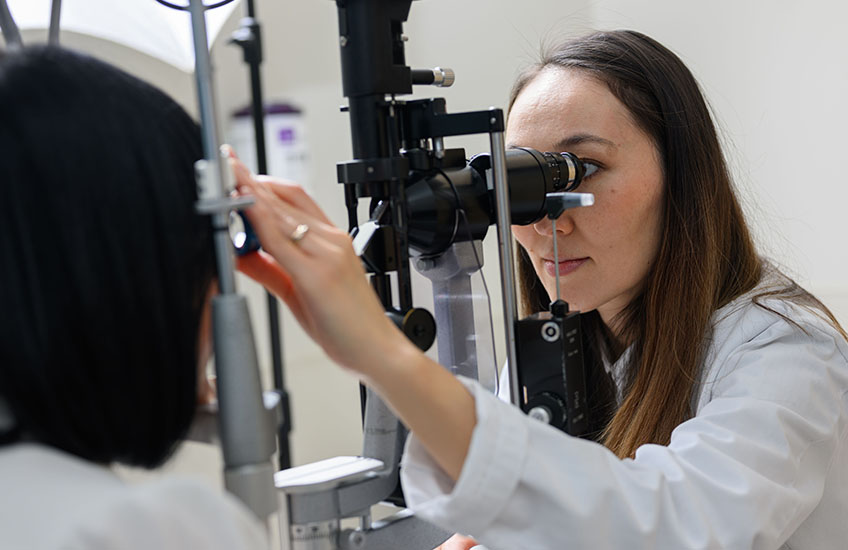
She hopes her work will lead to better management strategies, such as scheduling injections sooner for patients predicted to have a weak response.
Now, as a certified investigator, Talaspayeva has begun enrolling patients in a phase 3 clinical trial being conducted at about 100 sites in the United States and Canada. She said the medication being evaluated shows promise in slowing or stopping mild to moderate non-proliferative diabetic retinopathy.
The therapy is especially exciting because it would improve patients’ quality of life, is not an invasive procedure, and doesn’t involve an office visit, she said.
“It’s just a pill,” she said. “It’s a big win-win for me if their life is a little bit easier and they are able to see a little bit better.”
Far-seeing
Talaspayeva also hopes to improve diagnostics and modernize care for diabetic retinopathy in places like her home country.
“Evidence-based medicine in Kazakhstan is very limited,” she said. “Also, the country still uses diagnostic classifications of diabetic retinopathy from the Soviet Union.”
Structural and systemic problems — including medication shortages, high out-of-pocket costs, and limited outpatient clinics outside of population centers — also hinder people in Kazakhstan from receiving proper care, which increases their vulnerability to complications.
For example, Talaspayeva’s aunt, who does not have a car, has to take a more-than-three-hour taxi ride to Almaty to go to the Eye Institute outpatient clinic.
For now, Talaspayeva is treating patients with diabetic eye disease in the Joslin/Beth Israel Deaconess ophthalmology clinic three full days each week, supervising medical retina fellows as they perform consultations for hospitalized inpatients, taking her final-semester classes, and finishing her capstone project.
That doesn’t leave her a lot of free time. Still, she makes time on the weekends to explore cuisine for herself and her husband. Instead of cooking for her church group back in Kazakhstan, she brings baked goods to her colleagues. It’s another way she gives back to her new community.
Answering the Call to Improve Health
Celebrating the accomplishments of the Class of 2026