At a glance
Ginty shares the 2026 Brain Prize for research that has revealed the cellular machinery and neural signals underlying our sense of touch.
His findings explain how touch information is communicated from the body to the brain, where it is perceived as sensation and used to shape behavior.
The work could inform future treatments for touch dysfunction that can arise in conditions such as autism and chronic pain.
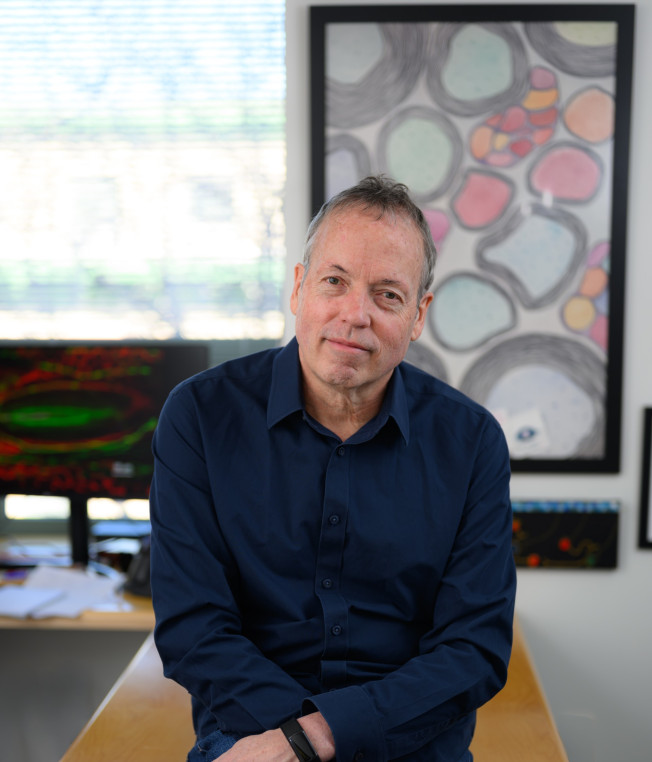
Harvard Medical School neurobiologist David Ginty has won The Brain Prize 2026 for his career-long research on our sense of touch: how the body perceives different types of sensations in the environment and communicates that information to the brain to shape behavior.
Ginty, the Edward R. and Anne G. Lefler Professor of Neurobiology and chair of the Department of Neurobiology in the Blavatnik Institute at HMS, shares the award with molecular neurobiologist Patrik Ernfors at the Karolinska Institutet in Sweden.
The Brain Prize, considered the world’s largest neuroscience research prize, is awarded each year by the Danish Lundbeck Foundation to researchers who have made highly original and influential advances in brain research. The prize comes with approximately €1.3 million to be shared by the recipients.
Together, the work of Ginty and Ernfors has revealed the cellular machinery that turns tactile information from the skin — such as pressure, temperature, vibration, itch, and texture — into neural signals. The researchers have also mapped how these signals are communicated from the skin through the spinal cord to the brain, where they generate perceptions that guide interactions with the physical world.
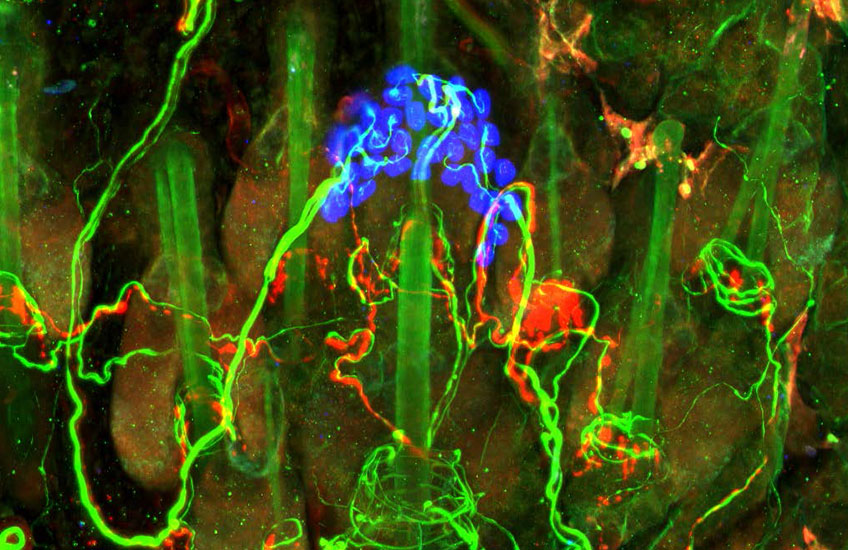
Ginty uses a combination of molecular, genetic, physiological, anatomical, and behavioral approaches in mice to investigate the neural circuits that underlie the sense of touch. His findings have defined the fundamental properties of different types of touch neurons across the body. His lab has also outlined the mechanisms by which touch neurons are activated and the pathways that transmit touch information through the spinal cord.
“David’s research on our sense of touch has been breathtaking. Over decades he and his colleagues have provided major insights into the molecules and neural circuits that mediate every aspect of touch, moving from the sensory neurons in the skin to the spinal cord and to the brain,” said Michael Greenberg, the Nathan Marsh Pusey Professor of Neurobiology at HMS and the previous department chair.
“This work illuminates the intricate biology of our sense of touch and shows how investing in basic discovery can rapidly advance an entire field,” said HMS Dean George Q. Daley. “David’s research brings us closer to understanding how touch, one of the most fundamental human experiences, affects perception and behavior. He is tremendously deserving of this recognition from the broader neuroscience community.”
More recently, Ginty has been exploring the biological basis of touch dysfunction that can occur in developmental conditions such as autism and can drive conditions such as chronic pain, with the goal of identifying new treatment avenues for touch overreactivity and pain.

Co-awardee Ernfors is carrying out complementary research. His group works to classify the key cell types involved in sensing touch, temperature, itch, and pain and uses this knowledge to investigate what causes chronic pain. His work has shown that touch neurons are highly conserved across species, enabling him to provide insights into human health and disease.
“By discovering and categorizing distinct sensory neuron types, linking them to specific end organs and pathways, and providing novel widely used genetic and molecular tools, [the winners’] work has created a blueprint for understanding normal touch and for pinpointing where things go wrong in disorders such as chronic pain and hyper- and hyposensitivity that may be associated with diseases of the nervous system,” said Andreas Meyer-Lindenberg, director of the Central Institute of Mental Health and chair of the selection committee.
A short film by the Lundbeck Foundation describes more about the winners, their backgrounds, and their research.
Pushing touch research forward
Ginty’s early work focused on neurotrophins: proteins that support the growth, survival, and function of neurons. In the process, he created multiple mouse models that could be used to target neurons expressing different receptors for neurotrophic factors.
In 2007, Ginty ventured into touch research when his lab developed genetic tools that enable visualization of the receptors pivotal for detecting light touch in sensory structures known as Meissner and Pacinian corpuscles. Since then, his research has focused on the sense of touch, as he’s worked to identify and classify the various touch receptors and their circuits.
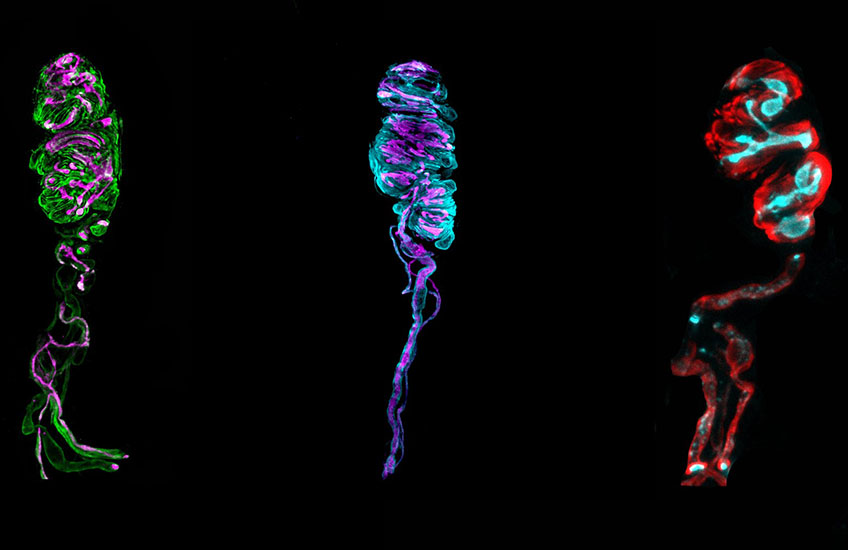
For the past two decades, Ginty and his lab have built an extensive genetic toolkit in mouse models that they have used to identify, isolate, and study more than a dozen different types of touch neurons throughout the body.
With this approach, Ginty and his team have characterized neural pathways that convey light touch and vibrations and relay painful and pleasant sensations from the skin to the brain.
Ginty also established the pivotal role of the spinal cord and brainstem in processing touch signals as they move to higher-order brain regions.
This research has revealed how the brain and spinal cord integrate signals from different types of touch neurons located in the same area of skin and how complex features of touch arise as signals travel from the body to the brain.
More recently, Ginty and his lab have applied their genetic tools to studying neurodevelopmental conditions such as autism, which often involve touch dysfunction. The team discovered that mutations in autism-related genes can alter the function of touch neurons in mice, leading to overreactivity. They then lessened the overreactivity by giving the mice a molecule that reduces neural signaling — hinting at a potential new avenue for therapy.
Ginty is also exploring the touch pathways that go awry in people with chronic pain.
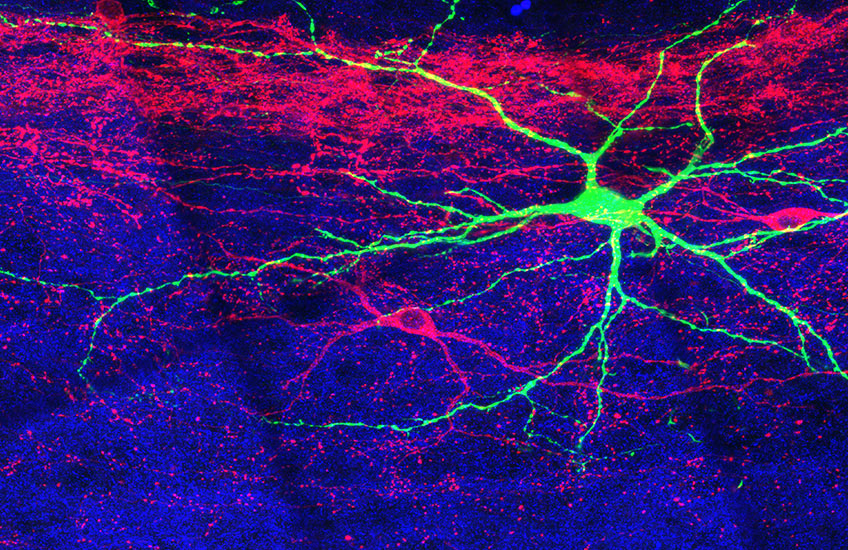
“I’m fascinated by the neurobiology underlying our sense of touch and how we interact with the world. I want to understand how this system works, how it develops, and what happens to cause disorders such as touch hypersensitivity or chronic pain,” Ginty said, adding that combining genetics with a broad range of other techniques “has proven to be alchemy, allowing us to unravel decades-old, if not centuries-old, mysteries of [touch].”
The path to HMS
Ginty earned a bachelor’s degree in biology from Mount St. Mary’s College (now University) and completed his PhD in physiology at East Carolina University. He started his postdoctoral work at Dana-Farber Cancer Institute, later moving to the Greenberg Lab at HMS. Ginty then became an assistant professor at Johns Hopkins University School of Medicine before returning to the neurobiology department at HMS in 2013. In 2022, Ginty became the department chair. In 2025, Ginty was named co-director of the new K. Lisa Yang Brain Body Center at HMS.
Ginty is an investigator of the Howard Hughes Medical Institute and a member of the American Academy of Arts and Sciences and the National Academy of Medicine. He has received numerous awards, including a Klingenstein Award, a Pew Biomedical Scholar Award, and a Jacob Javits Neuroscience Investigator Award from the National Institutes of Health.
The Lundbeck Foundation has awarded The Brain Prize annually since 2011. Winners are selected by a committee of nine leading neuroscientists from around the world who have expertise in diverse neuroscience disciplines.
Adapted from Lundbeck Foundation press materials.