
Experimental Foundations and Therapeutic Innovation
Student Perspective | February 5, 2026
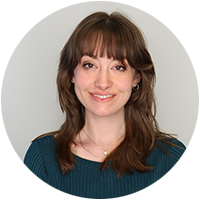
For Sophia Schroeder, the path into therapeutic sciences has been shaped by curiosity, technical rigor, and a strong sense of responsibility to patients. A member of the inaugural cohort of the Master of Medical Sciences in Therapeutic Sciences program at Harvard Medical School, Schroeder entered the program with hands-on research experience and a clear interest in contributing to the future of drug development.
Schroeder earned her bachelor’s degree in biology with a concentration in neuroscience from Colby College. As an undergraduate, she pursued a thesis using CRISPR-Cas9 to investigate an evolutionarily conserved pathway in Lepidoptera, an experience that deepened her interest in molecular biology and experimental design.
After graduating, Schroeder spent two years as a laboratory technician at Dana-Farber Cancer Institute, working in a lab focused on blood cancers and oncology-related clinical trials. Her work included projects related to CAR T-cell therapies, as well as a spatial transcriptomics study examining changes in the bone marrow microenvironment across different stages of multiple myeloma. Through this role, she gained exposure to experimental workflows tied directly to drug development and clinical research, while also developing the interpersonal and organizational skills that keep large research labs running smoothly.
While the experience was formative, it also clarified what she wanted next. As a technician, Schroeder was involved in many aspects of lab operations, from experimental execution to maintenance and coordination, but she wanted greater ownership over the scientific process. Returning to an academic setting allowed her to step back and think more holistically. “Now, I’m able to design an experiment from start to finish and see the full scientific process through,” she explains. Having experienced both perspectives, she sees value in each, and believes that the combination has strengthened her foundation as a scientist.
Schroeder learned about the Therapeutic Sciences program through mutual friends and was immediately drawn to its structure and scope. She was attracted to the program’s breadth, its emphasis on pharmaceutical innovation, and the inclusion of a thesis component. “I wanted a challenging environment that would give me a strong foundation across the entire world of pharmaceutical development,” she says. Just as importantly, the program’s patient-centered philosophy resonated with her. “There’s a real understanding here that people are counting on this research, and that it’s our responsibility to identify unmet needs and put patients first.”
Now a first-year student in the Class of 2027, Schroeder describes the academic experience as demanding, immersive, and energizing. Coursework emphasizes critical thinking and real-world application, pushing students to understand not only emerging technologies but also the broader systems that govern how therapies are developed, tested, priced, and distributed. During the January term, she enrolled in an intensive translational pharmacology course that traced the life cycle of a drug from early discovery through clinical trials, regulatory oversight, and global distribution. “It was a lot of information,” she says, “but it was incredibly engaging; it made everything feel connected.”
Schroeder is currently developing her thesis project in the lab of Xin Zhou, PhD, at Dana-Farber Cancer Institute. The lab focuses on spatial biology, and her project centers on understanding and overcoming T cell exhaustion in solid tumors. By studying the degradation of PD-1 in T cells and the interactions between tumor cells and immune receptors, her work aims to inform strategies for improving the effectiveness of immunotherapy. While the project is still being finalized, Schroeder has been immersed in planning and preparation since early in the program. “I really enjoy being in the Zhou Lab,” she says. “I feel like I fit right in.”
Mentorship has been a defining feature of Schroeder’s experience. She speaks highly of the accessibility and investment of both faculty and lab mentors, noting that instructors consistently make time to understand students’ backgrounds, skill sets, and goals. In lab settings, intentional pairing and collaborative structures have allowed students to learn from one another while building confidence in new techniques. “I’ve never felt hesitant to ask for help,” she says. “It feels like the professors want to see us succeed.”
Equally impactful has been the cohort itself. Despite coming from diverse academic and professional backgrounds—including recent graduates and students with industry experience—Schroeder says the group has formed a close, supportive community. “I expected to make friends,” she reflects, “but I didn’t expect that they’d become some of my closest ones.” Collaborating in and outside the lab, attending events together, and learning from one another’s perspectives has been central to her experience in the program.
Looking ahead, Schroeder remains focused on entering the biotech industry after graduation, particularly in research and development. She is especially interested in wet lab work, process development, and strategies for maximizing drug production and access. At the same time, she values the flexibility that the program offers and remains open to other possibilities. “Very few people really know exactly what they want to do,” she notes. “This program gives you the space to have a direction, while still being open to where opportunities might lead.”
For prospective students, Schroeder’s advice centers on confidence and initiative. She encourages students to embrace leadership, speak up, and trust their ideas, even when uncertainty is part of the process. “Don’t be afraid to put yourself out there,” she says. “This field needs people willing to take the first step, share ideas, and work together. At the end of the day, the only way we succeed is if we do so collectively.”
Written by Bailey Merlin