
Advancing Drug Discovery Through Purpose, Precision, and Collaboration
Student Perspective | January 11, 2026
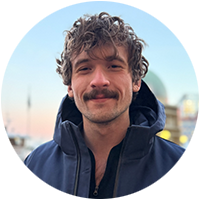
When Nick Foley joined the inaugural cohort of Harvard Medical School’s Master of Medical Sciences in Therapeutic Sciences program, he was seeking rigorous scientific training and mentorship to prepare him for a future at the intersection of medicine, research, and therapeutic innovation. With aspirations to pursue a joint MD/PhD and eventually lead scientific programs in the biotech industry, Foley saw the new Therapeutic Sciences program as a strategic next step.
His path into therapeutic science began earlier than most. After entering Drexel University expecting to pursue physical therapy, Foley quickly discovered a deeper interest in medicine and research. At the same time, he took up rowing—an unexpected decision that grew into a defining part of his collegiate career. Training multiple times a day while exploring academic interests, he learned discipline and teamwork, qualities that now shape his approach to scientific inquiry.
During his undergraduate research experience, Foley worked in the laboratory of Dr. Alexej Dick, where he contributed to projects characterizing HIV capsid modulators using screening assays and X-ray crystallography. This work earned him a co-authorship in the Journal of Medicinal Chemistry and led to a senior thesis centered on a potential new target for reversing HIV latency, which is currently under review as a co-first-author publication.
Because competitive MD/PhD programs require exceptional preparation, Foley sought a graduate environment that would provide advanced training in pharmacology, drug development, and translational research. The Therapeutic Sciences program, with its direct connections to industry-experienced faculty and its focus on the full therapeutic pipeline, offered exactly what he was seeking.
A major draw for Foley was the opportunity to learn under program director Mark Namchuk, PhD, whose decades of leadership in therapeutic development, including work at Vertex Pharmaceuticals, bring real-world context to the classroom. “One of the best goals in life is to have someone advising you who has been down your path,” Foley says. “These topics are complex, but the faculty is just so knowledgeable that they can make them understandable for the students.”
A hallmark of the Therapeutic Sciences program is its diverse inaugural cohort. With only 15 students, the group includes recent graduates, industry professionals, government leaders, and aspiring physician-scientists. Foley describes this diversity as central to the program’s strength. “Our cohort is small, but it’s incredibly diverse,” he reflects. “They’re already really good friends of mine just six months later.”
The collaborative nature of the curriculum mirrors the interdisciplinary environment in which therapeutic discovery takes place. Frequent small-group assignments and lab-based coursework allow students to learn from one another while developing practical skills. “Drug discovery is team oriented,” Foley says. “The program has ingrained that into us from the very beginning.”
Research is also central to the Therapeutic Sciences experience. Students complete multiple lab rotations before selecting a thesis project. Foley began his first rotation in the laboratory of Stephen C. Blacklow, MD, PhD, . What was expected to be a short observational rotation quickly became more immersive, with Foley taking on two active projects. “Science is unpredictable, but one of my rotation projects has real potential to become a high-impact paper over these two years,” he says.
As Foley prepares for the MCAT and the MD/PhD application process, he remains motivated by his long-term goal of leading therapeutic development efforts in biotech. He hopes to bring the clinical insight and scientific rigor he is building in the Therapeutic Sciences program to bear on his next project.
For prospective students, he offers simple but meaningful advice: “If you treat learning like a game, it doesn’t feel like work, and you can work a long, long time.” This mindset reflects not only his approach to graduate school, but also the philosophy he brings to both science and rowing.
Whether in the lab or on the river, Foley has learned that collaboration and persistence drive measurable progress. “You can’t do this alone,” he says. “If I’ve learned anything from rowing, it’s that you have to blend and meld with the people around you to get as far as you want to go.”
Written by Bailey Merlin