
Exploring Women’s Health Through Scientific Inquiry and Clinical Ambition
Student Perspective | January 9, 2026
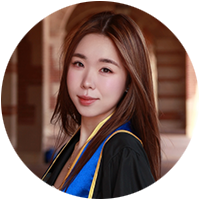
For Emilie Zhang, a first-year student in the Master of Medical Sciences in Therapeutic Sciences program, the journey toward a future in medicine has always been shaped by curiosity—about how the body works, how biological systems communicate, and how scientific discovery can inform better health outcomes for women.
Raised in Shanghai and educated at the University of California, Los Angeles, Zhang earned a bachelor’s degree in molecular, cellular, and developmental biology. During her undergraduate training, she found herself drawn more deeply into research while also developing a stronger interest in applying scientific insight to patient care.
“I enjoyed the aspect of being able to immerse myself in research and dedicate a whole day to going to the lab,” she says. But as Zhang gained clinical exposure through shadowing and volunteering, she realized that pursuing an MD was the right next step. The Therapeutic Sciences program became a natural bridge: a way to strengthen her research training, explore new scientific areas, and prepare for the competitiveness and intellectual rigor of medical school applications.
As an undergraduate researcher, Zhang worked in a neurophysiology lab studying estrogen signaling along the vagus nerve. Her work involved virus tracing of estrogen receptor alpha expression, sparking her interest in how hormonal regulation shapes feeding behavior and menstrual physiology. This early focus on estrogen pathways motivated her growing passion for women’s health research, a theme she hopes to deepen during her time at Harvard Medical School.
“I’m very interested in investigating women’s health,” Zhang explains. “That was something I communicated to the Therapeutic Sciences program faculty early on, and they’ve been really helpful in guiding me toward labs aligned with those interests.
Her first rotation centered on ovarian cancer research, while her current rotation focuses on endometriosis—two areas that reflect the program’s strength in connecting students with labs conducting high-impact research. Zhang’s thesis research will focus on characterizing marker found on endometriosis lesions. “I’m excited about that direction,” she says.
For Zhang, the Therapeutic Sciences program also offers the immersive research environment that she hadn’t fully experienced in college—it provides time, structure, and mentorship tailored to early-stage researchers preparing for advanced degrees.
“Gaining research skills equips aspiring MDs with the critical thinking, independence, and problem-solving mindset needed to approach medical challenges thoughtfully,” she says. “Research is also key during medical school interviews, where applicants must discuss their motivation, challenges, and impact. Being able to talk through something you initiated and worked on makes you a stronger candidate.”
One of the most surprising aspects for Zhang has been the depth and intensity of the coursework. “The amount of biochemistry we’re exposed to is significant,” she says, “and this rigor is intentional.” Because students may pursue industry, research, or further graduate education, the program prioritizes foundational scientific training as well as insight into how therapeutic development works from start to finish.
“If you’re interested in how industry works and what it takes to develop a drug from the beginning, this is the place,” Zhang says. She has already seen how coursework strengthens her ability to communicate with faculty mentors. “I remember talking with my PI, and he used a lot of terms I had learned in class. I realized, ‘This class is really prepping us for the right stuff.’”
Zhang also appreciates how the inaugural cohort’s wide range of academic, professional, and cultural backgrounds has enriched her experience. “Each person shines in their own way. We’re able to help each other out, and we hang out a lot outside of class.” The collaborative nature of the program reflects the environments students will enter in future careers, and Zhang sees these relationships as the beginning of long-term professional connections.
As she completes her first year, Zhang is preparing for the next phase of her academic journey: medical school applications. She hopes to continue researching women’s health while developing the clinical skills needed to care for patients whose health concerns have historically been understudied or overlooked.
For students considering the Therapeutic Sciences program, Zhang offers direct advice: “Know your amino acids. You’ll get tested on them,” she says with a laugh. More importantly, she encourages incoming students to remain open and adaptable. “Don’t limit yourself with expectations. Be willing to embrace everything the program offers.”
Reflecting on her own experience—from neurophysiology research to rotations in ovarian cancer and endometriosis labs—Zhang sees the Therapeutic Sciences program as a pivotal step toward becoming a physician who brings research insight to patient care. “This program is comprehensive and ambitious,” she says. “It’s giving me the foundation I need to take the next step.”
Written by Bailey Merlin