
From Challenge to Change in Health Care Quality and Safety
Student Perspective | January 8, 2026
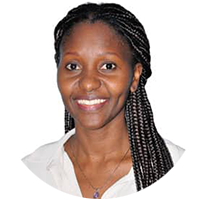
Growing up in Tanzania, Vivienne Mlawi, MD, always assumed that she would follow a familiar path. Her father was a lawyer, and from an early age, she imagined herself doing the same. She vividly remembers the day he passed his bar exam while she was still in primary school. “I told myself that one day, that would be me,” she recalls. But Mlawi’s path would ultimately lead her somewhere very different.
Throughout her early schooling, science did not come easily. Chemistry and physics were particularly challenging, often requiring long nights of studying just to pass. At one point, Mlawi promised herself she would leave science behind as soon as possible. That resolve seemed confirmed during her third year of secondary school, when she asked her chemistry teacher whether she could see Mlawi pursuing a career in science. The response was blunt: no—she was better suited for the arts.
At first, Mlawi accepted the advice. But after reflecting on the comment, she realized that it wasn’t guidance she wanted to live by. “I didn’t think she believed I was capable,” she says. “That’s when I decided to challenge myself—to see if I could not only become proficient in science, but actually enjoy it.” If it didn’t work, she reasoned, law would always be there.
From that moment on, Mlawi leaned into science. She enrolled in more science courses, studied relentlessly, and graduated with top marks. When she entered college in Tanzania, her interests solidified further—and she made the decision to pursue medicine. What she found there surprised her. “I loved everything about it,” she says, “the challenge, the responsibility, and the constant learning.”
As she progressed through medical school and internships, Mlawi initially gravitated toward surgery and anesthesia. Pediatrics, by contrast, held little appeal. She actively tried to avoid it whenever possible. But once she began working as a general doctor in a cardiac center—rotating through different departments—her perspective began to shift.
During her ICU rotations, Mlawi discovered a deep sense of purpose caring for critically ill patients with cardiac conditions. At first, most of those patients were adults. Over time, however, more children began to be admitted to the cardiac intensive care unit. Seeing those children recover and eventually leave the ICU had a profound impact. “When they go home and you see them improve, it’s incredibly rewarding,” she says. “They still have so much life ahead of them.”
That experience ultimately led Mlawi to pursue a fellowship in pediatric critical care at Wolfson Medical Center in Holon, Israel. After completing additional observerships in Colorado and Italy, she returned to Tanzania—this time as an intensivist and head of the cardiac critical care unit. She also became the first female intensivist in the country.
Stepping into a leadership role brought new responsibilities—and new realizations. Early in her career, high mortality rates in the ICU had felt inevitable. “When patients came in very sick, it became the norm that many wouldn’t make it,” she explains. But exposure to health systems in other countries showed her that outcomes could be different. “I realized there was more we could do—not just to treat patients, but to help them truly recover.”
Determined to make meaningful change, Mlawi began searching for a graduate program that would equip her with practical tools to improve care delivery. While she initially considered a research-focused degree, she ultimately found what she was looking for in Harvard Medical School’s Master of Science in Healthcare Quality and Safety program.
In Tanzania, quality and safety initiatives are often managed at the ministry level, and Mlawi knew that stepping away from her clinical role for an extended period was not feasible. The program’s online format made it possible to pursue advanced training without leaving her position. “Once I looked at the curriculum, I knew this was exactly what I needed,” she says. “There’s research involved, but it’s not just writing a paper. You’re developing ideas and actually applying them in practice.”
Encouraged by her hospital leadership—and by a colleague who had previously completed a certificate program at Harvard Medical School—Mlawi applied, submitting her materials just before the deadline while on a mission in Libya. She didn’t expect to be accepted. “But I’m always up for a challenge,” she says. “I applied anyway.”
From the start of the program, Mlawi was energized by the coursework. One experience in particular stood out: the Safety Intensive. “I knew I had a lot to learn, but I didn’t realize how big the field of quality and safety really is,” she says. “For the first three months, it felt like every day I was learning something new—and immediately bringing it back to my unit.”
A class project proved especially eye-opening. It challenged assumptions about problem-solving in clinical environments. “We think we know what the problem is and how to fix it,” she explains. “Then you realize—this wasn’t the problem at all.”
As her leadership responsibilities expanded, Mlawi also found herself navigating areas she hadn’t previously considered, including hospital finance. Through the program, she gained a new appreciation for understanding financial processes—even if she wasn’t directly managing them. That knowledge led to her appointment as chairperson of a hospital-wide price-review task force, the first major pricing overhaul since the hospital opened in 2015.
For her capstone project, Mlawi focused on improving communication during shift changes in the pediatric cardiac ICU. With a small team that included early-career physicians, a pediatrician without ICU specialization, and Mlawi as the sole intensivist, handovers were a consistent challenge. Important details were sometimes missed, particularly during overnight transitions.
Mlawi developed a structured communication system, including a curriculum for nurses and standardized handover documentation. While she initially envisioned a digital solution, limited infrastructure led her to design a paper-based system that better suited the unit’s needs. “Now, communication across the team is so much better,” she says. “It’s not perfect, but I sleep through the night. I don’t get as many phone calls because everything is written down.”
Each month, Mlawi analyzes the handover data to assess performance and identify opportunities for improvement. Patient information no longer gets lost between shifts, and care continuity has significantly improved.
Balancing work, school, and family required discipline. “I had to protect my time,” she says. During her first year, Mlawi adjusted her workday around class sessions, even stepping away for several hours to attend lectures. In her second year, as ICU demands increased and staffing changed, she shifted her schedule again—this time setting firm boundaries at home to ensure uninterrupted class time.
Since graduating in May 2025, Mlawi has taken on an expanding portfolio of quality and safety initiatives, including efforts to reduce ventilator-associated surgical infections. What began as ICU-based improvements soon extended across departments, requiring collaboration with surgeons and hospital leadership. Today, surgical infections have become rare. “It’s not as common as it used to be,” she says.
In recognition of her leadership, Mlawi has been appointed chairperson of the hospital’s Quality Audit Committee—a role she sees as an opportunity to drive even broader system-level change.
Looking ahead, she plans to continue building experience within the hospital before eventually moving into a broader leadership role beyond clinical care. For prospective students considering the program, her advice is simple: “It’s a great program. Don’t think twice about it. Definitely go for it.”
For Vivienne Mlawi, the Master of Science in Healthcare Quality and Safety program was not just an academic experience—it was a catalyst for lasting change, both within her ICU and across her health system.
Written by Lauren Young