
Ensuring Safer Health Care by Seeing the Whole System
Student Perspective | August 25, 2026
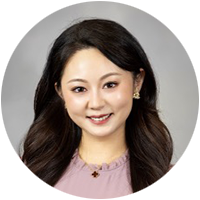
When Allison Zhao thinks about a hospital, she sees more than individual clinicians, departments, and procedures. She sees a system: people interacting with processes, technology, data, organizational culture, and one another. That perspective is shaped by years of working in health care quality and operations, but it is also rooted in an unconventional pathway into the field.
A senior quality consultant at Stanford Health Care in California, Zhao supports quality improvement, patient safety, and operational initiatives across procedural and perioperative services. Unlike many of her colleagues in health care quality, however, she did not begin her career as a clinician. Her background is in communication, sociology, health equity, and understanding how people interact with complex systems.
“I’ve always been fascinated by human behavior, organizational culture, and what helps people succeed within a complex environment,” she says.
One of the experiences that profoundly affected her understanding of health care came when she became chief of administration at the San Francisco Surgery Center on the first day of California’s COVID-19 shelter-in-place order. Instead of easing into a new leadership role, Zhao found herself helping an organization navigate one of the most disruptive periods in modern health care.
“That experience gave me a firsthand view of how leadership, communication, patient safety, and system resilience are critical during a time of uncertainty,” she recalls.
It also changed how she views the environments where health care happens. Zhao describes perioperative services as a “small society,” one in which surgeons, nurses, anesthesiologists, technicians, administrators, and other professionals operate within a tightly interconnected system. The safety of patients depends not simply on each individual doing their job well, but on how effectively the entire system functions around them.
Years later, that question—how to make the system itself safer—would bring Zhao to the Master of Science in Healthcare Quality and Safety program at Harvard Medical School.
Already established in her career at Stanford Health Care, Zhao was not looking to leave her work behind to pursue graduate education. She wanted a program that would allow her to deepen her expertise while continuing to lead quality improvement in practice. The part-time option made that possible.
While living in California sometimes means starting class at four or five in the morning, the ability to remain professionally active has become one of the most valuable aspects of the experience for Zhao. Rather than separating graduate school from her career, she has been able to move seamlessly between them.
“Every week, I am able to take the concepts from class and immediately apply them at Stanford,” Zhao says. “It creates a powerful feedback loop where my work informs my learning, and my learning informs my work.”
The problems that Zhao encounters at work become material for classroom discussion. A concept introduced during class can influence how she approaches a meeting, analyzes an issue, or considers a quality improvement initiative days later. “In many ways,” she explains, “the program has become an extension of my work rather than something separate from it.”
In quality and safety work, it can be tempting to focus on the most visible part of a problem: an adverse event, an unexpected outcome, or an individual decision. However, Zhao says the program has pushed her to ask a different set of questions: What conditions allowed this to happen? What is the root cause? What are the interactions between people, process, technology, and culture? What is the system designed to produce?
That shift toward systems thinking has been one of the most important developments in her education, along with learning to think proactively about patient safety. Rather than waiting for harm to occur and then determining what went wrong, Zhao is focused on identifying weaknesses before they reach a patient. That interest is shaping her proposed capstone project, which focuses on near-miss reporting and organizational learning from safety events.
A near miss occurs when something goes wrong within a health care system but is caught before it causes harm. Because no patient is ultimately injured, such events can receive less attention than adverse events. Zhao sees them as opportunities to understand where a system is vulnerable before the consequences become more serious.
Her project would explore how organizations can strengthen near-miss reporting, identify patterns, and turn those reports into opportunities for learning. “What fascinates me is that the challenge is not simply collecting data,” Zhao says. “It’s understanding the culture, the psychological safety, why people don’t want to speak up, the communication, and how people perceive the reporting.”
For Zhao, that insight connects directly to another major area of growth during the program: leadership.
“One thing that has surprised me is realizing that quality and safety work is often less about the technical issue or solution and more about bringing people together around a common goal,” she says. “You can have a perfect process design, but if the people don’t trust each other, don’t understand the common goal, or don’t feel engaged, the system change will be very difficult.”
While Zhao’s coursework has helped her think more intentionally about influence, stakeholder engagement, organizational culture, and change management, it also has pushed her beyond the qualitative strengths that initially brought her into health care.
Data, in particular, once sat outside Zhao’s comfort zone. Through the program, she has become more confident interpreting data, questioning what it shows, and using evidence to support decisions. Rather than seeing quantitative analysis and human experience as competing ways of understanding health care, Zhao now sees them as complementary.
“Data tells us stories,” she says. “It helps us understand the variations and identify the opportunities.” Her goal is to influence how health care organizations approach quality and safety by combining evidence, human-centered design, and organizational culture to drive lasting system-wide change.
That same combination of perspectives is reflected in Zhao’s cohort. Her classmates include physicians, nurses, pharmacists, researchers, quality leaders, and other professionals working across different countries and health systems.
Zhao expected their challenges to be substantially different. Instead, she has been struck by how often the same questions appear across institutions and borders. “How do we make care safer? How do we lead change? How do we improve outcomes with limited resources?” she asks.
The answers, however, are rarely identical. Someone working in another country, profession, or type of health care organization may approach a familiar problem in a way Zhao had never considered. “That diversity of thought really pushed me to become a better listener and a more creative problem solver,” she notes.
That environment also affirmed the value of Zhao’s own nonclinical background. In a classroom filled with clinicians and health care leaders, her experience in communication, sociology, and operations gives her another way of understanding why systems function as they do. “One of the lessons I’ve taken from the program is that improving health care requires a combination of clinical expertise, operational insight, systems thinking, leadership, and an understanding of human behavior,” she says.
Less focused on reaching a particular title than on gaining the ability to influence health care systems on a larger scale, she envisions work that connects quality, safety, operations, strategy, and organizational transformation, while keeping patients and frontline care teams at the center. “I hope to be in a role where I can impact health care strategy across the continuum of care service lines or even the entire health system,” she says.
For prospective students, especially those without traditional clinical backgrounds, Zhao has a simple piece of advice: do not count yourself out. “When I was applying, there were moments when I wondered if I would fit into a program centered around health care quality and safety,” she says. “If you’re passionate about improving health care, your perspective has value,” she says.
Zhao also encourages students who remain professionally active during the program to apply their new skills immediately. “Don’t wait until you learn everything,” she advises. “This program will allow you to take what you learn on Friday and apply that work on Monday.”
Written by Bailey Merlin