When Alison Farrar was in high school in southern California, she volunteered at a local hospital’s neonatal intensive care unit. In the tiny babies, she saw reflections of herself.
“When I was born, I was really sick,” Farrar said. She had been born two months prematurely, after her mother developed sepsis. “So I had this connection with the patients that we were serving.”
The East Los Angeles hospital took care of many disadvantaged families. And as Farrar held the babies and talked with the parents, she saw how some families were struggling to make ends meet, and some babies’ difficulties didn’t end with being premature.
“We took care of a lot of babies waiting to go into the foster care system,” said Farrar, who is graduating from Harvard Medical School with an MD this month. “A lot of it was holding the babies and talking with the families. I got to practice my Spanish and support people going through that emotionally difficult time. I felt that was special work.”
That special work launched Farrar onto a path that led to Alabama, Boston, Oxford, and back. Along the way, she hasn’t wavered in her vision of using medicine to help others, but has taken a broad view, one that embraces physics and math and saw her contributing to research into drug resistance while manning an overnight crisis hotline. She plans to pursue a career in psychiatry, with a particular interest in exploring wearable devices and other technology to help patients in need.
A foundation in research
Her early hospital experience helped Farrar see the importance of technology. She had heard how risky her own entry into the world was and how decades earlier it would have been unlikely that she survived.
“I saw how technology had the ability to make a difference. Babies who wouldn’t have survived 20 years ago, we were sending home,” Farrar said. “I realized this was something I really wanted to contribute to.”
Farrar attended the University of Alabama to study physics and mathematics, hoping to apply those skills in medical research. She volunteered at a free clinic, running the diagnostic lab there, where she tested blood and urine samples and even drew blood herself, perfecting the art of relaxing people while standing with a needle in her hand.

As with the urban population she had seen in East LA, most of the Alabama patients were underinsured, and Farrar could see the struggles common between the two groups, even though their daily circumstances were at times starkly different.
“One patient was late for his appointment because his horse was sick. He’d been planning to ride his horse and had trouble getting another ride,” Farrar said. “Things were very different, but it still reinforced the same passion about how to use technology to improve care for people who are underserved.”
Farrar was accepted into the Harvard-MIT Program in Health Sciences and Technology, and in 2018 arrived on campus for her first two years of study.
Revisiting Her White Coat Ceremony
Farrar looks back on her first week at HMS, when she and her classmates received their white coats and recognized those who helped them along their journey.
Video: Jessica Kisluk
When the time came to choose her PhD program, however, she chose to study at Oxford University, where, from 2020 to 2024, she earned a DPhil in interdisciplinary bioscience. Much of her doctoral work was conducted during the COVID-19 pandemic, which added to the challenge.
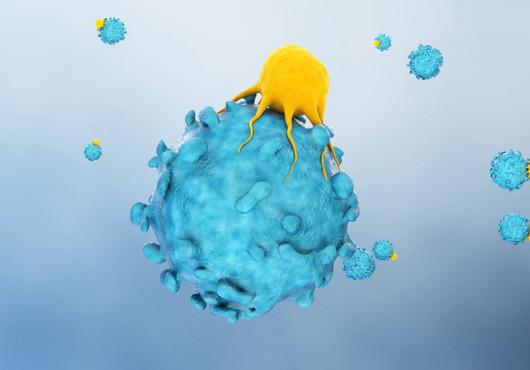
At Oxford, she worked in the lab of biophysicist Achilles Kapanidis. Among other projects, Farrar worked to develop a rapid test for antibiotic resistance that used cellular ribosomes, tiny protein factories inside the cell.
Earlier work had shown that ribosomes shift within a cell after exposure to antibiotics. Farrar and colleagues first made the ribosomes fluorescent and then exposed the cells to antibiotics, which shifted the ribosomes in a predictable way. The patterns were evaluated using an AI deep-learning algorithm.
Published in Communications Biology in 2025, the study, with Farrar as first author, showed that the process was highly sensitive: 99 percent effective at detecting drug resistance in E. coli strains after examining just two cells. That finding, researchers wrote, had the potential to dramatically decrease processing time — from days to as little as 30 minutes — by eliminating the need to culture cells to have enough for analysis.
Farrar’s varied academic background — blending math, physics, and her medical training at HMS — gave her a unique, multidisciplinary perspective among the team, Kapanidis said.
Helping those in crisis
Farrar didn’t forget about the people experiencing challenges in their lives. She coordinated the Oxford Nightline, an overnight hotline staffed seven days a week for people in crisis. And there were plenty, she said, with the pandemic taking its toll on mental health, on campus and beyond.
The work encouraged her budding interest in psychiatry — something that had started while she was working with families of premature infants in Los Angeles. She found meaning in being able to help people through moments of crisis.
After earning her DPhil, Farrar returned to HMS for her last two years of medical school.
That time was dominated by the clinical rotations that expose students to different medical specialties. Key clerkships for Farrar were at McLean Hospital’s psychosis unit, on Beth Israel Deaconess Medical Center’s consult psychiatry team, and, in the months leading up to Commencement, in Massachusetts General Hospital’s emergency psychiatry unit.
After graduation, Farrar will enter the psychiatry residency research track at Beth Israel Deaconess. She is looking forward to beginning her career as a doctor and continuing her training in both clinical care and research.
“I definitely want to continue doing a mix of research and treating patients,” Farrar said. “I’m really looking forward to the next chapter and seeing where my clinical experiences and interests lead me.”
Adapted from an article in the Harvard Gazette.
Answering the Call to Improve Health
Celebrating the accomplishments of the Class of 2026