Michael J. Davidson, HMS assistant professor of surgery, is remembered as a visionary cardiac surgeon, loving husband and father by colleagues at Brigham and Women’s Hospital.
President Barack Obama made few references to health care during his State of the Union address, but one topic in the spotlight was what he referred to as “precision medicine,” a way of approaching diseases in a highly individualized way by using patient DNA to predict how one might respond to specific treatments. Scott Weiss, professor of medicine at Brigham and Women’s Hospital, is quoted.
Americans are still waging a war on sleep, and we are, alas, still winning. Researchers recently studied our sleep patterns over time and concluded that we now sleep between one and two hours less than we did 60 years ago. Charles Czeisler, Frank Baldino, Jr., Ph.D. Professor of Sleep Medicine at Brigham and Women’s Hospital, is quoted.
Seth Berkowitz, instructor in medicine at Massachusetts General Hospital, coauthored this blog post about nutrition as a cornerstone of health improvement.
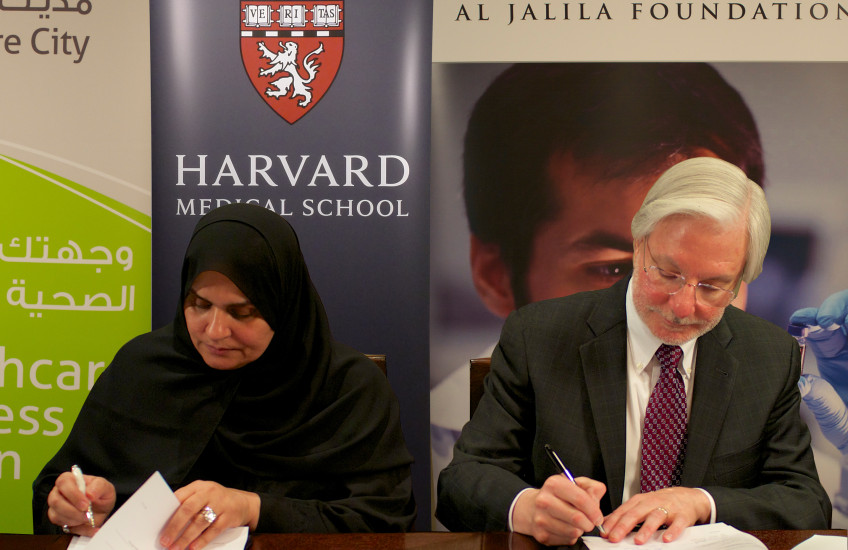
Medical research in the UAE and beyond is expected to progress within the next four years through a collaboration between a foundation established 11 years ago and the world’s premier medical research institute based in the U.S. The Harvard Medical School for Global Health Delivery-Dubai was formally launched at its headquarters, the Mohammed Bin Rashid Academic Medical Centre in Dubai Healthcare City on Tuesday morning. Salmaan Keshavjee, associate professor of global health and social medicine, is quoted. David Golan, dean for basic science and graduate education and professor of biological chemistry and molecular pharmacology; Ajay Singh, associate dean for global health education and associate professor of medicine at Brigham and Women’s Hospital; and Jennifer Puccetti, director of administration in the Department of Global Health and Social Medicine, are mentioned.
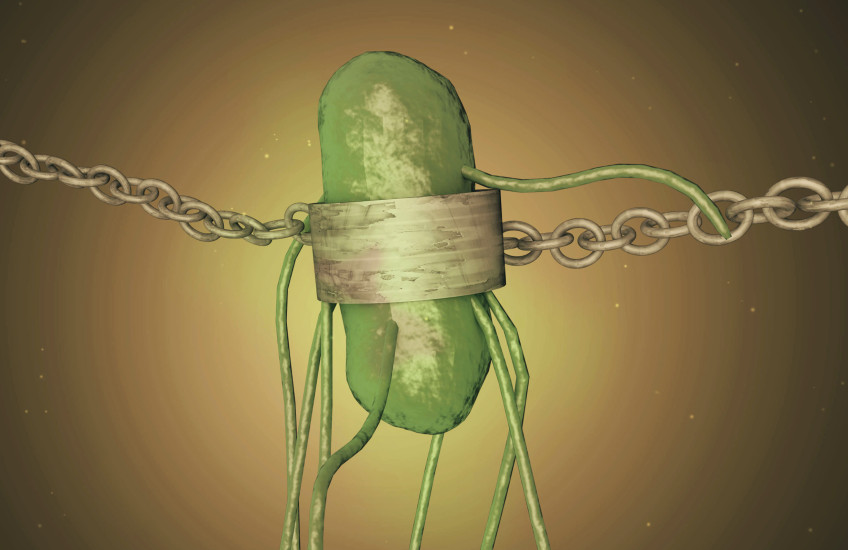
Could genetically modified bacteria escape from a laboratory or fermentation tank and cause disease or ecological destruction? This is not known to have occurred. But two groups of scientists reported on Wednesday that they had developed a complex technique to prevent it from happening. The scientists have given a common type of bacterium a unique genetic code that makes it dependent for survival on unnatural amino acids that must be fed to it. If such organisms escaped into the wild, where those amino acids are not available, they would die. George Church, Robert Winthrop Professor of Genetics, leads one of the research teams.
A large study that tracked thousands of nurses over decades suggests many years of night-shift work may raise a woman’s risk of dying from heart disease or certain cancers. Eva Schernhammer, associate professor of medicine at Brigham and Women’s Hospital, is the study’s senior author.
A Brigham and Women’s Hospital doctor was shot twice, and his alleged attacker later shot himself to death, in what Boston Police Commissioner William B. Evans said appeared to have been a targeted attack Tuesday morning in the Carl J. and Ruth Shapiro Cardiovascular Center.