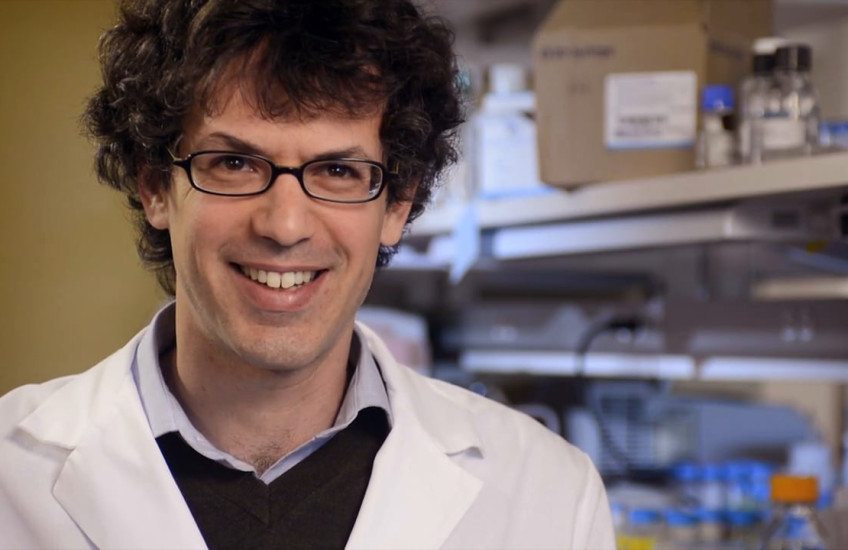
Sara Lazar, assistant professor of psychology at Massachusetts General Hospital, participated in an interview about the benefits of meditation and mindfulness.
No one knows what actually causes Alzheimer’s, but the suspects are its two hallmarks — the gunky amyloid in those brain plaques or tangles of a protein named tau that clog dying brain cells. New imaging can spot those tangles in living brains, providing a chance to finally better understand what triggers dementia. Now researchers are adding tau brain scans to an ambitious study that’s testing if an experimental drug might help healthy but at-risk people stave off Alzheimer’s. Reisa Sperling, professor of neurology at Brigham and Women’s Hospital, is the lead researcher.
Alcohol, at least in moderation, can help the heart, but too much can be toxic. The latest study tells you where to draw the line. Scott Solomon, professor of medicine at Brigham and Women’s Hospital, led the study.
If you’re going gluten-free, vegan or dairy-free simply to drop a few pounds, rather than for a health condition like celiac disease, it’s wise to talk with your doctor first. Robert Shmerling, associate professor of medicine at Beth Israel Deaconess Medical Center, is quoted.
More than 100 bombing survivors suffered an ear injury or hearing loss. Many are taking part in a 3-year study at the Massachusetts Eye and Ear. Alicia Quesnel, instructor in otology and laryngology at Massachusetts Eye and Ear, is the study’s lead researcher.
Summer is a big season for kidney stones. Doctors say more people suffer the condition when the weather is hot and dry and people become dehydrated. Gary Curhan, professor of medicine at Brigham and Women’s Hospital, is quoted.
Hospitals are trying new early-warning systems to monitor patients for subtle but dangerous signs of a worsening condition. David Westfall Bates, professor of medicine at Brigham and Women’s Hospital, is quoted.
Experts say many people are developing seasonal allergies for the first time well into their adulthood. Part of the reason may be that we’re having more intense allergy seasons. Aidan Long, associate professor of medicine at Massachusetts General Hospital, is quoted.
Paul Farmer, Kolokotrones University Professor of Global Health and Social Medicine and head of the Department of Global Health and Social Medicine, authored this article about the impact of weak or absent health systems and disparities in access to care on Ebola outcomes.