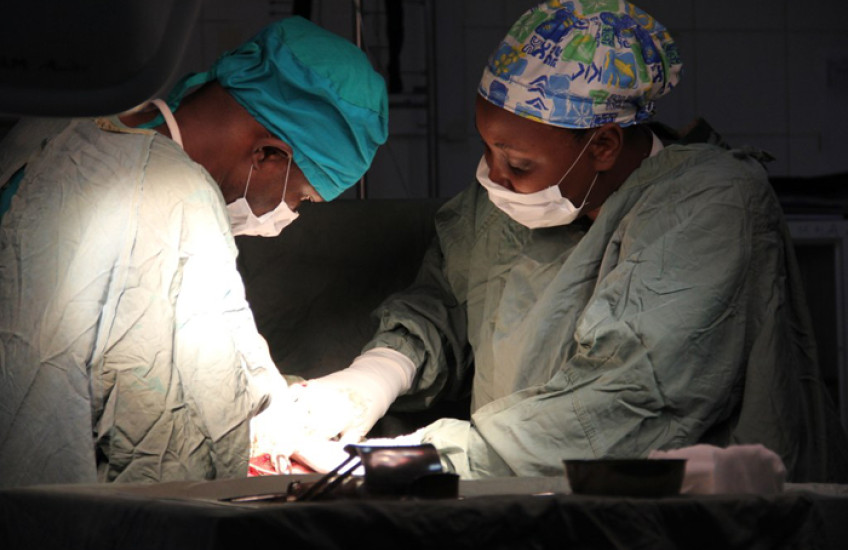
Five billion people worldwide do not have access to safe surgery and anesthesia, more than double previous estimates, resulting in more deaths than malaria, AIDS and tuberculosis combined, according to a new report. John Meara, Steven C. and Carmella R. Kletjian Associate Professor of Global Health and Social Medicine in the field of Global Surgery and associate professor of surgery at Boston Children’s Hospital, is lead author of the report.
There could be hope for dieters however, after scientists identified the brain cells that create the sensation of hunger. Bradford Lowell, professor of medicine at Beth Israel Deaconess Medical Center, is the study’s co-senior author.
Millions of people worldwide die from appendicitis, obstructed labor, compound fractures and other treatable conditions for lack of routine surgeries, according to a recent report. John Meara, Steven C. and Carmella R. Kletjian Associate Professor of Global Health and Social Medicine in the Field of Global Surgery at Boston Children’s Hospital, is a lead author of the report.
Neurons in the hypothalamus that express the melanocortin 4 receptor and communicate with a region at the back of the brain create a feeling of fullness that stops hungry mice from eating when the brain cells are activated, according to a new study. Bradford Lowell, professor of medicine at Beth Israel Deaconess Medical Center, coauthored the study.
Angelo Volandes, assistant professor of medicine at Massachusetts General Hospital, authored this blog post about improving end-of-life care by using video advance directives.
Debra Caporizzo, research associate in pathology at the New England Primate Research Center, authored this letter to the editor about primate care at the New England Primate Research Center.
Calling an illness “prostate cancer” or “breast cancer” doesn’t get to the core of the problem. That classification system—using organs and parts of bodies—is far too broad. Even categorizing cancers based on a specific cell type within an organ, bone or muscle, such as the lining of the kidney, isn’t enough. The truth is that cancer cells are more genetically diverse than that and are driven by the genetic mutations they carry. And that determines the course of treatment a patient will undergo. Mehmet Toner, Helen Andrus Benedict Professor of Surgery at Massachusetts General Hospital, is mentioned. Keith Flaherty, associate professor of medicine at Massachusetts General Hospital, is quoted.
You have likely experienced symptoms of staring at a screen for prolonged periods of time, like dry eyes and strained vision. But for a kids’ developing eyesight, what effects does this screen time has on long term eye health? David G. Hunter, professor of ophthalmology at Boston Children’s Hospital, and Jacob Brodsky, instructor in otology and laryngology at Boston Children’s Hospital, are quoted.
Four thousand years after the woolly mammoth vanished from the Earth, scientists have deciphered the genetic blueprint that may offer a key to bringing it back. George Church, Robert Winthrop Professor of Genetics, led the research.
Brain scans showed that seniors exposed to higher levels of the kind of small particle pollution that can come from car exhaust had a higher risk of mini-strokes and a smaller brain volume compared to those living in less-polluted areas, according to a new study. Elissa Wilker, instructor in medicine at Beth Israel Deaconess Medical Center, led the study.