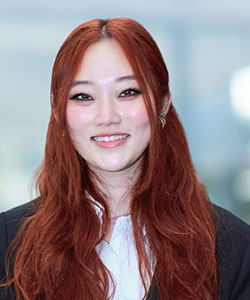
Aspiring physician and recent college graduate Minjae (MJ) Eum intends to change circumstances and attitudes about medicine and health care in her home state, Alabama, patient by patient.
Many people in the South and other areas of the United States mistrust the health care system, struggle to interpret complex medical terminology, or have experienced stigma because of their medical conditions, she said.
Working toward her goal, Eum is one of approximately 2,200 high school and college students who, while exploring or preparing for careers as doctors or medical researchers, have completed Harvard Medical School pre-college and pre-med online certificate courses since the programs started rolling out in spring 2025.
The courses offer motivated students advanced or more specialized content than is typically offered by high schools and colleges.
Developed and delivered by HMS faculty, “they capture the best of the HMS philosophy; the way we think about medicine and careers in medicine; and our approach to exploration, discovery, innovation, and leadership,” said David Roberts, HMS dean for external education.
“We need the best and brightest to come into the medical community,” he said.
To provide health care for an aging population and maintain its competitive edge in biomedicine, the United States needs to not only ensure that doctors and scientists are prepared to meet these challenges but must also expand its biomedical workforce.
A shortage of 86,000 physicians is projected by 2036, and even though the number of medical scientists is expected to increase by more than 14,000 by 2034, the required skills are changing rapidly because of AI and other new technologies.
HMS has provided in-person learning for high school students through its MEDscience program since 2005, but participation is limited to participating schools and programs. The new online programs bring HMS coursework to many more students than can be hosted on-campus, said Roberts.
“We would love to bring a new group of learners into our orbit who might not ordinarily consider going to medical school,” he said.

Eum took a pre-med course while completing a bachelor’s degree in human biology, health, and society at Cornell University. She learned how metabolism and enzyme function govern the body’s use of food, which gave her a way to explain to patients how heavily processed foods can alter organ function. She hopes that this information will encourage people to move from fear to understanding to changing their eating habits.
Next, Eum plans to spend two gap years at Stanford University School of Medicine and Stanford Medicine Health Care working in a lab and scribing in several clinics — moving right along on her path to becoming a physician and bringing that learning back home to Montgomery.
Challenging subjects, individualized support
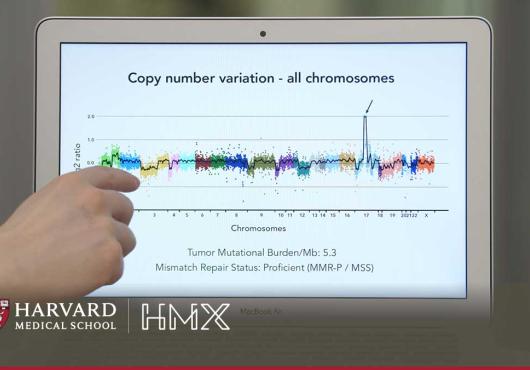
The courses present core scientific and medical concepts through videos, dynamic animations, interactive components, assessments, and clinical applications. Students then apply them to interpreting evidence, proposing diagnoses for patient cases, thinking through ethical dilemmas, and formulating research questions that HMS physicians and researchers are investigating today — all simulating real-world experience.
Learners progress at their own pace, receive regular feedback on their work, and can ask for help whenever they need it.
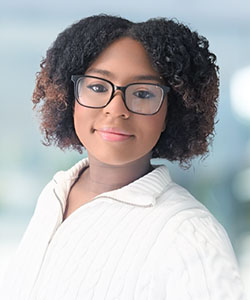
Angie Telhomme, a rising senior high school student from Boston who took the pre-college Genetics and Medical Research courses, found completing the sessions manageable.
“Even though I had school, sports, and family chores, I loved that I could come home and focus on what I truly wanted to do,” said Telhomme.
Each student is matched with a trained health science mentor who offers course‑specific strategies, learning checks, and feedback on homework, assessments, and projects.
Telhomme explained how her mentor encouraged in‑depth learning. On an assignment about type 1 diabetes, the mentor praised Telhomme’s straightforward depiction of the disease but then prompted her to elaborate.
“It helped me to go deeper into how it affects the actual functions of the body and how we can work against the disease,” she said.
Teenagers taking courses designed for more advanced students benefit from this wraparound support, Roberts said.
Even though students study independently, they can connect and learn together in asynchronous chat sessions.
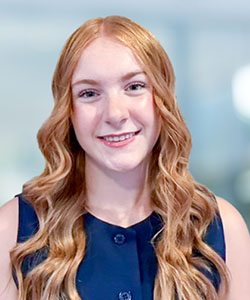
“I got to see a lot of different perspectives from people of all kinds of backgrounds,” said Madeline Vowels, a rising high school sophomore in Iowa who took the pre-college course Becoming a Doctor: A Deep Dive Into the Medical Profession.
Cultivating doctors and scientists
The pre‑college program offers early exposure to college‑level courses for learners age 13 and older who are seeking advanced coursework and considering future careers in health sciences and clinical care.
The pre‑med program allows undergraduate and graduate students to take medical school‑level coursework as they look ahead to medical or graduate school and explore careers in medicine. It is distinct from programs like the one offered by the Harvard Extension School, which are designed to help students complete the prerequisites for applying to medical school.
Courses provide 30 hours of instruction, and students can select from one-, two-, and four-week sessions that are offered year-round with rolling start and end dates. Tuition is about $2,000 per course, and financial aid is available.
Both programs offer two types of courses: academic enrichment and capstone courses.
Academic enrichment courses include Immunology, Genetics, Biochemistry, Physiology, and Pharmacology, with an option to bundle all five together. The coursework in fundamental science and its application to medical practice has been specially adapted for high school and college learners from existing HMX online courses designed for medical school students and health care professionals.
Eum, who completed the pre‑med Biochemistry: From Molecules to Medicine course, said it gave her “an understanding of the level of expectation that an academically rigorous medical school would want of a pre‑medical student.”
Although the courses are non-credit-bearing and not required for the Medical College Admission Test, or MCAT, they can build students’ knowledge and confidence to pursue careers in medicine.
Capstone courses offer learning beyond fundamental science and body systems. Students explore how their interests and strengths match up with careers in medicine and science. They hear HMS faculty describe their day‑to‑day work and get guidance on planning an educational path.
In Becoming a Doctor: Redefining the Frontiers of Medicine, for example, students study common illnesses and treatments through patient cases and hear clinicians describe everything from the administrative aspects of health care to one‑on‑one relationships with patients.
In Medical Research: Shaping the Future of Health and Medicine, students follow discoveries from the laboratory to new therapies for patients and learn about academic research, clinical trials, and industry commercialization.
Two new capstone courses titled Artificial Intelligence and Becoming a Surgeon are open for applications and will launch in fall 2026.
For her final project in the Medical Research course, Telhomme designed a therapeutic research proposal on breast cancer. “I really saw how cancer damages cells in the human body and affects women just like me,” she said.
Capstone course participants can lay out the steps to take them from medical school to residency and specialty fellowships — even to working their way up into leadership, Vowels said.
“It left me feeling confident about my ability to pursue a medical career,” she said. “It’s daunting, but I love it enough and think it’s going to be well worth it.”