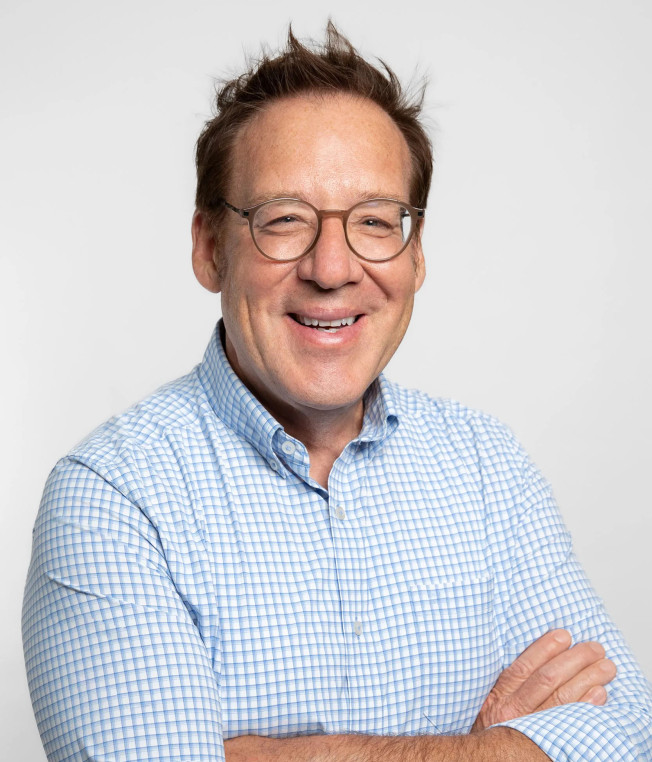
Chemical biologist Gregory Verdine was driving from his home north of Boston to his office in Cambridge when he had to pull over.
Verdine — the Erving Professor of Chemistry in the Department of Stem Cell and Regenerative Biology and of Chemistry and Chemical Biology, Emeritus, at Harvard University and Harvard Medical School — was listening to the podcast Interesting Times with Ross Douthat. The guest was former U.S. Sen. Ben Sasse, who has stage 4 (metastatic) pancreatic cancer. Few with the diagnosis survive beyond a year.
Sasse sounded surprisingly upbeat as he described an experimental drug that had reduced his tumors by 76 percent and helped him beat survival expectations (though not cure him, he noted).
“I did that,” Verdine recalled thinking. “I made that possible.”
The drug was daraxonrasib, which garnered attention in May for its unprecedented success in a phase 3 clinical trial. The treatment roughly doubled overall survival time from 6.7 months to 13.2 months among patients with previously treated pancreatic ductal adenocarcinoma, the most common and aggressive type of pancreatic cancer. It’s a precious increase for patients like Sasse and the estimated 60,000 other Americans who are diagnosed with pancreatic cancer each year.
“It’s a chink in the armor of a very difficult cancer,” Verdine said. “We can get patients six months, and now everyone is talking about how we get from six months to nine months and so on.”
A new kind of glue
Daraxonrasib’s success is owed to a kind of molecular glue that can help two proteins adhere when they otherwise wouldn’t.
For decades, conventional wisdom held that KRAS, a protein that when mutated is a major driver of cancer in humans, couldn’t be drugged due to its smooth surface with no good spot for drug molecules to latch onto. It took years, but Verdine’s innovative approach to binding proteins ultimately laid the groundwork for daraxonrasib, which binds KRAS to another type of protein to block the cancer-promoting signals it sends.
It’s not the only time one of Verdine’s seeming long-shot ideas turned out to have sticking power.
Verdine has made a career “drugging the undruggable” — creating not just new medications but new kinds of medication — both from his lab at Harvard and later at a series of companies he founded, led, and sold.

One of those companies, Parabilis Medicines, is advancing research from Verdine’s lab with zolucatetide, a first-in-class anticancer therapeutic that is also performing well in clinical trials.
“You might be familiar with the term ‘me-too drugs’ in biotech and pharma, where minimal improvements are made to existing therapeutics,” said Curtis Keith, chief scientific officer at Harvard’s Blavatnik Biomedical Accelerator, which supported some of Verdine’s early work with funding and business development consulting.
By contrast, Keith said, “Greg has the rare distinction of having created what are fundamentally new drug modalities. Not many people can say that.”
Learning to improvise
Verdine traces his entrepreneurial streak to early lessons after a family tragedy. When he was 5 years old, his father, Richard, suffered an accident and was paralyzed from the neck down. The event dramatically rearranged life for the blue-collar family in New Jersey’s rural Pine Barrens.
Beginning at age 7, Verdine began to skip school periodically to help his father with certain projects, like retrofitting a van to accommodate Richard’s wheelchair. “There was a lot of improvisation in that, and I didn’t realize it until many years later,” Verdine said.
As he grew older, Verdine did well in school and was encouraged to pursue higher education. He began as an English major at St. Joseph’s University in Pennsylvania, but he found a familiar sense of improvisation in the organic chemistry lab and was hooked. He liked that he could take molecules apart and put them back together in new ways for his own ends.
By the time he went to graduate school at Columbia University, he was working at the borderline between chemistry and biology, figuring out the mechanism by which an anticancer drug, mitomycin, interacts with DNA.
The research put him on Harvard’s radar, eventually leading to a professorship in 1988.
Verdine was then beginning to identify a problem in the drug development process that would become his life’s work.
Making proteins stick
Science had largely written off most human proteins as undruggable for two reasons.
First, most proteins are located inside cells, meaning protein therapeutics must be able to pass through the cell membrane to reach them. Secondly, proteins often lack textured edges or “sockets” that allow drugs to bind with them.
Verdine’s idea was to distill protein therapeutics to their essential elements, the shortest possible chains of amino acids that could accomplish their disease-targeting objectives while still passing through a cell membrane.
But those tiny amino acid chains were floppy. They needed a sort of chemical “staple” to hold them in the perfect helical shape to slip through the cell membrane and then cling to the surface of a protein.
“You can see how risky that was,” Verdine said. “It could have all been wrong.”
It was risky enough that securing federal funding would have been a challenge. Instead, Verdine turned to the Blavatnik Biomedical Accelerator, which supports innovative research in its preliminary stages.
Beginning in 2011, the accelerator awarded Verdine three grants totaling $450,000.
“Even relatively modest amounts of money, a few hundred thousand dollars, can make a huge difference at the early stages of developing a technology, de-risking it, showing proof-of-concept data that is then going to attract outside investors to put in much more significant money,” Keith said.
We should be funding crazy stuff, because the crazy stuff is what changes the world.
Gregory Verdine
And it worked. The technique, which Verdine called stapled peptides or helicons, proved versatile at targeting a wide variety of proteins. Verdine spun the technology into a private company, FogPharma, which then became Parabilis.
Betting on big ideas
Zolucatetide, which builds on Verdine’s helicon technology, slips inside cells and binds to a protein called beta-catenin. There, it inhibits a chain reaction that activates growth genes — a chain reaction that also drives a wide spectrum of cancer types.
Until zolucatetide, beta-catenin was considered undruggable.
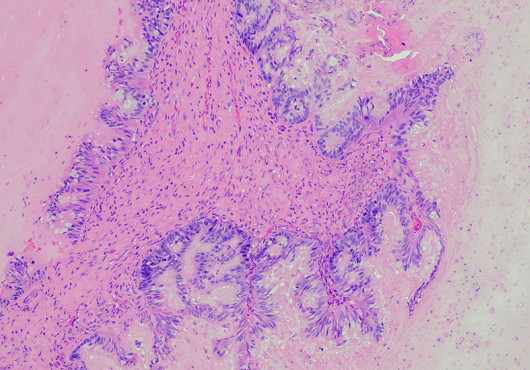
A phase 1 and 2 clinical trial of zolucatetide demonstrated tumor reductions in a remarkable 100 percent of participants with desmoid tumors: growths in connective tissues that do not metastasize but that can aggressively damage the organs surrounding them.
In November 2025, the FDA granted fast-track designation to zolucatetide for the treatment of desmoid tumors.
On June 10, 2026 — Verdine’s birthday — Parabilis went public, bringing in a record venture-backed biotech haul of $770.5 million for the company to further advance zolucatetide and other therapeutic programs.
The drug “has the potential to become one of the most important therapeutics coming out of Harvard in recent decades,” Keith said.
Verdine’s experience with zolucatetide and daraxonrasib has convinced him that improvisational, blue-sky thinking is necessary for the future of medicine.
“We should be funding crazy stuff, because the crazy stuff is what changes the world,” he said.
Adapted from an article in the Harvard Gazette.