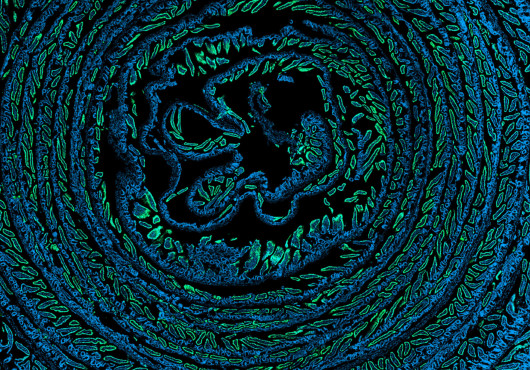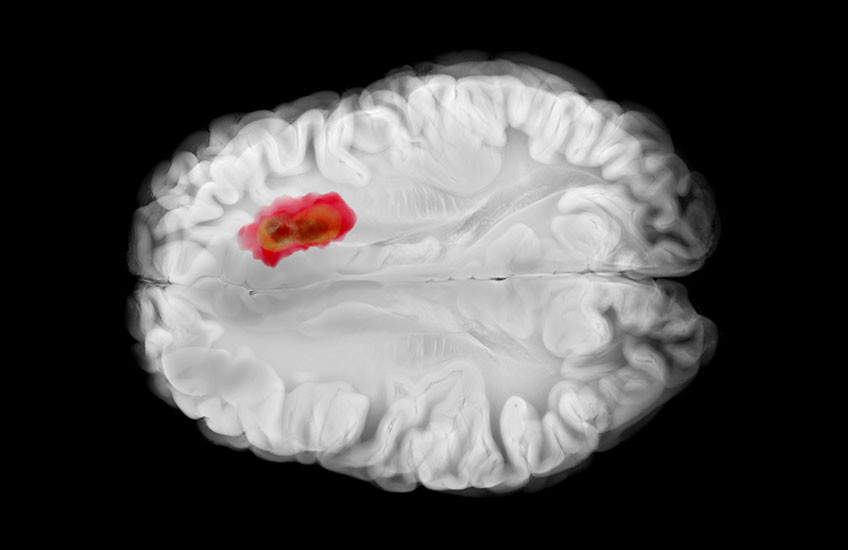
A single injection of an oncolytic virus — a virus that has been genetically modified to selectively infect and destroy cancer cells — can recruit immune cells to penetrate and persist deep within brain tumors, according to results of a phase 1 clinical trial led by investigators at Harvard Medical School, Dana-Farber Cancer Institute, and Mass General Brigham.
The research, published in February in Cell, provides details on how the therapy prolonged survival in trial participants with glioblastoma, the most common and malignant primary brain tumor.
Although there are several kinds of treatment available for glioblastoma — including surgery, radiation therapy, and chemotherapy — the cancer is often aggressive and tends to recur. Glioblastoma has also proven difficult to treat with the immunotherapies that have transformed the care of many other cancers, said study co-senior author Kai Wucherpfennig, the HMS Nancy Lurie Marks Professor of Neurology in the Field of Medical Oncology and HMS professor of immunology at Dana-Farber.
The new findings offer hope that immune system T cells can indeed enter and combat the brain cancer.
Before now, glioblastoma has been considered “a ‘cold’ tumor with poor infiltration by cancer-fighting immune cells,” said Wucherpfennig, who is also chair of the Department of Cancer Immunology and Virology at Dana-Farber. “Findings from our clinical trial and our mechanistic study show that it is now feasible to bring these critical immune cells into glioblastoma.”
Help from an oncolytic virus
The oncolytic virus used in the trial was developed by study co-senior author E. Antonio Chiocca, the HMS Harvey W. Cushing and Daniel E. Ponton Professor of Neurosurgery at Brigham and Women’s Hospital and executive director of the Center for Tumors of the Nervous System at the Mass General Brigham Cancer Institute.

The virus is made from a herpes simplex virus genetically altered so it can only make copies of itself in glioblastoma cells and not normal healthy cells. When administered, the virus spreads to a glioblastoma cell, kills it, and then makes a copy of itself that spreads again to another glioblastoma cell.
Infection of cells with the virus also triggers an immune response.
In the trial of 41 patients with recurrent glioblastoma, the treatment extended survival compared to historically reported survival, especially among those with preexisting viral antibodies.
Tangible results
The investigators examined the extent of this immune response in participants. Their analysis revealed that the treatment induced long-term infiltration of immune T cells into patients’ tumors.
Closer proximity of cytotoxic T cells with dying brain tumor cells was associated with longer patient survival after treatment.
The therapy also expanded preexisting T cells in the brain.
“We show that increased infiltration of T cells that are attacking tumor cells translates into a therapeutic benefit for patients with glioblastoma,” said Chiocca. “Our findings could have important implications for a cancer whose standard of care hasn’t changed for 20 years.”
Phase 1 clinical trials evaluate the safety and dosage of proposed new treatments. Further research is needed to test the oncolytic virus therapy’s effectiveness and side effects. Work also continues along other avenues to improve treatment and seek cures for glioblastoma.
Adapted from a Dana-Farber news release.
Authorship, funding, disclosures
Additional authors include Maxime Meylan, Ye Tian, Lijian Wu, Alexander L. Ling, Daniel Kovarsky, Graham L. Barlow, Linh D. Nguyen, Jason Pyrdol, Sascha Marx, Lucas Westphal, Julius Michel, L. Nicolas Gonzalez Castro, Sydney Dumont, Andres Santos, Itay Tirosh, and Mario L. Suvà.
This work was supported by the National Institutes of Health (grants P01CA236749, P01CA163222, R01CA238039, R01CA251599, P01CA163205, R01NS110942). Wucherpfennig is a member of the Parker Institute for Cancer Immunotherapy (PICI) at Dana-Farber.
Wucherpfennig serves on the scientific advisory boards of DEM BioPharma, Solu Therapeutics, D2M Biotherapeutics, DoriNano, and Nextech Invest; is a co-founder of Immunitas Therapeutics; receives sponsored research funding from Fate Therapeutics; and holds equity in TScan Therapeutics. These activities are not related to the research reported in this publication. Suvà is a scientific co-founder and advisory board member of Immunitas Therapeutics. Chiocca is an advisor to Bionaut Labs, Seneca Therapeutics, Calidi Biotherapeutics, and ReIGNITE Therapeutics; has equity options in Bionaut Laboratories, ReIGNITE Therapeutics, Seneca Therapeutics, and Ternalys Therapeutics; and is co-founder and on the board of directors of Ternalys Therapeutics.
Patents related to oHSV and CAN-3110 are under the possession of Brigham and Women’s Hospital with Chiocca, and he is named as co-inventor. These patents have been licensed to Candel Therapeutics. Present and future milestone license fees and future royalty fees are distributed to Brigham and Women’s Hospital from Candel.