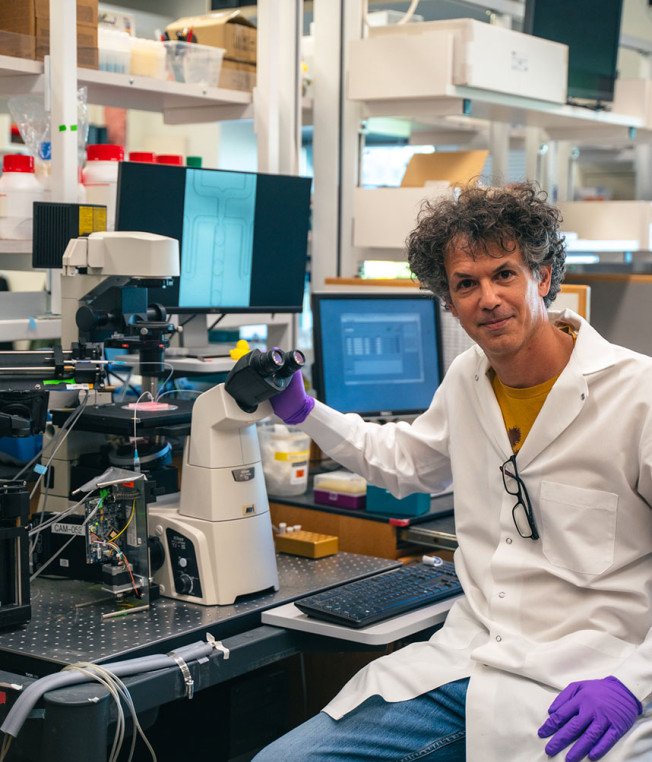
Allon Klein, professor of systems biology in the Blavatnik Institute at Harvard Medical School, has been named a 2026 Schmidt Science Polymath. The award provides up to $2.5 million over five years for researchers to pursue questions beyond their established areas of research.
Klein, who is one of eight award recipients this year, has focused on understanding how cells acquire and change fates during development and in adult tissues. He plans to use the Polymath award to explore several new directions, including investigating immunity in invertebrates, with the aim of uncovering new biology in largely unexplored territory. If successful, the results could inspire new treatments for disease.
“Each of these researchers has already shown a real range and originality in their work. Now they’re ready to bring that to an entirely new set of questions,” said James Ricci, director at Schmidt Sciences, the nonprofit organization dedicated to advancing science and technology for positive global impact that confers this award.
Nicholas Bellono, professor of molecular and cellular biology at Harvard University, was also named a 2026 Polymath.
Crossing boundaries and domains
Klein started his career as a physicist. He found that theories from one branch of physics could explain how stem cells behave in regenerating tissues. But when his research led to questions that could not be answered by theory alone, he decided to expand his expertise.
“I felt I had reached a junction: I could remain a theorist working on problems where data were abundant, or I could remain in developmental and stem cell biology but would need to build experimental tools to move those fields where theories were stuck,” Klein said.

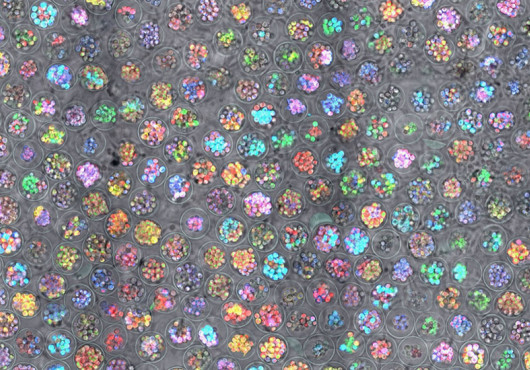
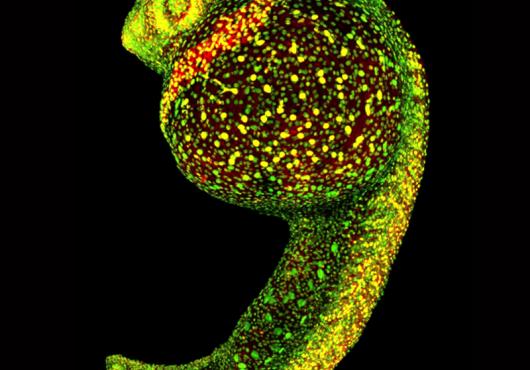
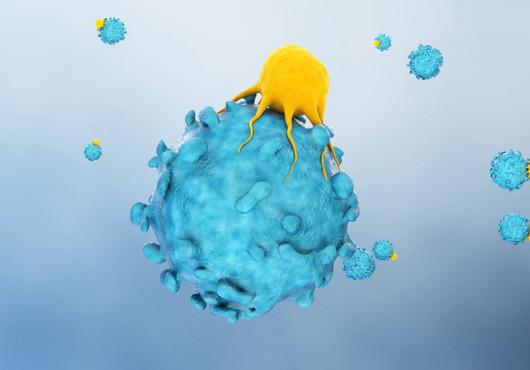
Klein retrained in experimental biology and set out to create new tools to map the states of developing cells. He has mapped gene expression in developing embryos, developed high-throughput techniques to genetically profile every individual cell in a sample, identified immune cells that play a role in fighting cancer, and recently co-founded a company that is using AI to help understand the rules that guide cell development and use them to create viable treatments.
The tools Klein developed and the biology he has been studying have led him to new questions. The Polymath award will help him explore them.
New directions
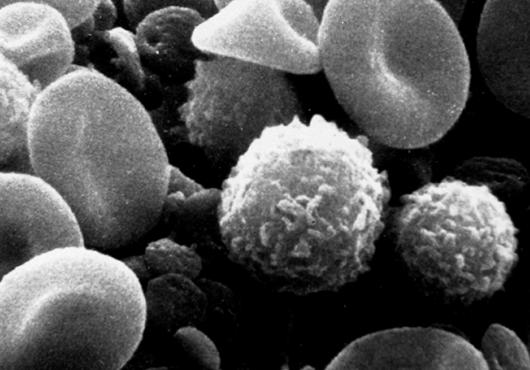
While investigating the evolutionary origins of human blood cells, Klein and his colleagues found completely distinct immune cells in tunicates — a group of marine filter-feeders that spend most of their lives attached to the seafloor and also happen to be our closest invertebrate relatives. Klein was intrigued. One future direction that he is considering is attempting to explore the invertebrate immune genome — identifying the types of immune cells, the unique proteins they express, and their responses to pathogens.
“Historically, major breakthroughs in immunity — including the discoveries of phagocytosis, antimicrobial peptides, and toll-like receptors — emerged from studies of invertebrates,” Klein said.
Invertebrate immune cells may implement unique strategies that could expand our therapeutic toolkit, and the molecules they express might lead to new disease treatments. One molecule isolated from tunicates is already the basis for an FDA-approved cancer drug.
“I have simply no idea where this biology will take us,” Klein said. “Finding entire immune repertoires with no vertebrate counterpart feels like discovering a new grammar in a language we thought we knew.”
There are other avenues that he wants to explore as well. Cells constantly respond to signaling molecules in their surroundings, and the range of possible signal combinations is far greater than scientists have been able to test. Klein is considering how tools developed in his lab could be adapted to explore a vast diversity of these signals in a single, small-scale experiment. The results could one day point to new ways of steering cells for therapy.
“It’s a rare gift to be given time to wander into new areas,” Klein said. “I’m grateful for it and genuinely curious to see what we find. The ideas we are exploring are risky, and some are too early to be funded by government grants. The Polymath award gives us the freedom to try.”