The future of federally funded research at Harvard Medical School — supported by taxpayers and done in service to humanity — remains uncertain. Learn more.
One of the most enduring goals in regenerative medicine is deceptively simple: replace a person’s damaged or dying cells with healthy new ones grown in the laboratory.
Researchers at Harvard Medical School and around the world have made striking progress toward that goal, learning how to guide stem cells to become muscle, nerve, and other specialized cell types. In principle, those lab-grown cells could one day be used to repair injured tissues or slow the progression of disease.
In practice, however, only a small fraction of these advances has moved beyond the lab.
The difficulty lies in how hard it is to control the process by which stem cells develop. As cells mature, they respond to a sequence of chemical signals that tell them what to become. Those signals must arrive at the right moment and in the right amount. Small missteps can cause cells to stray from their intended path, leaving them immature, inconsistent, or unsuitable for use as therapy. Even protocols that work well in one lab can be difficult to reproduce elsewhere.
Researchers in the Blavatnik Institute at HMS co-founded the company Cellular Intelligence to address that challenge.
Building on large experimental datasets from developmental, systems, and computational biology, the company aims to build a foundation model — a large machine-learning system trained on experimental data — to improve two requirements for turning cell replacement therapies into viable treatments: predictability and scalability.
“For many cell therapies, the biology works but not robustly enough,” said scientific co-founder Allon Klein, professor of systems biology at HMS. “You can get the right cells once, but reproducing that result reliably and at scale is a very different problem.”
Once trained and validated, the machine-learning tool could reveal underlying rules that guide cell development — rules that researchers can use to predict how cells will behave under new conditions.
“Developmental biology already has an internal logic,” Klein said. “What we’re trying to do is understand that logic well enough to guide it.”
Exploring translation, step by step
The origins of Cellular Intelligence, formerly known as Somite AI, lie in decades of basic research.
Much of the early work took place at HMS before the team ever envisioned a company. At that stage, the focus was on building tools and asking whether they could shed light on fundamental questions about how cells develop.
Support from programs such as the Quadrangle Fund for Advancing and Seeding Translational Research (Q-FASTR) helped make that exploratory work possible. Q-FASTR, part of the HMS Therapeutics Initiative, provides milestone-based funding for projects that show early translational promise, allowing researchers to test ideas that fall between basic discovery and application.
To date, Q-FASTR has supported 104 projects with $17.7 million in initial funding. That includes 11 recent off-cycle grants awarded to help sustain research amid continued uncertainty about the future of federal funding. Collectively, awardees have gone on to co-found six startup companies, including Cellular Intelligence, and have attracted nearly $349 million in follow-on funding.
“The intent is to give people room to ask whether their science could plausibly move in a translational direction,” said Mark Namchuk, executive director of therapeutics translation at HMS, who leads the Therapeutics Initiative. “Funding early, high-risk pilots before preliminary data are available is what sets Q-FASTR apart from other funding sources, and it is precisely this approach that enabled the development of this new technology.”

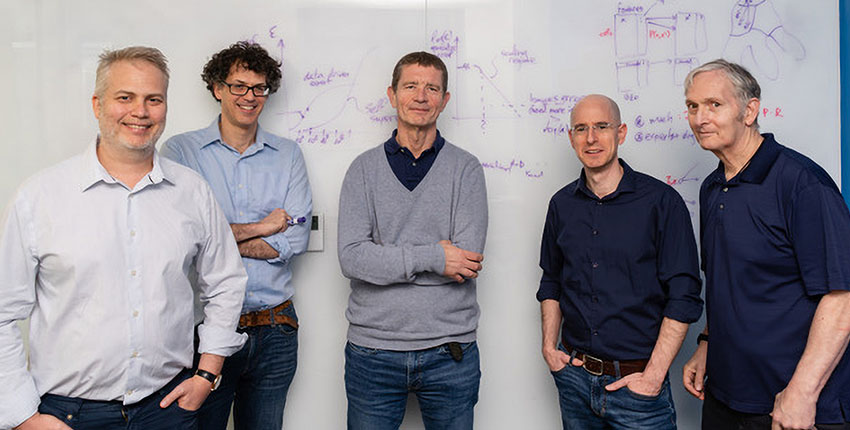
As the scientific picture sharpened, Klein and colleagues — including scientific co-founders Olivier Pourquié, the HMS Frank Burr Mallory Professor of Pathology at Brigham and Women’s Hospital and professor of genetics at HMS, and Clifford Tabin, the George Jacob and Jacqueline Hazel Leder Professor of Genetics and head of the Department of Genetics at HMS — began to consider what it would take to develop the work further.
Some questions, such as about reproducibility, scale, and integration of experimental and computational approaches, were difficult to address within academic labs.
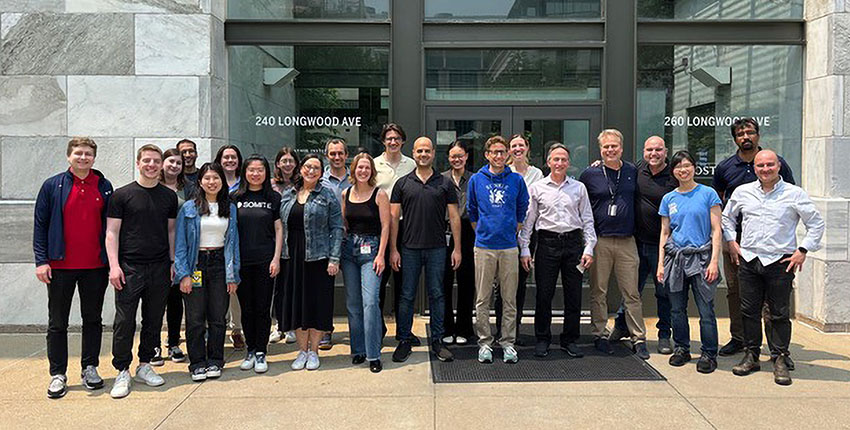
The Blavatnik Harvard Life Lab Longwood offered a practical next step. The incubator provides shared laboratory space and infrastructure for early-stage, Harvard-connected life science startups, allowing teams to organize work outside the academic setting while remaining close to ongoing research.
For Cellular Intelligence, that proximity mattered. In its earliest phase, frequent interaction between the scientific founders and the growing team helped clarify which ideas could translate and which would need to be rethought.
“For something this complex, being able to easily move back and forth mattered,” Klein said. “It helped us test ideas quickly.”
A long arc of discovery science
For Pourquié, early signs of translational promise emerged from studies in his lab of how tissues form during embryonic development. His laboratory has spent years investigating somites — repeating structures that give rise to skeletal muscle, vertebrae, and connective tissues — to answer fundamental questions about how orderly patterns emerge in living systems.
As human pluripotent stem cell technologies advanced, that work took on new relevance. Processes once studied only in embryos could now be reproduced, in part, in a dish.
“If you understand how tissues form during development, you can start to reproduce those processes in the lab,” Pourquié said. “That naturally leads to questions about whether those cells could eventually be useful therapeutically.”
Over time, his group developed methods to generate muscle progenitors and other early tissue types from human stem cells. Improving those methods, however, was painstaking. Each adjustment required careful tuning of multiple signals over weeks-long experiments, making progress slow and difficult to generalize.
Around the same time, Pourquié began collaborating more closely with Klein, whose lab studies how cells make decisions as they develop. Klein’s group uses large-scale experiments and computational tools to identify patterns in how cells respond to different environments.
The two scientists converged on a shared limitation: While researchers could describe how cells develop, they lacked a systematic way to explore the many conditions that shape those decisions.
Building a system for cell development
The idea behind Cellular Intelligence grew out of that realization. Instead of refining cell development one experiment at a time, the founders began to ask whether the process itself could be studied — and improved — more systematically and at scale.
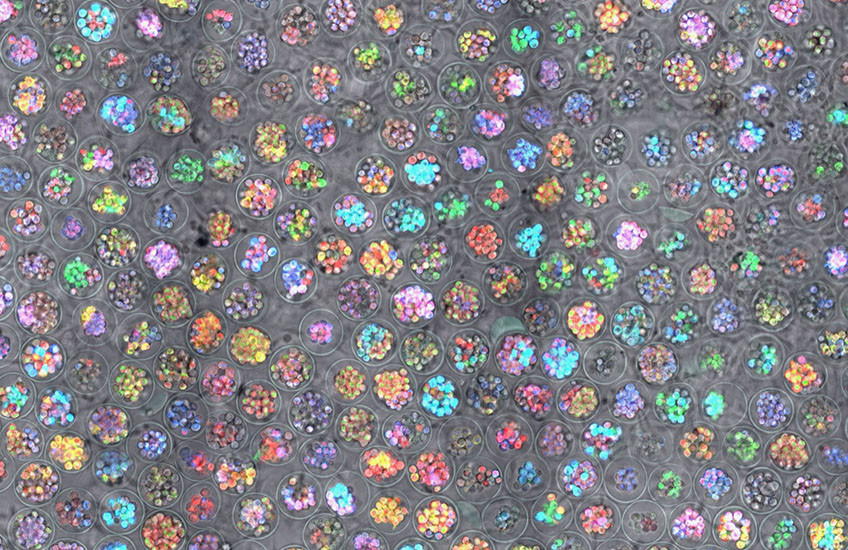
A key step was a capsule-based technology developed in Klein’s lab with Q-FASTR funding that allows cells to be grown in tiny, self-contained environments and exposed to many different combinations of signals. In December, Klein and colleagues described the technology in Science, showing how it could support large-scale experiments that would have been impractical with traditional methods.
By observing how the cells responded to many conditions in parallel, the researchers could begin to see patterns in how timing, signal strength, and sequence influence cell fate. Those data now form the basis of Cellular Intelligence’s approach.
The founding team reflects that blend of biology and computation. Additional company co-founders include AI entrepreneur and CEO Micha Breakstone, Jonathan Rosenfeld of MIT, and Jay Shendure of the University of Washington.
A convergence of labs and ideas
The effort offers just one demonstration of how advances in stem cell biology, experimental scale, and artificial intelligence are converging in ways that were not possible even a few years ago. This allows researchers to ask new kinds of questions.
“For many cell-based therapies, progress comes from connecting the right pieces at the right moment,” Klein said. “When biology, computation, and the right support come together, you can start to move much faster toward something that could ultimately matter for patients.”