
Keeping Curiosity at the Center of Therapeutic Sciences
Student Perspective | November 23, 2026
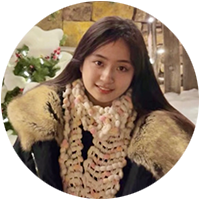
Xiaonuo “Noya” Fan has built her scientific training by following questions rather than narrowing her interests too early. As an undergraduate at Boston University, she studied biology while minoring in business administration, a combination that reflected both her longstanding interest in research and her enthusiasm for working with people.
Fan had already begun gaining research experience in high school, and biology quickly became the center of her undergraduate work. But she continued exploring widely, with research spanning structural biology, cardiovascular development, and cancer biology. After graduating in 2024, she spent another year at Boston Children’s Hospital continuing a project she had begun as an undergraduate.
When she began considering graduate programs, that breadth of interest mattered. Fan wanted deeper scientific training, but she was not yet ready to commit herself exclusively to either academia or industry. The Master of Medical Sciences in Therapeutic Sciences program offered exposure to both.
“I think it’s a great opportunity to keep my doors open,” she says.
Fan joined the inaugural cohort of the program and is now in her second year. Enrolling in a new program required some trust, but she was already familiar with the Longwood Medical Area through her undergraduate research. Before making her decision, she also spoke with Catherine Dubreuil, PhD, the program’s executive director, and came away assured of the attention that would be given to students.
Although joining a first cohort came with some uncertainty, Fan says that those conversations gave her confidence in the people building it. That sense of support continued as Fan moved from coursework into thesis research.
Now, much of Fan’s time is spent at Dana-Farber Cancer Institute in the laboratory of Benjamin Levine Ebert, MD, PhD, where her thesis focuses on resistance to lymphoma degraders. She works most closely with her postdoctoral mentor Jeremy Grevet, MD, PhD, investigating how cancer cells adapt when exposed to therapies designed to eliminate disease-driving proteins.
Fan had been interested in cancer research before joining the lab. In her current work, she investigates why cancer cells respond differently to treatment and how resistance develops. Her experiments include screening approaches and validation assays, and the rhythm of the work varies considerably. More important than the schedule, however, is the independence that she is developing. After Fan and Grevet agree on the broader direction of the project, she moves experiments forward and checks in as questions arise.
“We talk about what we’re going to do, then I go ahead and do my experiments,” she says.
That experience has helped Fan clarify what draws her to research. Although cancer remains one of her strongest interests, she does not describe herself as committed to one disease area. “I have a broad interest,” she says. Her earlier cardiovascular research and current work in oncology have helped her recognize that the underlying biological questions are often what interest her most.
Her coursework has encouraged that openness. Fan particularly enjoyed pharmacology, an area where she did not have the opportunity to study deeply as an undergraduate. Seminars also introduced her to research far outside her own field. “Seeing a lot of journals or publications from other fields that I’ve never thought about has been one of the most enjoyable parts of the program,” she says.
Fan has also challenged herself through advanced coursework outside the core curriculum. She took BCMP 250: Molecular and Biophysical Mechanisms of Signal Transduction, a PhD-level course taught by Josefina del Mármol, PhD. The class required significant effort but gave her the opportunity to go deeper into the molecular mechanisms that increasingly shape her research interests.
“It was a really great experience,” she says. “Very insightful.”
For her remaining elective, Fan is considering another broad set of possibilities, from immunology and deeper work in biological mechanisms to computer science. The range is intentional. She sees electives as another opportunity to explore new areas.
That same mindset shapes how Fan thinks about life after graduation. She is currently applying to PhD programs but open to explore industry positions as well. Rather than viewing those paths as mutually exclusive, she sees both meaningful possibilities.
“I think they’re both great opportunities to do meaningful work,” she says. That openness is also reflected in the cohort around her.
Asked what has surprised her most about the program, Fan points to her classmates. Students came from different countries and different stages of their careers. Some had worked in the government or industry. Others entered directly from undergraduate programs. Some are now considering PhD or MD-PhD training, while others are preparing for careers in industry.
“Just talking to them has been a great experience,” she says. Conversations like that are important to her because science is only one part of how she likes to engage with the world.
Fan has long been involved in student organizations and community building, and at Harvard she serves on the board of the Harvard Chinese Students & Scholars Association. The work offers a different kind of learning from her time in the lab.
“It’s given me a lot of chances to professionally build on communication or event planning,” she says, “and also learn how to deliver efficient and effective communication in a short conversation.”
Those skills complement the scientific side of her training. Whether she ultimately pursues a PhD, enters industry, or follows a path she has not yet considered, Fan wants to be able to move comfortably between technical work and the people around it.
Her advice to incoming Therapeutic Sciences students reflects the way that she has approached the program herself. “If you’re not certain about your next steps, keep your options open and talk to people,” she says.
For Fan, keeping options open has not meant avoiding commitment. It has meant giving herself permission to investigate deeply without assuming every experience has to determine the rest of her career.
Written by Bailey Merlin