
Building Bridges for Evidence-Based Medical Education
Student Perspective | February 23, 2026
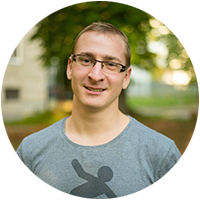
From Hungary, where formal pathways in medical education are still emerging, Gergely Csaba, MD, is helping to build something that did not previously exist. As a second-year student in the Master of Medical Sciences in Medical Education at Harvard Medical School, Csaba is part of a small but growing movement to formalize medical education as a scholarly field in his country. “There is one person in Hungary I know of who has earned a master’s in medical education,” he reflects. “With my classmate, we are probably the second and third.”
That sense of pioneering responsibility has shaped his journey. As a medical student at the University of Pécs Medical School, Csaba became a student representative for educational affairs. What began as service gradually evolved into scholarly curiosity. Through attending the International Association for Health Professions Education (AMEE) Conference and participating in AMEE’s online courses, he discovered medical education as an academic discipline in its own right.
“I gradually learned about medical education as a scientific community and a scientific area,” he says. “After that, I was really interested in doing a master’s in medical education, because that seemed like an important step.”
Even before enrolling in the program at Harvard Medical School, Csaba had begun pursuing research in medical education as a PhD student. But without an established national department dedicated to the field, navigating that path required persistence and creativity. Substantial support was provided by his mentors and the University of Pécs; however, a master’s degree was considered essential for advancing methodological rigor and further developing medical education research competencies.
For Csaba, the stakes of medical education extend far beyond the classroom. “As a doctor, you have responsibility for your patients,” he says. “If you are a better doctor, you improve patient care. If you are in a leadership position, you can improve care in a department. But if you step back and try to develop medical education itself—not just the students, but the educators—then the impact can be much bigger. You can influence the whole national health care system.”
In Hungary, there is not yet a clearly defined department devoted solely to medical education. Committees and faculty development efforts exist, but the infrastructure is still developing. Csaba sees opportunity in that openness. “I feel that this is something really important,” he says. “If we improve medical education, we improve patient care.”
One example of this vision in action is the recent introduction of Objective Structured Clinical Examinations (OSCEs) at the University of Pécs Medical School. As OSCE lead and project coordinator, Csaba has helped guide the implementation of this structured assessment format, which strengthens the evaluation of clinical competencies and aligns training more closely with real-world patient care.
He first encountered the Master of Medical Sciences in Medical Education program through the AMEE Conference, but his interest was strengthened by a prior professional connection with Program Director Krisztina Fischer, MD, PhD, MMSc, herself an alumna of the program. Through faculty development collaborations in Hungary, Csaba had already experienced her approach to teaching.
“Harvard has its name, as you can imagine,” he says with a smile. “But also the curriculum was very clear. I really liked the focus on teaching and learning science, on assessment and the strong emphasis on research.”
That translational focus stood out immediately. “You learn concepts, frameworks, theories, and then you apply them,” he says. In the qualitative research methodology course, for example, students conducted interviews, transcribed them, and performed analysis by the end of the term. “It was a really great experience to use the learned concepts right away.”
Now, as he completes his thesis under Fischer’s mentorship, that theory-to-practice integration continues. Csaba’s research centers on developing effective learning strategies for medical students. Specifically, he has been studying an elective course in Hungary designed to improve students’ learning skills through the framework of self-regulated learning theory. The course focuses on helping students plan, monitor, and reflect on their learning, encouraging active strategies rather than passive absorption.
According to Csaba, it’s soft skills development. “Students should plan their learning, monitor their achievements, reflect on what works or what does not, and try new strategies,” he explains. The course already existed, but Csaba upgraded it using concepts and frameworks from the Medical Education program. His thesis evaluates its effectiveness: Have study habits changed? Has academic performance shifted? Are students developing stronger self-regulatory behaviors?
By applying rigorous research methodology to an actual educational intervention, Csaba is modeling the kind of scholarship that he hopes will shape Hungary’s future academic infrastructure.
Working with Fischer has been a central part of that process. “Quite smooth,” he says of their collaboration. “It’s awesome to work with her.” Regularly scheduled meetings provide structure and accountability amid his other academic responsibilities. “I know when we will meet, and what I should do until then. That helped me a lot.”
Although the program is delivered virtually, Csaba describes the experience as deeply connected. He initially worried that long Zoom sessions might feel passive or disengaging. “I feared it might be boring, sitting at a computer for many hours,” he admits. “But fortunately, that wasn’t the case.”
Instead, he found highly interactive sessions, teamwork, and creative instructional design. One of the biggest surprises for Csaba was the online simulation course. “I didn’t understand how simulation could work online,” he says. “But it was really great. Our instructors made it work.”
In-person sessions in Boston during the program’s optional on-campus visits further strengthened those bonds. Meeting classmates and faculty face-to-face deepened both academic exchange and personal connection. “It was great not just academically, but also socially. It really helped us connect and think about collaboration.”
For prospective students, Csaba offers practical but thoughtful advice: protect your time. “Most students have other responsibilities like patient care and administration,” he says. “But if you invest more time, you can learn a lot more. We get lots of support from instructors. We can ask for feedback on our projects anytime.”
As he prepares to graduate, Csaba’s vision remains focused on impact at scale. In a country where medical education scholarship is still taking shape, he is helping to lay the groundwork that may influence generations of learners and, ultimately, patients. By stepping back to strengthen how doctors are trained, he is expanding what it means to improve health care.
Written by Bailey Merlin