
From a Moment of Error to a Mission of Safety: How One Incident Shaped a Lifetime of Leadership
Student Perspective | January 6, 2026
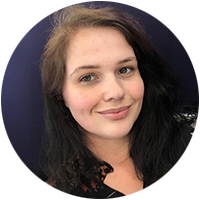
As an honors math student at the University of Georgia, Marjorie Wall, EDBA, was ambitious, confident, and driven. But one weekend job would change the course of her life—and ultimately redefine her career in health care.
While working weekends in a sterile processing facility, Wall completed a two-week training program to learn how to properly clean, inspect, and sterilize surgical instruments. Soon after, she was assigned to work a weekend shift alone at a trauma hospital. When two hip fractures came in, she reprocessed the instruments used for surgery and sent them back to the operating room.
The following Monday, those same instruments were used in a procedure—and when a guide pin was inserted, blood came out the other side. The tools hadn’t been properly cleaned. When the surgical team opened the hospital’s only backup set, it too was contaminated. The team was forced to hand wash and sterilize instruments on site while the patient remained on the table. “My overconfidence as a student made me lose sight of the seriousness of what I was doing,” Wall recalls. “That moment could have permanently harmed someone, and it changed everything for me.”
Wall’s manager told her that many wanted her fired. But instead of leaving health care behind, she decided to master the field she had misunderstood. She immersed herself in sterile processing, earned her credentials, and dedicated her career to ensuring that no patient would ever face harm due to preventable errors.
Wall’s early experience led to a 25-year career focused on patient safety and process improvement. She worked her way up to leadership roles in sterile processing and served on association boards, such as president of the Healthcare Sterile Processing Association, a global professional organization with more than 40,000 members. “Everything I’ve done since that day has been about creating systems that set people up for success,” she says. “We have to design processes that protect both patients and providers.”
Her work as a keynote speaker and advocate for innovation in sterile processing has helped drive change across hospitals and health systems. But even as a seasoned executive, she wanted to expand her understanding of health care operations.
After earning her bachelor’s and master’s degrees from Azusa Pacific University and an Executive Doctor of Business Administration from Saint Mary’s College of California, Wall began exploring what would come next. A trusted mentor introduced her to the Master of Science in Clinical Service Operations program at Harvard Medical School.
Despite her impressive credentials, Wall wrestled with imposter syndrome. “I didn’t think I’d ever get into Harvard Medical School,” she admits. “But when I read an email that said, ‘If you’re questioning whether or not you belong at Harvard, Harvard belongs to you,’ I knew I was right where I was meant to be.”
She ultimately chose the Clinical Operations Pathway, drawn to its combination of leadership training and clinical focus, which is something she hadn’t encountered in other graduate programs. “This program is so unique. It’s leadership education, but through the lens of clinical operations. That’s exactly what I was looking for.”
Wall found the program’s case-based, discussion-driven structure especially powerful. With so many international students in her cohort, she valued the different perspectives each brought to the table, and she learned so much through each experience.
She also enjoyed the seminar series, where weekly guest speakers offered real-world insights into leadership, systems thinking, and health care innovation. “Everything we learned was actionable. It wasn’t just theory, and it elevated my thinking as a leader.”
Even in the online format, Wall formed close relationships with her classmates, from meeting in person when possible to taking part in virtual coffee chats when not. Thinking about the connections built across the two years in the program, she notes: “Those relationships have already shaped my career.”
For her capstone, Wall partnered with the chief of plastic surgery at Cedars-Sinai Medical Center in Los Angeles, where she currently works, to pilot a new artificial intelligence initiative that uses visual recognition technology to analyze surgical instrument use in the operating room. Their partnership began in an unexpected way—over a coffee cup.
“He had just joined Cedars-Sinai from Massachusetts General Hospital in Boston. He noticed my Harvard Medical School mug and asked me about the program. When I told him about my idea for the capstone, he immediately wanted to be a part of it.”
That chance encounter led to a collaboration on applying AI to optimize surgical efficiency. By tracking which instruments were used or unused, Wall’s team identified major opportunities to improve efficiency, sustainability, and cost reduction. The project reduced unnecessary reprocessing, cutting down on water, energy, and materials consumption. It also helped optimize instrument trays, freeing time and resources for frontline teams.
The initiative was so successful that it is currently under review to expand beyond the research phase, an outcome Wall attributes in part to the project management and leadership skills that she developed in the master’s program.
As Wall takes the next step in her career as Vice President, Processing Optimization and Customer Success at Steris Corporation, beginning in January 2026, she will apply the knowledge, skills, and perspectives gained through this program. The coursework extended well beyond theory, equipping her with practical tools in systems thinking, strategy, and leadership that directly support her work in health care transformation.
Reflecting on her journey from an overconfident college student to a global industry leader, Wall sees her Harvard experience as transformational. “This program gave me exposure, knowledge, and confidence to be a stronger strategic leader in clinical operations. It’s not just about learning—it’s about being part of a community driving real change in health care.”
For those considering the Master of Science in Clinical Service Operations program, she offers simple advice: “Put yourself out there and try. It’s an amazing opportunity to grow, connect, and make a lasting impact.”
Written by Lauren Young