


Curious about our program?
Discover where a master’s degree from Harvard Medical School will take you. Our brochure covers curriculum, faculty, capstone projects, and what graduates do next.
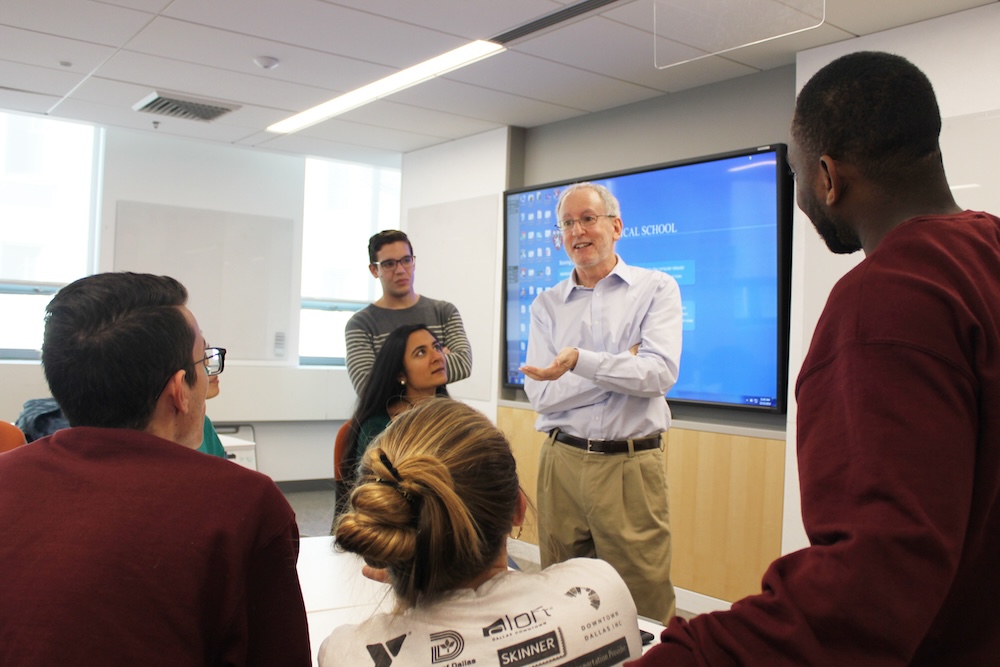
Specialized Pathways
To complement individual learning and development, the program provides students the choice of a Clinical Operations Pathway, Executive Leadership Pathway, or an Industry Leadership Pathway.

Program Overview
Building leading clinical service operations that save time, save money, and save lives
A clinic is far more than a building that houses care providers. It’s a complex nexus of staff, physicians, patients, infrastructure, and technology—and when it’s designed and managed well, it’s much greater than the sum of its parts. But how do we organize a department, a hospital, or a system to ensure patients receive the best care most efficiently? How can we use data and technology to restructure service lines or to adjust processes to better connect patients with their care providers—and to build more collaborative, more engaged care teams? How can we evaluate, select, and integrate the best new technologies into our care settings?
Harvard Medical School’s Master of Science in Clinical Service Operations endeavors to answer these questions and more through a multidisciplinary curriculum that spans traditional and innovative learning methods—from classroom study to hands-on simulations to a capstone project undertaken at a students’ home institution.
This clinical leadership program provides physicians, clinicians, nurses, industry leaders, allied health professionals, and administrators with the operations management training they need to lead teams, optimize efficiency, and improve the patient experience.
Available in full-time (one-year) and part-time (two-year) options, the Master of Science in Clinical Service Operations program is designed for health care professionals and administrators who aspire to leadership positions in operations management. Applicants should hold an advanced degree and have at least five years of clinical experience or requisite work experience. Applicants without an advanced degree should have eight years of clinical operations experience.
Three Educational Pathways
Now complementing individual learning and development, the program provides students the choice of three separate educational pathways. Students will have the opportunity to focus on clinical service operations, health industry leadership, or interdisciplinary clinical executive leadership. The program will offer both didactic and experiential learning with a curriculum designed to support the learning needs of clinicians, health care administrators, industry professionals, and executive leadership.
The program provides learners with clinical operations skill sets and knowledge that are essential to lead health care organizations in the United States and internationally.
Upon completion of this clinical leadership program, you’ll be able to:
- Improve overall clinical operations, innovate, and facilitate hospital and system-wide innovation
- Build collaborative teams of multi-disciplinary stakeholders who are equipped to work with a hospital’s corporate functions
- Evaluate productivity and financial measures, manage budgets, and understand regulatory compliance
Graduates will be well-positioned to pursue leadership roles including:
- Allied Health Director
- Administrative Director
- Advanced Practice Clinical Director
- Chief Operating Officer
- Chief Patient Experience Officer
- Clinical Operations Director
- Clinical Research Director
- Nursing Director or Manager
- Program Director
- Service-Line Director
Program Objectives and Benefits
Given the rapid change across all sectors of health care, the importance of formal training in operational aspects of health care has never been more critical. Health care organizations require high-performing, collaborative teams that can work together seamlessly to deliver value-based care, ensure patient satisfaction, and achieve better outcomes.
In this complex environment, health care leaders must be able to navigate multidisciplinary service lines and new platforms that underpin “the DNA” of every health care operation—from electronic medical records, real-time accounting systems, and just-in-time delivery of materials to a highly specialized workforce and artificial intelligence-driven technology at the bedside.
As patients and families increasingly focus on value, efficiency, and supportive care services, leaders must also be skilled at implementing and refining patient-centered programs. The MCSO program equips students with the clinical operations skillset and knowledge that are essential to leading health care organizations through transformational change in the United States and internationally.
Program Benefits:
- A nine-month mentored capstone project at your hospital or organization that enables you to shadow health care professionals in clinical operations and apply your newly acquired skills and practical knowledge.
- Multidisciplinary faculty from Harvard Medical School and Boston-area hospitals who prepare you to lead your health care organization through transformational change in the United States and internationally.
- A comprehensive curriculum that features interactive case studies and lectures, an innovative seminar series, hands-on simulations, traditional and flipped classrooms, and a mentored capstone project conducted at your own selected local hospital.
- Skills-based and team-based learning that integrates content across clinical operations management, financial and strategic planning, resource planning, quality and safety, systems design performance improvement, and information systems integration.