
Bringing Bioethics into the Practice of Forensic Psychiatry
Student Perspective | August 21, 2026
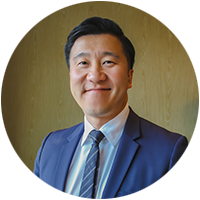
When Trevor Ma, MBBS, MPsych, MPhil, MBE, began the Master of Science in Bioethics program at Harvard Medical School, he was already a decade into his career as a physician. A forensic psychiatrist based in Sydney, Australia, Ma was serving as clinical director of custodial mental health for the Justice Health and Forensic Mental Health Network, overseeing mental health services across the prison system in New South Wales.
The work was demanding, particularly in the aftermath of the COVID-19 pandemic. Ma found himself confronting difficult questions about mental health care, incarceration, justice, and the responsibilities of clinicians working within restrictive systems.
“I was probably feeling a little bit burnt out,” he recalls, “and maybe a little disenfranchised with my work in the profession.” Ma began looking for a way to engage more deeply with the ethical and moral challenges he was encountering in practice.
He was already familiar with bioethics through his own reading, but opportunities for formal study were more limited in Australia. Because Ma planned to continue working full time, he looked internationally for a program that could offer both intellectual depth and flexibility.
“I was looking not only at international courses, but also at ones that were being delivered online and that were flexible, because I was working full-time as well,” he says.
Harvard Medical School’s two- or three-year, part-time, live virtual Bioethics program offered that combination. Ma was also drawn to the faculty, particularly Rebecca Weintraub Brendel, MD, JD, director of the HMS Center for Bioethics and a psychiatrist whose professional background resonated with his own.
Coming into the program, Ma was primarily interested in moral theory and its application to health care. The breadth of the curriculum quickly expanded that understanding. “I was impressed by how broad the field really was,” he says.
Alongside foundational coursework, Ma explored human rights, research ethics, clinical ethics, and questions of justice. The ability to select electives that connected directly to his professional interests allowed him to examine issues he was already facing in correctional psychiatry from new perspectives.
One course, Health and Human Rights, proved especially influential. During a lecture on the psychiatric consequences of solitary confinement, Ma encountered research that spoke directly to his work with incarcerated patients.
“I was able to apply those teachings to my own practice,” he notes, “and it also spurred me to go on to do quite a bit of advocacy work in that area within my own jurisdiction.”
That classroom experience eventually contributed to policy work beyond Harvard. Ma helped develop a position statement for the Royal Australian and New Zealand College of Psychiatrists on the mental health impacts of solitary confinement and later worked on related guidance within his own health organization.
The exchange between coursework and professional practice became a defining feature of his time in the program. Rather than setting aside his clinical career to study bioethics, Ma was able to bring questions from his work into the classroom and return to that work with new frameworks for addressing them.
Doing so from Sydney required some adjustment, however. The time difference meant attending live classes in the middle of the night, but Ma valued the opportunity to participate synchronously. “I actually appreciated the live lectures,” he says. “I’ve learned from recorded lectures of online courses before, and it doesn’t have the same impact. I was quite willing to adjust my time to connect with other students.”
The virtual classroom also connected Ma with professionals across disciplines and countries. “I was really impressed by the enthusiasm of all the students,” he says. “Being around like-minded people who were very passionate, who’d come from all different backgrounds, both globally and professionally, was really nice.”
Several courses produced work that continued long after the semester ended. In Writing and Communications for Biomedical Sciences, Ma focused an assignment on moral distress and moral injury among clinicians working in prisons and other detention settings. He continued developing the piece after graduation, eventually publishing it in a medical journal and adapting it as an opinion piece for a national Australian newspaper.
Research ethics coursework led him in another direction. During the program, Ma joined his organization’s Human Research Ethics Committee, where he spent the next three years reviewing research involving incarcerated populations.
Clinical ethics training had an equally direct impact. After completing the Clinical Ethics Consortium, Ma helped establish the inaugural Clinical Ethics Committee within the Justice Health and Forensic Mental Health Network and became its deputy chair, a position he continues to hold.
“The applicability of the teachings to your own professional setting was something that really impressed me,” he explains. “That flexibility allowed me to use the assignments to generate real-world changes in my own professional work.”
Ma’s capstone experience centered on questions that had followed him throughout his career. Working with Brendel as his mentor, he developed “Securing Social Justice: A Recommitment to Ethics in Forensic Psychiatry,” examining social justice and the social determinants of mental health within correctional psychiatry and the criminal justice system.
Their shared background in psychiatry created an immediate connection, but Ma was especially struck by the consistency and accessibility of the mentorship. “I appreciated the commitment, the time, and the availability of the mentors,” he says. “To be able to connect weekly on a regular basis allowed the work to progress quickly.”
Their collaboration continued after graduation. Ma and Brendel co-authored a book chapter based on the work and presented together at the 2024 American Psychiatric Association Annual Meeting in New York on emerging themes in global forensic psychiatry. They later presented together at another international conference in Mexico City.
“We’ve stayed in contact directly ever since, and we both support each other’s work,” Ma says.
He had not expected the mentorship to become an enduring professional relationship. “It was certainly a real benefit of the program,” he says. “I expect that we’ll have an ongoing professional relationship long into the future.”
Since graduating, Ma has continued incorporating bioethics into both clinical leadership and education. He established a forensic psychiatry ethics journal club for trainees across Australia and New Zealand, leading monthly discussions on subjects such as neuroscience in the criminal justice system, solitary confinement, and mental illness in detention.
His current work has brought those questions into another complex clinical environment. As lead psychiatrist for Healthcare Australia’s national immigration detention network, Ma oversees mental health services across immigration detention settings throughout the country. “I really look to apply some of the bioethics skills to further advance justice and health outcomes for people in that setting,” he says.
Looking back, what surprised Ma most was how readily the program could be incorporated into an already established career. He entered Harvard as an experienced physician seeking a deeper way to think about the ethical challenges of his work. The part-time live virtual format allowed him to pursue that education without stepping away from the patients, institutions, and policy questions that made the material immediately relevant.
“Even though I was in the middle of my career, the program gave me the chance to create a launching pad to new opportunities,” he says. “It provided me with a platform to engage in some of the ethical challenges more deeply.”
Those opportunities have taken many forms: advocacy around solitary confinement, clinical ethics leadership, research oversight, international scholarship, and the education of future forensic psychiatrists. Ma sees the value of the training as extending well beyond a single role or specialty. “Those skill sets will serve you well not only for your work in the near future, but also for many more years to come,” he adds.
For Ma, the Master of Science in Bioethics offered a way to deepen an existing career rather than step away from it. By studying ethical questions while continuing to confront them in practice, he was able to turn graduate education into something immediate: a source of new ideas, new collaborations, and new ways to advocate for patients within some of health care’s most ethically complex settings.
Written by Bailey Merlin