
Bridging Biology, Sociology, and Care Through Bioethics
Student Perspective | January 26, 2026
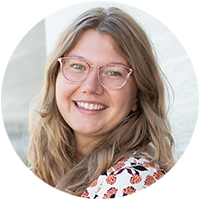
Hannah Bentz entered the full-time, in-person Master of Science in Bioethics program at Harvard Medical School with a strong foundation in neuroscience and microbiology, and a growing conviction that biological explanations alone cannot fully account for how health, disease, and treatment are understood. Her academic trajectory reflects a sustained effort to examine science not only as a technical enterprise, but also as a social one.
Bentz earned dual bachelor’s degrees in neuroscience and microbiology from Indiana University Bloomington, along with minors in medical sociology and chemistry. As an undergraduate, she conducted molecular neuroscience research, organized medical humanities conferences, and volunteered in memory care facilities. Bentz also received Indiana University’s Excellence in Research Award for her work in neuroscience. Throughout her studies, she was deeply engaged in laboratory research and initially planned to pursue medical school.
As she began preparing for the MCAT, however, Bentz found herself questioning whether a traditional clinical pathway was the right fit. Rather than pushing past that uncertainty, she chose to pause and explore her interests more intentionally. After graduating, Bentz moved to Cambridge, MA, to work as a research assistant in a brain aging lab within Harvard’s Department of Stem Cell and Regenerative Biology, where she focused on myelination and potential therapeutics for multiple sclerosis.
It was during this period that Bentz began to notice something that would fundamentally reshape her academic direction: consistent differences in treatment response between male and female mice. While such findings are often framed as purely biological, Bentz hesitated to accept that explanation alone. “I knew there were many factors that affect how we interpret scientific data,” she explains, “and that those interpretations have consequences for patients.”
That curiosity led her to the work of Sarah Richardson, PhD, whose scholarship examines how sex and gender are conceptualized in scientific research. After attending one of Richardson’s lectures, Bentz began working in the GenderSci Lab at Harvard, exploring how social frameworks influence knowledge production in the biomedical sciences. Bioethics soon emerged as the field that could bring these strands together. “My motivation for joining the Bioethics program was to understand the intersection of sociology, health care, and research,” she says, “and how social constructions influence the way we practice science and the care people receive.”
Now more than halfway through the Bioethics program, Bentz describes her first semester as both challenging and affirming. The program’s breadth prompted her to reconsider assumptions she once held about science, policy, and access to care. “It forced me to step back and see how policy and ethics intersect with medicine in ways I understood abstractly, but not concretely,” she reflects. Bioethics, she adds, has helped her recognize that ethical questions are not peripheral to scientific work but embedded in every stage of research and practice.
One course that has been especially influential for Bentz is Narrative Ethics. In a field often dominated by empirical evidence and quantitative measures, she found narrative approaches both grounding and transformative. “Narratives humanize spaces that are often dehumanized,” she explains. “Science and medicine depend on human experience, yet the people most impacted by that work are often sidelined.” Through Narrative Ethics, Bentz has come to see how patient stories, research trajectories, and institutional histories shape access to care and the understanding of disease. She plans to carry this perspective forward into her future academic work, particularly in the history of science and medical sociology.
Bentz’s capstone project reflects this interdisciplinary approach. Initially interested broadly in autoimmune disease, she soon narrowed her focus through historical and sociological analysis. Her project now centers on Sjögren’s syndrome, an autoimmune condition with a striking gender disparity in diagnosis. While women are diagnosed far more frequently, men often present with more severe manifestations of the disease.
Her research examines how shifting classification and diagnostic criteria have influenced who gets diagnosed, who receives treatment, and how funding priorities are set. She is co-mentored by Vrushali Dhongade, MBBS, MS, MBE, and Sarah Richardson, PhD, a support structure Bentz describes as both intellectually rigorous and deeply compassionate.
Beyond coursework and research, Bentz has been struck by the Bioethics community itself. While expecting a cohort largely oriented toward pre-medical or pre-law paths, she has found that the diversity of perspectives among her peers has significantly shaped her thinking. “Even when we disagree, it’s an environment where I feel encouraged to speak,” Bentz says. She credits faculty mentorship with fostering a culture of care that extends beyond academic performance. “It feels like people want to know how you’re doing, not just how you’re doing in class.”
After completing the Bioethics program, she plans to matriculate into a PhD program in sociology or the history of science, while continuing her work with the GenderSci Lab at Harvard. Bentz sees bioethics as a lens that she can apply in any discipline.
For prospective students, her advice is straightforward: keep an open mind. “Bioethics requires a willingness to change how you think,” she says. For Bentz, that openness has been the foundation of a program that not only clarified her next steps, but also transformed how she understands science itself.
Written by Bailey Merlin