
Stephan DeCarlo
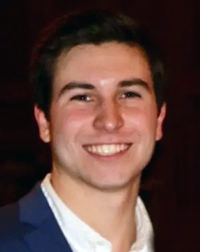
Chemical Biology PhD Program
I initially focused on using phage-assisted continuous evolution (PACE) to evolve chemical biology tools for use in targeted protein degradation (TPD) applications. I now am utilizing PACE to evolve biomolecules for diverse applications in biotechnology.
Where are you from, where did you study prior to this, and what brought you to HMS?
I was originally born and raised in Connecticut and did my undergrad at Bowdoin College. I worked at a biotech company for a couple of years after graduation doing antibody discovery. I came to Harvard because of the scientific community and opportunities.
How does your research hold promise for therapeutic innovation?
Hopefully, some of the tools I’ve contributed to developing so far in my PhD studies can be used for derisking/identifying tractable targets for TPD drug development. I can’t elaborate on my current work, but it is focused on addressing unmet needs pertaining to a variety of biologics that are either currently in the clinic or under investigation.
What was your reaction when you learned you were named a Fujifilm Fellow?
I was surprised and grateful!
Hawa Dembele
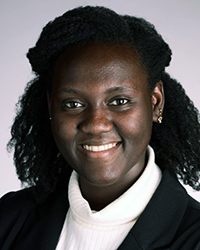
Systems, Synthetic, and Quantitative Biology PhD Program
My field of study is synthetic biology broadly, and nucleic acid origami more specifically. I’m a third-year PhD student in William Shih’s lab at the Wyss Institute; my project focuses on developing a new class of messenger RNA vaccines/therapies for various disease applications.
Where are you from, where did you study prior to this, and what brought you to HMS?
I grew up in Bamako, Mali, and moved to Manhattan, Kansas, to complete my undergraduate degree at Kansas State University. As an undergraduate student, I participated in multiple research projects ranging from protein structure determination to small molecule synthesis and protein design. I decided to join Harvard Medical School for my PhD because of the highly collaborative and supportive research atmosphere.
How does your research hold promise for therapeutic innovation?
The recent successes with vaccine development against SARS-CoV-2 have highlighted the unparalleled potential that mRNA vaccines have to offer. Along with these successes, several key challenges have come to light with regard to mRNA stability and its potential use as a therapeutic agent. In particular, the cold chain manufacturing process and the complex lipid-nanoparticle encapsulation process present obstacles that limit the worldwide distribution of the SARS-CoV-2 mRNA vaccines and the expansion of mRNA therapeutics broadly. My projects in the Shih Lab focus on addressing some of these challenges using nucleic acid origami technology.
What was your reaction when you learned you were named a Fujifilm Fellow?
I was incredibly excited and honored to learn that I had been selected as a Fujifilm Fellow. I am deeply grateful to Fujifilm for their support of not only my research project, but therapeutics research as a whole.
Katlyn Gabriel
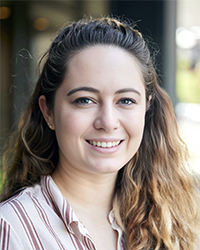
Biological and Biomedical Sciences (BBS) Program
I am a fourth-year student in Anna Greka’s laboratory. My research uses high-throughput imaging to discover new mechanisms of cellular fatty acid regulation.
Where are you from, where did you study prior to this, and what brought you to HMS?
I am originally from eastern Pennsylvania. I first moved to Massachusetts to pursue my undergraduate degree at UMass Amherst. I then moved to Boston and spent three years studying mechanistic lipid biology in cellular and disease models, which led me to pursue my PhD at Harvard, exploring mechanisms of fatty acid metabolism.
How does your research hold promise for therapeutic innovation?
Dysregulation of fatty acid metabolism induces metabolic syndrome, which can lead to the development of many associated pathologies such as obesity, type 2 diabetes, cardiovascular disease, and chronic kidney disease. My research aims to identify modulators of fatty acid metabolism, specifically compounds that may protect the body from fatty acid-induced stress.
What was your reaction when you learned you were named a Fujifilm Fellow?
I am honored and enthusiastic to have been named a Fujifilm Fellow. I am excited to have the support of Fujifilm in my efforts to produce strong therapeutically driven research.
Lily He
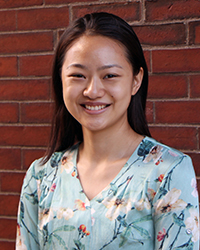
Neuroscience PhD Program
I am a student in Dr. Nicholas Bellono’s lab in the Department of Molecular and Cellular Biology at Harvard. I study voltage-gated calcium channels involved in signal integration in sea anemones, using a combination of electrophysiological, genetic, and molecular studies.
Where are you from, where did you study prior to this, and what brought you to HMS?
I was born and raised in the Boston area and pursued my neuroscience bachelor’s and master’s degrees at Brandeis University. During my undergraduate training, I worked in the lab of Dr. Eve Marder, studying the adaptation mechanisms of a neural circuit to global perturbations. I decided to join the neuroscience PhD program at HMS because of the program’s long history, the training opportunities it offers, and the School’s integration with Boston’s hub of life science innovation.
How does your research hold promise for therapeutic innovation?
My research can improve our understanding of the function of voltage-gated calcium channels, which are involved in numerous critical physiological functions such as muscle operation in both skeletal and cardiac systems and cellular processing in brain regions like the cerebellum. Findings from my work can inform the mechanistic understanding of the impact of genetic mutations involving calcium channels as well as the development of treatments for cardiac-related illnesses.
What was your reaction when you learned you were named a Fujifilm Fellow?
I was pleasantly surprised and felt honored when I heard that I had been named a Fujifilm Fellow. I am truly grateful to Fujifilm for their support of my research and of life sciences and therapeutic innovation at HMS.
Joe Hurley
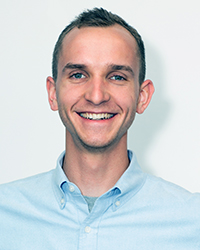
Biological and Biomedical Sciences (BBS) Program
I am a fourth-year PhD student in Andrew Kruse’s lab at Harvard Medical School, and my research focuses on developing and deploying protein engineering technologies to modulate key biological processes such as G protein coupled receptor (GPCR) signaling and bacterial membrane biogenesis.
Where are you from, where did you study prior to this, and what brought you to HMS?
Originally from Oregon, I pursued undergraduate studies in biochemistry at Northwestern University and researched bacterial methane oxidation in Dr. Amy Rosenzweig’s lab. After graduating, I spent a two-year postbaccalaureate fellowship studying bacterial membrane biogenesis in the lab of Dr. Susan Buchanan at the National Institutes of Health. I then worked in drug discovery at a couple of biotechnology companies in California before returning to academia to pursue my PhD at HMS.
How does your research hold promise for therapeutic innovation?
My hope is that the tools I’m developing in my PhD studies will not only prove useful to investigate my specific research topics, such as GPCR ligand recognition, but will be broadly applicable and robust such that they can be used by other research groups studying a wide variety of biological questions. The ultimate measure of success would be if these tools could be used to discover or engineer molecules that confer therapeutic benefits.
What was your reaction when you learned you were named a Fujifilm Fellow?
I was honored and grateful to be selected, and I look forward to continuing my thesis research with the support of Fujifilm, the Therapeutics Graduate Program, and the community of other fellows.
Kasia Kready
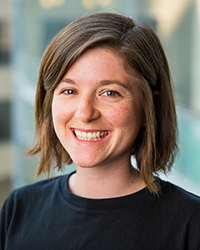
Systems, Synthetic, and Quantitative Biology PhD Program
I am a fifth-year student in Pam Silver’s lab, and I am designing protein therapeutics to increase lactation.
Where are you from, where did you study prior to this, and what brought you to HMS?
I am from Little Rock, Arkansas. I did my undergraduate studies at Dartmouth College, and I have a master’s from Paris Descartes University in Paris, France.
How does your research hold promise for therapeutic innovation?
Fifty percent of lactating parents struggle to make enough milk for their infants, and I am designing protein therapeutics to increase lactation.
What was your reaction when you learned you were named a Fujifilm Fellow?
I was really excited and grateful.
Claudia (Yunxi) Liu
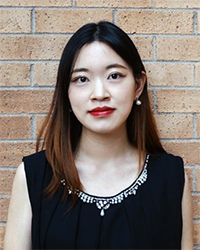
Chemical Biology PhD Program
I’m a third-year grad student in Emily Balskus’s lab studying a small microbial genotoxin called colibactin.
Where are you from, where did you study prior to this, and what brought you to HMS?
I grew up in Chongqing, China, and went to the University of Wisconsin-Madison for undergrad. In undergrad, I got opportunities to be involved in gut microbiome research and wanted to keep exploring the area, but with more of a biological focus at the interface of host-microbial interactions. There are just so many exciting ongoing research at HMS in this area, which is why I’m here!
How does your research hold promise for therapeutic innovation?
I’m really interested in developing therapeutics for infectious diseases, particularly those of microbial or viral origins. By researching and gaining a deeper understanding of the chemical mechanisms and biological impacts, I hope to connect diseases’ molecular details with therapeutic development.
What was your reaction when you learned you were named a Fujifilm Fellow?
I was very surprised, honestly, but a burst of joy followed! It’s my honor to be named a Fujifilm Fellow and I really appreciate the opportunity!
Jiho Park

Biological and Biomedical Sciences (BBS) PhD Program
I am a fourth-year student in Eric Fischer’s lab at Dana-Farber Cancer Institute and Harvard Medical School. My research focuses on the use of cryo-EM to study how transcription factor stability and function are regulated in cells.
Where are you from, where did you study prior to this, and what brought you to HMS?
I primarily grew up in Orange County, California, before moving to the Boston area for my undergraduate studies at Harvard College. After attaining my bachelor’s degree in molecular and cellular biology, I worked as a data scientist at nference, a biotechnology startup. Having mainly done research in computational biology before graduate school, I decided to pursue a PhD at HMS to gain more experience in benchwork and experimental biology.
How does your research hold promise for therapeutic innovation?
Despite their central role in a number of malignancies, transcription factors have long been considered to be undruggable by small-molecule inhibitors. The Fischer Lab studies how a class of small molecules called molecular glues can co-opt the protein homeostasis machinery of cells to degrade transcription factors. By using cryo-EM in conjunction with other structural biology and biochemical techniques, I hope to uncover additional mechanisms by which we can perturb the stability and function of this important class of drug targets.
What was your reaction when you learned you were named a Fujifilm Fellow?
I was very excited when I was notified about the Fujifilm Fellowship program. I am honored that Fujifilm will be supporting my research, and grateful for the company’s commitment to rigorous scientific training and innovative scholarship.
James Woods
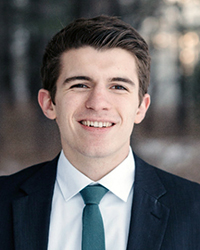
Chemical Biology PhD Program
I am a student in Brian Liau’s lab in the chemistry and chemical biology department. I use genome editing to study the function of key proteins that drive cancer growth. By studying these proteins in their native cellular environment, instead of in simple, purified systems, I hope to better understand their complexity and regulation.
Where are you from, where did you study prior to this, and what brought you to HMS?
I’m originally from Oregon, studied biochemistry in Utah, and completed a post-baccalaureate fellowship at the National Institutes of Health in Maryland. Before graduate school, I studied cell signaling in cancer and immune cells. Over time, I also discovered an interest in understanding how drugs work and how new drugs are developed. Coming to Harvard’s chemical biology program was the perfect opportunity to expand on those interests and pursue exciting projects in therapeutic science.
How does your research hold promise for therapeutic innovation?
My research could reveal new sites or pockets on cancer-associated proteins. These sites could then be targeted in future drug development campaigns. Proteins are often studied in isolation, which ignores the fact that most proteins exist in complexes that tightly control protein function. By studying proteins in a more natural context, we can discover new mechanisms that regulate these proteins and perhaps mimic these mechanisms with chemical compounds or drugs.
What was your reaction when you learned you were named a Fujifilm Fellow?
I was so grateful to be selected as a Fujifilm Fellow. Having secure funding for my third year allows me to focus on my research and gives me flexibility in the questions I ask and the experiments I design. I’m glad that Fujifilm has consistently supported important life science research by funding graduate students like me.