A team of medical historians including two from Harvard Medical School has launched a series of articles in the New England Journal of Medicine looking at the role of physicians, medicine, and disease in the American Revolution to mark its 250th anniversary.
The group plans to publish as many as eight pieces through September 2033, the 250th anniversary of the end of the Revolution.
The list of potential subjects conveying the sizeable impact of doctors and disease in this period of history — and some of those physicians’ connections with Harvard University — is not short.
For example, the prominent Warren family played key roles in both the war and the early history of HMS.
“In the Revolution, physicians were relatively more prominent than they have been in subsequent moments of American history,” said series co-author David S. Jones, the A. Bernard Ackerman Professor of the Culture of Medicine in the Blavatnik Institute at HMS. “In these battles, as in most wars, more soldiers were dying of disease than were dying of combat.”
Jones’s fellow co-authors are Scott Podolsky, professor of global health and social medicine at HMS and director of the Center for the History of Medicine in the Francis A. Countway Library of Medicine at HMS; HMS alumnus Jeremy Cannon, professor of surgery at the University of Pennsylvania Perelman School of Medicine; and Justin Barr, a transplant surgeon at the Ochsner Clinic in New Orleans.

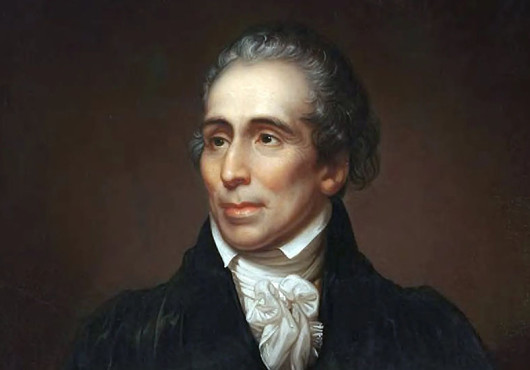
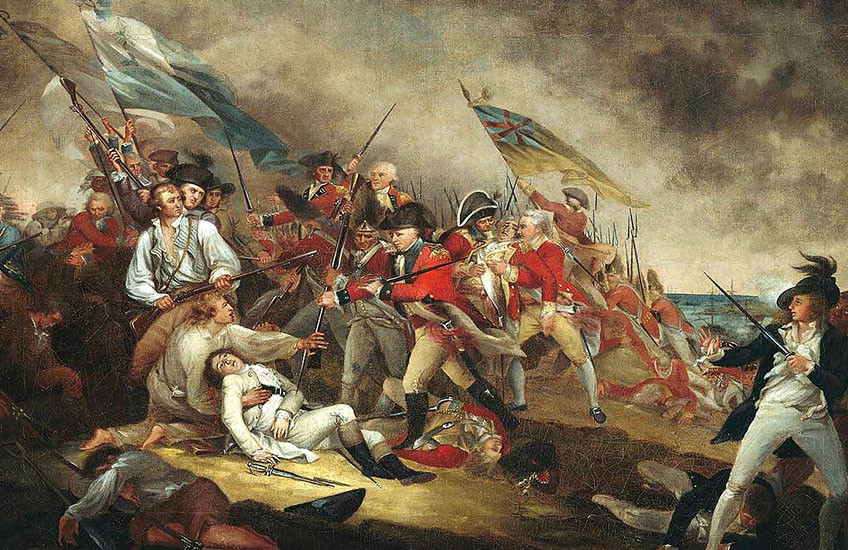
The first article in the series, released April 12, 2025, to coincide with the 250th anniversary of the Battle of Lexington and Concord, commemorated Joseph Warren, a Harvard College alumnus, physician, military general, and U.S. Founding Father who died at the Battle of Bunker Hill.
Warren’s brother John Warren was a Continental Army physician who went on to found HMS in 1782, while John Warren’s son, John Collins Warren, founded NEJM and served as the School’s first dean. The Center for the History of Medicine is preparing an exhibit on John Warren, the Revolution, and the subsequent early history of HMS, designed to coincide with the 250th anniversary of Evacuation Day, when British forces retreated after the siege of Boston, Podolsky said.
The team’s second article, which came out Dec. 6, 2025, examined the role of smallpox and fears of biological warfare before and after the siege of Boston.
The authors hope future articles might cover subjects spanning doctors’ service on battlefields at land and sea and their political work as legislators, governors, and Declaration of Independence signers.
The parts of the stories that intrigue Jones most are those where open questions or outright mysteries remain, such as whether the British did in fact engage in biological warfare. Historians already know that both sides readily engaged in what would now be considered war crimes, from destroying the enemy’s crops to killing prisoners of war.
“Colonial warfare was just a violent, awful thing,” Jones said. “Is spreading smallpox any more violent or awful? It bugs us. I don’t think it bugged them at the time.”
Finding the proof would matter, Jones said, to thoroughly tell the truth about America’s founding war and medicine’s role in winning it.
The article series marks the latest collaboration between HMS faculty and NEJM. Another effort, launched in 2023 — featuring eight articles written by independent scholars and edited by Jones and Podolsky as well as three symposia hosted at HMS — identified examples of discrimination published in NEJM’s own pages as part of a larger push to investigate historical injustices in medicine and alleviate harms that continue to arise from them.
Read the full article in the Harvard Gazette.