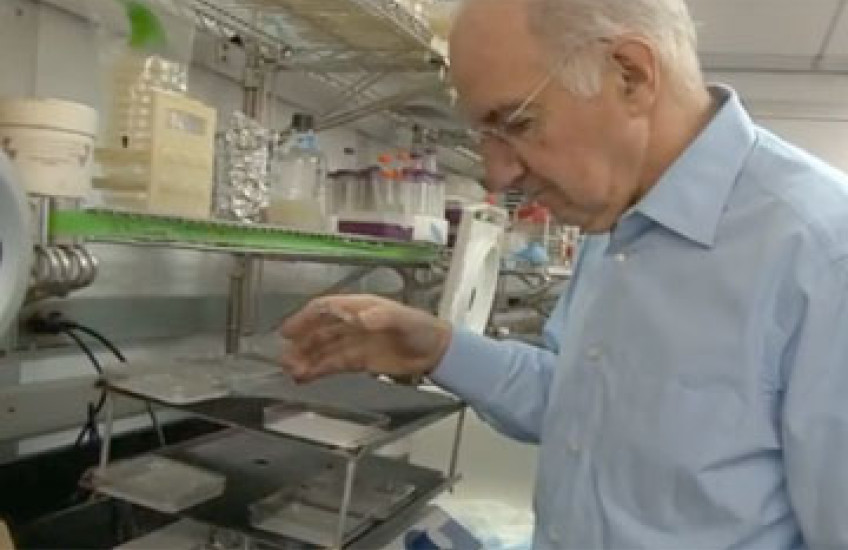
Researchers at Boston Children’s Hospital are pioneering a surgical procedure in which a child’s blood vessels are stretched, providing new material to make repairs elsewhere in the body. The newly grown arteries can replace sections that are damaged or missing, resulting in fixes that may grow with the child and last a lifetime. Heung Bae Kim, HMS associate professor of surgery at Boston Children’s Hospital, led the team.
A former research fellow at Harvard School of Dental Medicine falsified numbers in slides presented at a laboratory meeting and in research summaries submitted to conferences, according to a finding by the federal Office of Research Integrity.
Kendall Square in Cambridge has become the center of a real estate boom, with most of that growth connected to the biotechnology and pharmaceutical industries. Collaboration with HMS-affiliated hospitals is also mentioned.
The past year has seen more debate about the best way to find breast cancers. Daniel Kopans, HMS professor of radiology at Massachusetts General Hospital is quoted, and discusses a 3-D mammogram he invented called tomosynthesis.
A report on nearly three million people found that those whose B.M.I. ranked them as overweight had less risk of dying than people of normal weight. George Blackburn, HMS professor of surgery at Beth Israel Deaconess Medical Center, is quoted.
For years, doctors, scientists, and ethicists have debated whether people will benefit from decoding their DNA, the three billion letters of the genome that spell out traits and predisposition to disease. Now, that complicated conversation is moving to a new venue: the newborn nursery. Alan Beggs, the Sir Edwin and Lady Manton Professor of Pediatrics at Boston Children’s Hospital and Robert Green, HMS lecturer on medicine at Brigham and Women’s Hospital, designed a trial to measure benefits and risks of newborn sequencing.
Dozens of cancer drugs have been in short supply in recent years as manufacturers closed factories, stopped making products, or halted operations because of quality control problems. Researchers have struggled to quantify the effect shortages have had on patient care, and a new article advances that effort. Amy Billett, HMS associate professor of pediatrics at Dana-Farber Cancer Institute, was one of the authors of the study.
Isaac S. Kohane, the Lawrence J. Henderson Professor of Pediatrics at Boston Children’s Hospital and director of the Countway Library of Medicine at HMS; Jeffrey M. Drazen, the Parker B. Francis Distinguished Professor of Medicine at Brigham and Women’s Hospital and editor-in-chief of The New England Journal of Medicine; and Edward W. Campion, HMS assistant professor of medicine at Massachusetts General Hospital, published an editorial looking forward at what medicine may look like in the next 100 years.
When faced with a thorny medical problem, Jeffrey Karp, HMS associate professor of medicine at Brigham and Women’s Hospital, and his students sometimes head to Franklin Park Zoo or the New England Aquarium because animal life is a big source of inspiration for Karp and his colleagues at the center on regenerative therapeutics he runs. Robert S. Langer, HMS senior lecturer on surgery and Mehmet Toner, the Helen Andrus Benedict Professor of Surgery at Massachusetts General Hospital, are also quoted.