Rwanda and Harvard Medical School have teamed up to empower a new generation of health leaders to bridge the gap between knowledge and practice in global health care delivery.
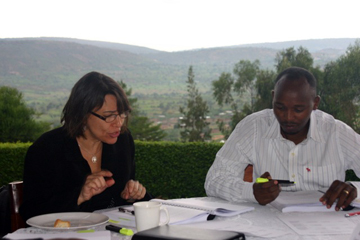
On Feb. 19, 41 faculty and students from Burundi, Haiti, Rwanda, and the United States gathered at the Rwinkwavu Hospital Training Center to launch an immersive five-day course in global health delivery, led by HMS faculty in conjunction with the Ministry of Health of Rwanda.
Dr. Agnès Binagwaho, Rwanda’s minister of health and a senior lecturer at Harvard Medical School, called the course an example of “authentic and effective capacity building for the health sector, meant to break the vicious cycle of poverty and disease.”
The course, Global Health Delivery in Rwanda, utilizes a novel educational framework to address the global burden of disease and its complex inter-related social determinants. In a rigorous and stimulating scholarly environment, participants will:
- analyze case studies from around the world that detail the design, operations and outcomes of projects to improve health care delivery in resource-poor settings;
- engage in deep discussions about how epidemiology, culture, economics, and politics inform the design and performance of global public health programs; and
- conduct field visits to health care delivery sites in rural Kayonza District to observe and analyze management principles.
“To build a discipline of global health, research universities need to work with the real experts: those who deliver services,” said Paul Farmer, Koloktrones University Professor at Harvard, chair of the HMS Department of Global Health and Social Medicine and a member of the course faculty. “It’s an honor to teach and also to learn here in Rwanda.”
The course will be offered twice per year, with the goal of enrolling all central-level leaders in the Ministry of Health, as well as program managers and students from around the world. New case studies will be developed to disseminate innovations in Rwanda’s health sector and cultivate Rwandan leaders in the emerging discipline of global health delivery.
“I am thrilled to learn about a new way of conceptualizing service delivery,” said Jean de Dieu Ngirabega, director general of clinical services in Rwanda’s health ministry and a student in the course.
The non-governmental organization Partners In Health / Inshuti Mu Buzima, which collaborates closely with the HMS Department of Global Health and Social Medicine, provided logistical support and funding for the pilot version of the course.