The pace of discovery in the life sciences is breathtaking. Our understanding of human genetics, as well as the chemical and physical interactions of single molecules within cells, has advanced according to Moore’s Law. Meanwhile, critical new insights show how social networks, psychology and behavioral economics impact health.
And yet, there have been painfully few equivalent advances in human health. The drug development system is stalling, health care costs continue to rise unsustainably, and poverty and politics prevent many in the world from achieving even the most basic standards of human health.
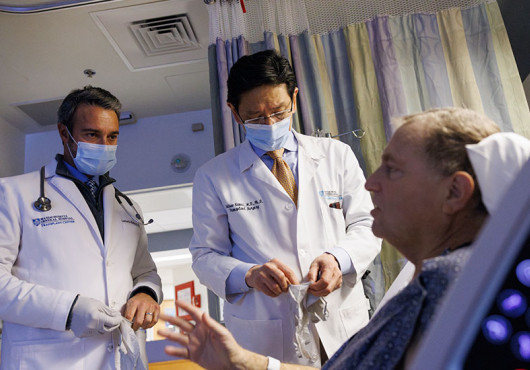
“In the 40 years that I’ve watched the progress of medicine and science, we have not conquered enough diseases,” said Lee Nadler, HMS dean for clinical and translational research, addressing the crowd on Nov. 29 at the inaugural Kantoff- Sang Lecture, an event that honors Philip Kantoff, professor of medicine at Dana-Farber Cancer Institute, in memory of Heng-Kang Sang, who was Kantoff’s patient. Senior leaders, educators and researchers from Harvard University, Harvard Medical School, Harvard School of Public Health and Harvard-affiliated hospitals presented a series of talks and a panel discussion focusing on clinical and translational research education and on the challenges and opportunities inherent in the current ecosystem of biomedicine and human health.
Speakers and panelists also addressed the challenges of educating and training a new generation of physicians and scientists who will translate scientific knowledge into innovative treatments, and to the challenge of ensuring that such potential treatments are available to people everywhere.
Jeffrey S. Flier, dean of Harvard Medical School, described new programs that HMS has undertaken to facilitate translational and clinical research. At the heart of many of these efforts is Harvard Catalyst | The Harvard Clinical and Translational Science Center.
Alan Garber, provost of Harvard University and, until taking his current post in 2011, director of the Center for Health Policy and the Center for Primary Care and Outcomes Research at Stanford University, and a primary care physician at the Veterans Affairs Palo Alto Health Care System, emphasized the need to include sociology, psychology and economics in the spectrum of research, and noted that Harvard University excels in these areas.
When he came to Harvard, Garber said, he saw many opportunities for improving coordination across different department and different schools. “Catalyst has given me huge hope that this is a solvable problem,” he said. “Being able to point to examples of success just makes it easier to build on to other successes, to encourage people that it can be done.”
William Chin, HMS executive dean for research and Bertarelli Professor of Translational Medical Science, said that one of the key challenges is that, despite amazing advances, we still haven’t truly overcome the complexity of disease. “To defeat more diseases,” he said, “we don’t just need to adjust the old ways of collaborating and regulating research; we need entirely new ways.” Chin said that HMS is working to develop such new approaches through collaborations with the Law School and the Business School, as well as with government agencies and with industry.
The challenges that need to be solved nowadays are more complex and the exponential growth of knowledge makes it impossible for a single physician or scientist to master it all. “We have to do this as teams, ” said Elliott Antman, HMS associate dean for clinical and translational research.
Speakers mentioned a variety of new programs designed to help researchers and physicians work together, including the Harvard Institute of Translational Immunology, the new initiative in Systems Pharmacology and the Wyss Institute for Biologically Inspired Engineering. In addition to building programs and infrastructure to support collaboration, these projects also focus on inherently collaborative techniques like crowdsourcing.
David Scadden, co-chair of the Department of Stem Cell and Regenerative Biology, the University’s first cross-school department, spoke about the importance of attracting new young scientists through multidisciplinary courses like his freshman seminar, “Blood: From Gory to Glory.” Students read “Dracula,” they recreate the foundational experiments of stem cell biology, and they meet people who have benefitted from stem cell therapies.
The underlying theme of the event was clear: Astounding work happens when different disciplines intersect.
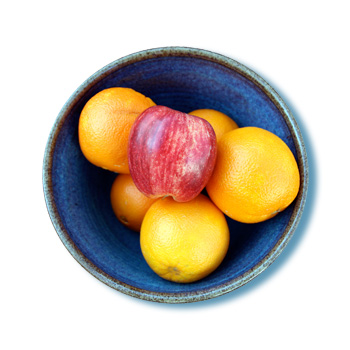
“Be an apple in a bowl of oranges,” said Frances Jensen, professor of neurology at Children’s Hospital Boston. “That is how we have to be conducting ourselves.”
The event was made possible through generous gifts in memory of Heng-Kang Sang.