This is one in a series of profiles featuring graduating HMS students.
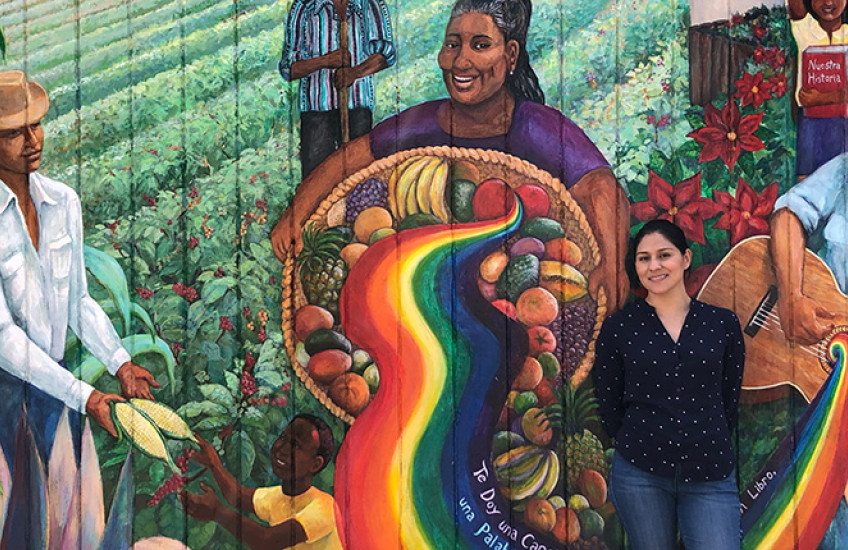
Graduating Harvard Medical School student Blanca Morales Temich came to the U.S. nearly 30 years ago with her parents, who are undocumented immigrants. She was allowed to remain in the country and attend medical school as a recipient of the Deferred Action for Childhood Arrivals, or DACA, immigration policy.
Harvard Medicine News profiled Morales Temich in Feb. 2018 when DACA, and her ability to remain in the country to complete medical school, were threatened by the Trump administration’s move to eliminate the program. The policy was extended, however, and she was able to renew her status.
Now, her status is once again in jeopardy, and Morales Temich is worried that she will not be able participate in her OB/GYN residency at the University of California, San Francisco.
As graduation approaches, HM News followed up with Morales Temich to find out how she is doing amid the coronavirus pandemic, discuss looming DACA deadlines and learn how she chose her specialty and residency location.
HMS: How are you and your loved ones doing during the coronavirus pandemic? Are they safe and well?
My family is in southern California. Everyone, thank goodness, is healthy. My dad is still going into work every day. He’s in that position where my parents can’t really afford to not have an income coming in, but at the same time, going out every day puts him at risk for exposure. My sister just had a baby, which is exciting, but I’m thinking about them, exposure-wise.
This pandemic has certainly hurt everyone, but I think it highlights the real struggle that documented and undocumented immigrant communities are going through, because we don’t have the same safety net opportunities that other individuals do. People like my parents don’t have the luxury of working from home. They have to expose themselves, and I think most families are happy to still have a job. It has uncovered the strong workforce that has always been there.
HMS: When we spoke in 2018, you were unsure you could finish your medical degree. So, congratulations—you are on the verge of graduation. However, a new ruling on DACA is expected from the U.S. Supreme Court in mid-June, and even if that decision is postponed, your status is scheduled to expire in October. Fill us in on where you stand now.
This is the closest I have been to becoming a doctor. And still there is this looming indecision, this constant threat as to whether or not that’s actually going to become a reality. The rescinding of DACA is threatening my ability to become a doctor, because the next step of the training is actually a job; you’re a resident. It’s a contract job, and that ability to work, to legally seek employment, is what DACA has given me.
I know this is supposed to be a really happy time, but it’s hard for me to believe. You work so hard because you want to be a doctor so bad. And now it’s within arm’s reach, but still it could be yanked away.
I think this pandemic is putting uncertainty into everyone’s life, but that’s how I’ve certainly felt for the majority of my life. Not knowing what is going to happen tomorrow. Not knowing what opportunities are going to be available. Not knowing if I’ll be allowed to help out in the best way that I can. And now that I’m so close to actually being a doctor, to being a licensed physician, I don’t know if I’m going to get to do that because of the political system.
HMS: Do you see immigration issues as health care issues?
Absolutely. This is a health care issue because we’re all integrated. We’re all part of this community, and if one group of people is hurting, that is going to affect the rest of us, either directly or indirectly, because of the services that we provide.
If there is a group of people that is for some reason not participating in health care because they can’t, or they’re afraid or there are barriers for them, that group is going to become very ill, and that is going to affect their ability to contribute to the rest of society. We’ve already seen this with the coronavirus pandemic.
We’ve seen that individuals from lower socioeconomic classes are the ones that are being affected the most. They have one of the highest mortality rates. They are performing jobs without proper health care. They’re afraid to get testing themselves, and they’re out there providing services that we all need. If part of us is in trouble and hurting, it’s eventually going to ripple down to everyone else.
HMS: How about other DACA recipients who might be medical students, either here at Harvard or across the country? Have you been in touch with any of them?
Dalia [Larios Chavez, MD ‘19] is a graduate of HMS and a first-year resident at Brigham and Women’s. I have another really good friend at UCSF. He’s a first-year family medicine resident there. They are working. They are on the front lines. I asked them about how they feel about the whole Supreme Court ruling. We had a lot of conversations, and everyone was just terrified of that.
But now, since they are working in the middle of a pandemic, they said they don’t even have time to worry about that. They’re worried about taking care of their patients. They’re overwhelmed with how many people are critically ill, and yet, this big decision is looming. But they are rolling up their sleeves, and they’re doing their part.
Almost 27,000 DACA recipients are directly involved in health care, either by being EMTs, nurses or any of the ancillary health care team members. Imagine taking that component out of health care. That’s going to affect and worsen the pandemic and the health care crisis that we have on our hands. This pandemic is just highlighting how integrated immigrants are into society, how much we are contributing and how much we want to be there. We want to be there. We just need the opportunity, the resources, the permission to continue doing what we’re doing.
HMS: You matched at UCSF in OB/GYN. Why OB/GYN? What do you hope to contribute in your career as a doctor?
I knew I wanted to do something in primary care, but I wasn’t quite sure. I ultimately decided on OB/GYN because there is a huge undercurrent of primary care in that field. For a lot of women their OB/GYN is their primary care physician. And I had a lot of great models of the importance of taking care of women. My mother was the person who inspired me the most. She has five children, and she’s been in this country for 30 years. Until recently, the only time she went to the clinic or hospital was related to her pregnancies because she didn’t have access to having a regular checkup.
In California, the state has recognized that pregnancy is a particularly vulnerable situation for women, and there’s some funding set aside to take care of women regardless of their immigration status. That’s how my mom was able to receive care surrounding her pregnancies. My three little sisters were born in the U.S. Otherwise, she’s been out of the medical system. I remember her finally being taken care of, even if it was just surrounding her pregnancy.
OB/GYN is a remarkable field in that you can manage diabetes, blood pressure, pregnancy, do cancer screenings, and if you find a malignancy, you can physically go in there and take care of it. It’s a full-service specialty, and it involves a lot of reproductive justice. I’m very interested in and passionate about empowering women and providing some service to them, because of how much women do.
And then why UCSF? The day that I had my interview at UCSF was the day of our second rally at HMS to highlight the threat to DACA. I physically couldn’t be there for the rally because I was interviewing. But it felt really nice to be in San Francisco, in a well-known and outspoken sanctuary city that is welcoming to immigrants and to everyone who needs help.
San Francisco General is a county hospital. It’s a safety net hospital. There’s a large population of undomiciled patients, patients who lack all sorts of support. The hospital has a huge commitment to taking care of people who need it the most. So, I really liked that program for its mission, for being able to provide and take care of everyone regardless of which groups patients self-identify with.
HMS: Is there anything that you want Americans to know about immigrants or fellow DACA recipients, especially those who are pursuing careers in health care, especially given that racial and ethnic diversity continues to increase in the U.S.?
We consider this our home, and we want to take care of our home. We want to see it thrive. We want to live in it and be happy and contribute and see our children and our families thrive. Undocumented people are doing that every single day. We are not afraid of hard work, we’re not afraid to put our talents and our abilities to use, because we want to see this country grow, and we want to grow with it.
To have this constant threat to us, even as we aspire to be a little bit more, is very demeaning. To always be pointed out as being different and unwanted wears away our ability to live a life with decency. And I think most people just want that. They want to earn a living. They want to see their families happy.
All of that is constantly threatened when the leadership says they blame us for crimes, they blame us for taking up resources, they blame us for taking away jobs that other people need. And if you look at the numbers, that’s simply not true. We contribute a lot to this economy without taking very much from it. We do some of the hardest jobs without complaining. We show up when it’s needed, and that’s what this global health care crisis is revealing—that we are there and we’re doing it without much protection.
As for being a future physician, I’ve wanted to become a doctor so much. I’ve done everything I could, volunteering in clinics and translating and doing research, everything but actually being a doctor. All of that could go away from a decision that is going to impact all of us.
HMS: What are the biggest things that you will bring to your medical career, as a physician, to your patients?
I think certainly being a woman of color is something that we need more of in all sectors of society, but especially in medicine. The reason that is important is because it’s known that people who have certain identifiers tend to serve communities with those same identifiers. As an immigrant, and a minority, I really want to take care of those communities, because I see that care for them is lacking. People say it’s challenging and difficult to work with certain communities because of resources, cultural barriers and language barriers, but these are the groups that need help the most.
Why these women matter is because they are the women who are raising your children. They are the ones who are cleaning your offices. They are the ones who are picking the food that you eat and serve your families. They are the ones who are putting together families that are going to impact every sector of society. So, I really want to be able to take care of this community because we’re all integrated, and if one community is able to be lifted up, we’re all going to rise with that tide.
This interview was edited for length and clarity.
Read profiles of graduating students and get details on graduation here.