
Dean of the Faculty of Medicine Jeffrey S. Flier began the meeting by announcing that the Liaison Committee on Medical Education (LCME) had concluded its accreditation visit and that brief reports were presented to him and to Harvard University Provost Steven Hyman by the LCME Visiting Committee. A formal report will be issued in October. Flier acknowledged the work of Lisa Muto, lecturer on health care policy and associate dean for institutional planning and policy, Jules Dienstag, dean for medical education, and all of the faculty and staff who participated in the process.
Flier then introduced Gretchen Brodnicki, dean for faculty and research integrity, and Kristin Bittinger, director of scientific integrity, to discuss the HMS Conflict of Interest (COI) Interim Policy and implementation plan. Brodnicki, who had distributed the interim COI policy statement for review prior to the meeting, gave a brief history of the COI policy review. Highlights included the creation in January 2009 of a committee made up of faculty, students and senior administrators from HMS and HSDM and charged with developing recommendations for revisions to the existing policy. Dean Flier accepted the committee’s recommendations in July 2010. Brodnicki introduced Jennifer Ryan, program manager for outside activities from the Research Issues Department, before opening the floor for discussion.
Timothy Ferris, associate professor of medicine, questioned whether the COI revision process would correspond with the processes at HMS-affiliated hospitals. Bittinger noted that HMS and its affiliates are in the process of establishing one point of entry and one portal for disclosures. Once a point-of-entry product is identified, the implementation phase will begin, with the goal of having the process in place by 2013. Martin Samuels, committee vice chair and head of the Department of Neurology at Brigham and Women’s Hospital, suggested implementing an IT solution that would highlight COI problems.
Samuels also asked about the chain of command regarding reporting, noting that there was need for educating chairs and supervisors. Bittinger agreed that education would be a key component of the implementation plan.
Erik Alexander, associate professor of medicine, questioned the required disclosures regarding clinically related continuing medical education (CME). Brodnicki answered that only disclosures relevant to the topic of the presentation were required, and that the requirement was specific to CME talks and talks given to students. Flier noted that it prove difficult to define relevance and suggested that the COI Standing Committee address the interpretation of financial disclosure requirements related to CME.
Alexander shared his concerns about public opinion if HMS is the only medical school to disclose information to the extent outlined in the new policy. Bittinger noted that faculty members from other institutions who participate in CME would be required to disclose conflicts of interest.
Flier expressed his reluctance to proceed with the implementation plan until areas of ambiguity are clarified. He encouraged council members to contact Brodnicki with additional questions.
Flier then introduced Maureen Connelly, HMS dean for faculty affairs, to report on the senior faculty promotion process. Connelly gave a brief overview and highlighted key changes, including: greater input from departments and the executive committee; central solicitation of a single set of letters shared confidentially with key stakeholders; reconfiguration of the Subcommittee of Professors (SOP) and input from the Committee of Professors; testimony from departments to the ad hoc committee; and reconfiguration of the ad hoc committee with equal representation of internal and external members but no department representative.
Connelly explained that informing the HMS community of the new procedures would be the next step, along with restructuring the SOP membership and reintroducing the Committee of Professors mailing. She also plans to complete cases under review that are still governed by the former procedures and to host a training event for administrators. Connelly was pleased to note that the first case had gone through the new promotions process that day. She also gave a demonstration of the new promotions tracking website.
During the discussion, Walter C. Guralnick Distinguished Professor of Oral and Maxillofacial Surgery and Dean of the School of Dental Medicine, Bruce Donoff, asked about the impact of the changes on the SOP. Connelly replied that currently the SOP consists of 30-35 senior faculty members who meet monthly to review reports from ad hoc committees and search committees. Her plan is to identify a subset of the faculty who are able to devote more time to chairing the ad hoc committees and reviewing the reports.
Samuels asked about the necessity of comparands, noting that writing them is onerous and suggested that they be shortened. Connelly explained that the University feels strongly that comparands are intrinsic to the promotion process and are necessary to determine a person’s standing in his/her field
Flier then introduced Robert Fuhlbrigge, assistant professor of pediatrics, who presented the Elections Subcommittee’s recommendations. These included: distributing the revised roles and responsibilities for faculty council members; linking the nomination ballot to Harvard Catalyst profiles; advertising the election process across the HMS community; encouraging self-nomination; and reviewing the eligible faculty criteria and voting districts at regular intervals to ensure appropriate representation.
To ensure continuity for the Docket Committee, the subcommittee recommended the creation of a vice chair-elect position to be chosen each December for a nine-month term, followed by a one-year term as vice chair. The subcommittee recommended that council members must be in either the first or second year of their three-year term to qualify for the position.
The subcommittee recommended that the council hold an election for vice chair-elect within the next month, and recommended shifting all elections from the summer to the spring.
The subcommittee also reviewed the clinical districts and recommended shifting anaesthesia into District II with surgery, reducing psychiatry (District III) representation by one junior seat; and increasing medicine (District I) representation by one junior seat based on changes in the number of faculty members in the affected districts.
Flier asked for a motion to approve the election subcommittee’s recommendations. The council so moved and approved the recommendations as presented.
Flier adjourned the meeting.
Trending News
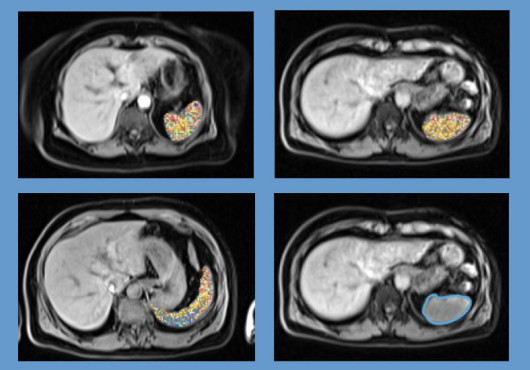
Research Provides Clues to Spleen’s Role in Coronary Artery Disease
Genetic variants may drive visible changes in the spleen that contribute to heart disease
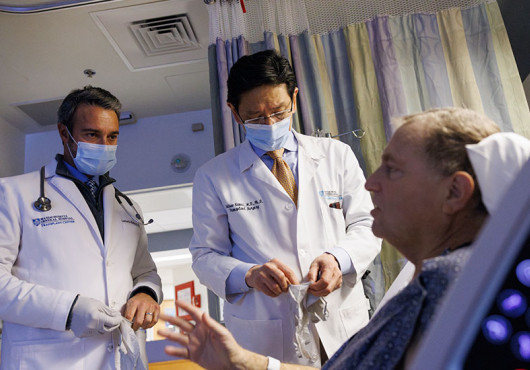
Patient Who Received Pig Kidney Becomes First To Progress to Human Kidney Transplant
Study shows xenotransplantation can serve as a bridge for patients with end-stage kidney disease

Pilots, Flight Attendants Have Greater Risk of Radiation-Related Cancer Death Than Other Professions
Findings support efforts to protect U.S. aircrews from cosmic radiation exposure