
“I went back. I screwed up,” he said. “I went back to heroin.”
Blond, tall, poised, and dressed in a suit and tie, the clean-cut young man in front of me could have been a college basketball player or an investment banker. Instead, he was a recovering drug addict, enrolled for the second time in a 15-month residential recovery program. He started crying, “The toughest part is that I just received a letter from my wife. She was willing to stick it out with me the first time, but now she wants a divorce.” After blinking back the tears, he started to sing a song of hope amid despair. He wasn’t my patient. He was a visitor at my church.
Church has become a window into the world of my patients. I’ve been blessed with a ragtag congregation: long-time South End residents who have chosen to stay despite the gentrification of the neighborhood, Latino immigrants living in Villa Victoria, African Americans drawn in from Dorchester and Roxbury, and young working professionals attracted to the diverse congregation and authentic worship. Through listening to people’s stories and prayer requests, I have started to appreciate the flux and flow of life in the “real world.” Besides being a place of spiritual nourishment, church is a space in which the norms, medical jargon, and high achievement of the Harvard–Longwood community give way to a different kind of normalcy. It is the normalcy of financial woes and struggles with addiction. It is the normalcy of abnormal families and mental disability.
It’s a place where the stark sketches of medical conditions get colored in with personality, history, and relationships. Epilepsy no longer equates merely with EEG spikes, but with the vivacious lady who loves to sing and dance and whose seizures have returned, confining her to a wheelchair. Assessing whether experimental treatments have worked consists of more than evaluating her brain activity, but also her progression to a walker, and then to playing the tambourine
during worship.
When I saw that clean-cut young man battling the lure of heroin, I came to know drug addiction as something more than the rewiring of brain circuitry and downregulation of dopamine receptors that we had learned about in class that week. I came to know it as a devastatingly powerful force that could entice even the best-intentioned recovering addict back into its destructive embrace. I came to know it as a tragic influence that could cause the loss of his marriage and his daughters.
Some of us may already have a place like this in our lives, a place that removes us from our academic, medical context and situates us—as people, not as physicians—face-to-face with turmoil, with messiness, with wounds that need healing. I am thankful that I have found such a place. I need it.
The opinions expressed in this column are not necessarily those of Harvard Medical School, its affiliated institutions, or Harvard University.
Trending News
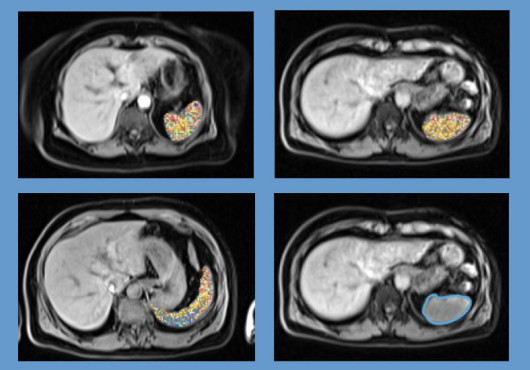
Research Provides Clues to Spleen’s Role in Coronary Artery Disease
Genetic variants may drive visible changes in the spleen that contribute to heart disease
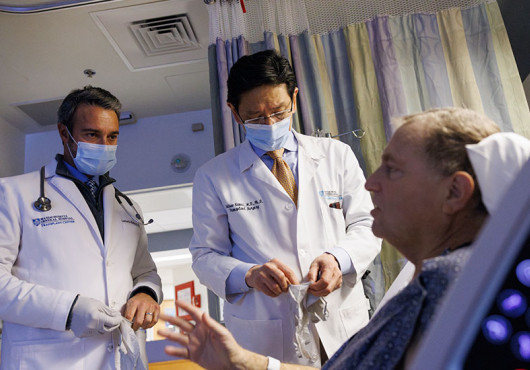
Patient Who Received Pig Kidney Becomes First To Progress to Human Kidney Transplant
Study shows xenotransplantation can serve as a bridge for patients with end-stage kidney disease
Pilots, Flight Attendants Have Greater Risk of Radiation-Related Cancer Death Than Other Professions
Findings support efforts to protect U.S. aircrews from cosmic radiation exposure