In mid-August, the drugmakers Moderna and Merck announced that a cancer vaccine trial had successfully lowered risk of both death and metastases of melanoma, a deadly skin cancer.
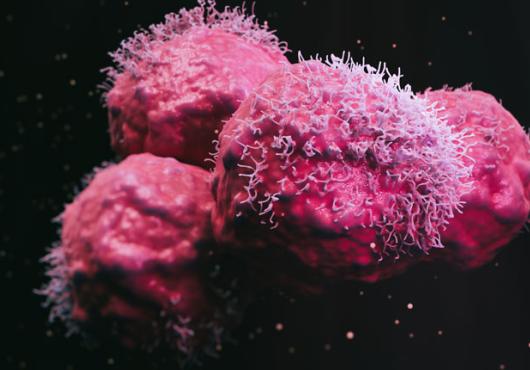
The experimental cancer vaccine, designed to be given to melanoma patients after initial treatment, primes the immune system to recognize and attack tumor cells if they recur.
Moderna and Merck announced only that the phase 3 trial was successful. The companies plan to release full results at a European conference later this year.
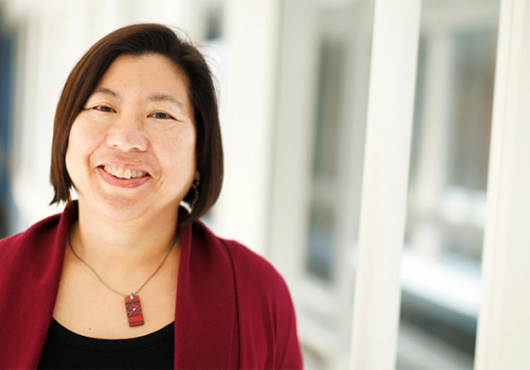
The trial’s approach — which tunes immune cells to recognize tumor-specific proteins called neoantigens — was pioneered in part at Harvard Medical School-affiliated labs, including those of Catherine Wu, HMS professor of medicine at Dana-Farber Cancer Institute, and Nir Hacohen, HMS professor of medicine at Massachusetts General Hospital and core institute member at the Broad Institute of MIT and Harvard.
In a conversation with the Harvard Gazette, Wu said that she’s optimistic that the technique will be effective against cancers beyond melanoma.
A couple of years ago, you said that in two years you expected large, industry-run trials to confirm positive results of the many smaller trials you have conducted using neoantigens to create a cancer vaccine. Were you specifically thinking of this Merck-Moderna trial?
Wu: Yes. In our smaller prior studies, we found activities from neoantigen-targeting vaccines across many different tumor settings and had hoped that such results would be borne out in larger studies. The promising results from Moderna-Merck are specific to melanoma, but hopefully this is the first of many that are to come.
Moderna and Merck have several other large studies that are underway, with participant numbers that are in the hundreds to over a thousand per study. They are all of similar design, with the targeting of multiple personal neoantigens per vaccine using mRNA as a delivery format. One study is in kidney cancer, and the others are in squamous cell carcinoma, bladder cancer, and lung cancer.
When we talk about your pioneering work in this field, are the key developments leading to this trial the identification of and work with neoantigens, along with advances in genetic-sequencing that allow for speedy analysis of the tumor genome?
That’s right. We had a terrific local team that helped bring these pieces together — not only Nir Hacohen, but also Edward Fritsch (HMS research associate in medicine at Dana-Farber) and Patrick Ott (HMS professor of medicine at Dana-Farber), who were instrumental in the clinical translation of our work that we first reported in 2017. What made our 2017 study the first of its kind was that these are personalized vaccines, not one-size-fits-all.

We used real-time genomic-sequencing data and a computational approach to identify the tumor targets to put into a vaccine. That was a conceptual advance that necessitated generating a different type of manufacturing strategy. We had to go to the FDA for early guidance because we weren’t creating the same one vaccine that we were going to distribute to many people. Instead, we were creating a new, personalized product unique to each patient tumor for each patient treated — a fundamentally different process than what had been done before for vaccines.
To make that cost-effective, we had to disrupt the usual manufacturing process for vaccines, namely so we could make frequent yet small quantities of vaccine for any individual patient.
If the FDA had told you that each unique vaccine for each patient had to be approved separately, would that have been a deal-breaker?
For sure. Ours was the first trial to approach the FDA like that. We were crammed in a tiny conference room packed with interested members of various departments, curious to see how genomics, immunology, and personalized medicine were all going to come together. It was exciting.
I am really appreciative of what the FDA does. These are really dedicated, hardworking people who just want to make sure that the safety guardrails are there for patients.
Is Merck and Moderna’s next step to try to get the vaccine approved for patients?
I imagine that is so. I expect that the first approval will be for melanoma, but depending on future results, hopefully for other solid tumor malignancies as well. I am optimistic that this type of customized immune therapy will be available for cancer patients more broadly.
The companies have said that they’ve met their clinical trial endpoints and that they plan to release full results this fall. What will you be looking for? Is there a scenario in which something in the full results tempers enthusiasm around this work?
It’s hard to know. As you say, the company has only given us broad strokes of positive results right now. As in any study, when fuller results come out, I expect we will collectively scrutinize the composition of the patients enrolled. Was there any skewing in the characteristics of the patients enrolled in the different arms of the study that could impact the interpretation of the results? Were there any differences in the number of vaccine administrations? We will see.
Are there cancers for which this technology might not be appropriate?
There are settings where I think that we’re not yet finding the best vaccine targets. Particular areas of need include pediatric tumors and blood malignancies, whose mutational burden is quite low, and hence have a low neoantigen burden.
People have talked about the end of cancer for a long time, but it feels like today’s therapies, including this vaccine, are closing in. Are we seeing the end of cancer in real time?
The end of the beginning, maybe? I do think we’re seeing vast improvements in front of our eyes for the cancer therapeutic landscape. Part of the challenge now is: How do we get our therapies out there fast enough? That requires resources. This is not a time that we should be pulling back. It’s a very, very exciting time in the field.
This interview has been edited for length and clarity.
Adapted from an article in the Harvard Gazette.