
The 6th annual Medical Education Day, held on Oct. 30, also served as a send-off to George Thibault, Med Ed Day founder and director of the Academy, who is leaving HMS at the end of the year to become president of the Josiah Macy Foundation in New York City. More than 100 abstracts were accepted for the poster and technology session, and, as dean for education Jules Dienstag noted in his opening remarks at the plenary session, “You feel the palpable excitement of how passionate people here are about medical education, and I think this day is a reflection of that passion.”
Three poster session participants presented at the plenary session. Susan Farrell, HMS assistant professor of medicine at Brigham and Women’s Hospital, began with “Assessment of Medical Student Competencies in Emergency Medicine: A Behaviorally Anchored Assessment Tool Incorporating the LCME Educational Guidelines and ACGME Core Competencies.” After determining that there was a need to standardize medical student evaluation in emergency medicine, Farrell and colleagues designed an objective evaluation tool that could be used to measure skills in both undergraduate and postgraduate students. They developed 11 observable components for student assessment using objectives from the LCME divided among the six core competencies of the ACGME, creating the first evaluation tool to incorporate guidelines from both accreditation programs.
The second presentation, titled “Interactive Spaced Education to Teach the Physical Examination: A Randomized Controlled Trial,” examined the concept of spaced education. Price Kerfoot, HMS assistant professor of surgery at the VA Boston Healthcare System, and colleagues presented content to 120 Patient–Doctor II students in six e-mails per week for six weeks, which were then repeated over two more six-week cycles. The researchers found that the students’ scores improved significantly by the last cycle and that the method was well received by the students.
Jennifer Stanford, HMS instructor in cell biology, gave the final presentation on “Using an Audience Response System in the Medical School Classroom.” Stanford found that preclinical students are often either over- or under-confident of their knowledge in a particular course. She implemented an audience response system in the Molecular and Cellular Basis of Medicine course, which enables students to answer questions using remotes. Students are immediately able to see the correct answer and how they performed in comparison to their classmates on a screen in the front of the classroom. The program allows the instructor to identify what topics need more review and gives students an immediate assessment of their performance. Stanford noted that students also appreciated the anonymity such a system provides and that, through it, all students have the chance to participate in a large lecture class.
In his keynote address, “42 Years of Learning at Harvard Medical School: Observations of a Perpetual Student,” Thibault looked back at the changes he personally witnessed in medical education at HMS, as both a student and faculty member. Peppered with humor and nostalgia, his talk revealed his observations on the evolution of medical education, noting that despite recent reforms, the need for change and evaluation has always been and will always be present at the Medical School.
Thibault also cautioned educators not to lose sight of the simple joy of teaching. “That’s what captivated me way back at the beginning, and I hope that we seek out those moments and regard them as precious and work hard to preserve them.”
Trending News

Pilots, Flight Attendants Have Greater Risk of Radiation-Related Cancer Death Than Other Professions
Findings support efforts to protect U.S. aircrews from cosmic radiation exposure
Rare Inherited Genetic Mutation Is One of Strongest Indicators Yet for Lung Cancer Risk
Influence of EGFR variant could expand screening guidelines
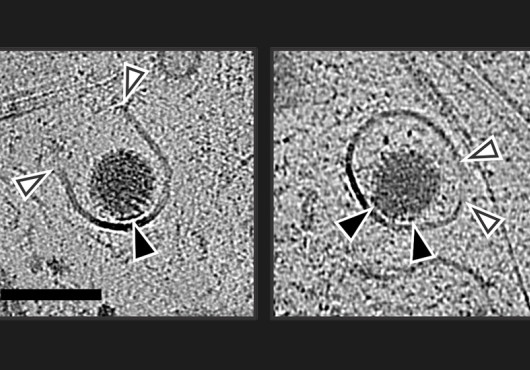
‘Molecular Movie’ Fills in Blanks of How Non-Enveloped Viruses Infect Cells
Cryo-ET of rotavirus answers decades-old virology question, could inform drug delivery techniques