New evidence from mouse lung tissue indicates that low levels of carbon monoxide (CO) enhance cell survival in an organ transplant model. The researchers, who reported their findings in the March 20 issue of Proceedings of the National Academy of Sciences, demonstrated that CO activates a variety of regulators of cell survival.
 Leo Otterbein, HMS associate professor of surgery at Beth Israel Deaconess Medical Center, is used to skepticism when he describes CO as a therapy. But in low concentrations not used in previous studies, the gas can protect cells from death, Otterbein explained. For instance, in last year’s Sept. 4 Journal of Experimental Medicine, he and colleagues reported that low levels of CO reverse established pulmonary hypertension in rodent models. But the precise cellular targets for the gas remained unclear.
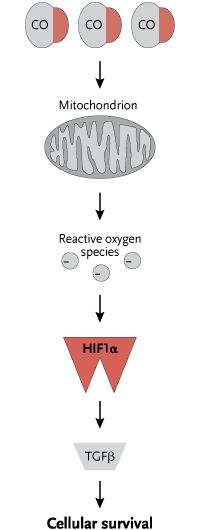
To investigate the targets, the researchers exposed lung macrophages to low concentrations of CO (<0.025 percent), finding that it induced the generation of reactive oxygen species, an inflammatory response signal. This increase appeared within five minutes of CO exposure and disappeared within an hour. “It’s on and off,” said Beek Chin, a toxicologist and HMS instructor in surgery at BID. “It’s the earliest CO signaling event that we know of.”
The team went on to show that a transcription factor activated by reactive oxygen species, hypoxia-inducible factor 1-alpha (HIF-1-alpha), rises in response to CO. Western blot analyses indicated that HIF-1-alpha, which regulates genes related to inflammation and cell survival, increased within 15 minutes of CO exposure. Because HIF-1-alpha regulates the wound healing cytokine TGF-beta, Otterbein and Chin wondered whether TGF-beta was also part of the pathway of CO’s cytoprotective effects. As they predicted, CO upregulated TGF-beta, a result they mimicked with a synthetic CO-releasing molecule.
The researchers then applied their findings to an animal model of organ transplantation, in which macrophages were deprived of oxygen for eight hours, followed by 16 hours of reoxygenation. The regimen killed about 20 percent of the cells. In contrast, only about five percent of cells died when the plate of macrophages was exposed to CO during reoxygenation. Otterbein and his collaborators at Yale University School of Medicine found similar cytoprotective effects of CO in mice. Breathing in CO prior to a temporary occlusion of a blood vessel to the lung protected against cell death. This protection was dependent on the ability of CO to increase HIF-1-alpha and TGF-beta expression.
Clinical trials later this year will evaluate CO use during organ transplantation. The gas could improve organ acceptance and accelerate function once transplanted.