
A few years back, as Catherine DeAngelis was going about her job as editor in chief of The Journal of the American Medical Association, she got word that a major pharmaceutical company wanted to run an expensive ad, but only if it would appear in a particular issue—one with articles relating to the company’s product. Under pressure by her sales department, DeAngelis agreed to let the ad run.
“And I moved the articles ahead two months,” she told a packed auditorium attending the 26th Fae Golden Kass Lecture, which was established in 1970 by Edward Kass to honor outstanding women in medical science. At her talk, titled “Conflict of Interest—Facts and Friction,” DeAngelis was humorous, lively, and passionate as she folded this and other personal anecdotes into a larger narrative about how the noble profession of medicine is being threatened by big business greed and corruption.
It is an epic tale with many actors—investigators, authors, reviewers, and editors may all fall prey to a conflict between private interest and official responsibility. The desire for career advancement, recognition, and funding can cause scientists to compromise their standards of accuracy and fairness. But the really questionable players, according to DeAngelis, are the pharmaceutical and biotech companies, and especially their marketing departments, who use their big budgets to lure scientists into compromising positions.
“Financial interests can bias what authors publish and also when, where, how, and if research is published,” said DeAngelis.
She spent much of her talk reviewing a litany of such transgressions, including nonreporting and hiding of negative results; delaying publication for proprietary reasons; suppressing and withholding data; and outright lying and fabrication. Nor did she shy away from naming names, implicating the makers of such industry giants as Synthroid, Celebrex, and Vioxx. Some pharmaceutical companies are soliciting and paying for articles by researchers, and in some cases even ghostwriting them. “The total result arouses public concern and threatens the credibility of biomedical research,” she said.
She and editorial colleagues have taken corrective measures like demanding that companies who publish in their journals register all of their clinical trials. New disclosure practices require that authors reveal funding sources and financial interests, but more needs to be done to monitor conflicts of interest, especially by medical schools, she said.
“My bottom line for this talk is, we’ve got to take back our profession,” she said. And getting more personal, “Harvard is the number one medical school, maybe in the world. Who better to set the example?”
Trending News
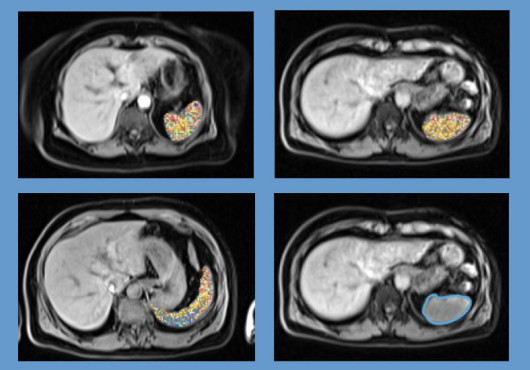
Research Provides Clues to Spleen’s Role in Coronary Artery Disease
Genetic variants may drive visible changes in the spleen that contribute to heart disease
Patient Who Received Pig Kidney Becomes First To Progress to Human Kidney Transplant
Study shows xenotransplantation can serve as a bridge for patients with end-stage kidney disease

Pilots, Flight Attendants Have Greater Risk of Radiation-Related Cancer Death Than Other Professions
Findings support efforts to protect U.S. aircrews from cosmic radiation exposure