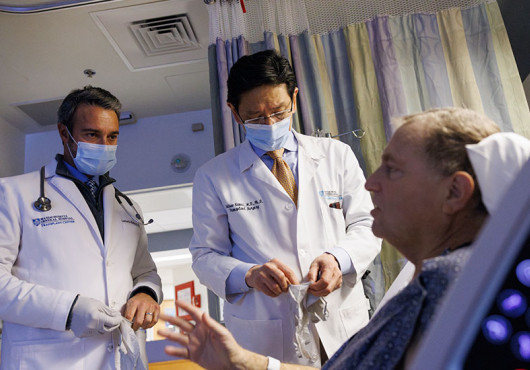
Deans Julio Frenk and David Hunter delivered the Eighth Annual State of the School Address, their first as deans at HSPH, on Oct. 5, providing an overview of the School’s financial status, research priorities, reorganizational efforts and milestones.
Looking ahead as dean of the School of Public Health, Frenk said he planned to use the 2013 centennials of the founding of the Harvard–MIT School for Health Officers—the precursor to HSPH—and the Welch–Rose Report, which established the model for schools of public health, as an opportunity to rethink what it means to be a school of public health in the 21st century.
“We have a single product: knowledge,” Frenk said. “We are engaged in the production of knowledge through research, the reproduction of knowledge through higher education, and we need also to create mechanisms for translating knowledge into evidence for the benefit of the public, policymakers, and practitioners, in order to make the world a better place.”
Hunter, who became dean for academic affairs on Aug. 1, updated the School on additions and changes to leadership positions, including the appointments of Michael Grusby and Karen Emmons to the new positions of senior associate dean for academic affairs and associate dean for research, respectively.
The School is in strong financial shape due to prudent fiscal management during previous administrations, Frenk said. However, HSPH remains vulnerable due to its reliance on federally sponsored research dollars. He said he is looking at new ways of increasing revenue, including expanding continuing education programs, in addition to looking to efficiency gains to help the bottom line.
Chief among the priorities aimed at improving students’ experience at HSPH is increasing financial aid.
A second part of enriching the educational experience at the School is engaging in ongoing educational reform efforts, Frenk said. The School has increased the number of programs for students, their families and spouses—with an emphasis on easing the transition from different cultures and environments.
Surveys have indicated that HSPH staff members are more engaged in their work now than in the past; the staff engagement score is up to 77 percent from 61 percent. HSPH employees participated in more than 477 educational courses using tuition assistance program funds, noted Hunter, and 780 employees took advantage of the fitness benefit reimbursement program. Many HSPH members have attended seminars about personal financial learning and management and have taken advantage of the School’s work–life balance efforts and programs.
Going Greener
Over the past year, efficiency gains have helped the School save money as well as reduce its carbon footprint, Hunter said. Last year, HSPH saved approximately $17,000 by diverting waste from the trash to recycling and composting. And the School leads the way across Harvard in reducing greenhouse gas emissions over the last three years.
Since February, the Dean’s Office has received more than 100 suggestions from community members focusing on ways in which the School can be more efficient.