Following a year of engaging and rigorous discussion, the Harvard Medical School Task Force on Faculty Development and Diversity has completed its charge of developing comprehensive recommendations aimed at creating an even more vibrant and diverse faculty and trainee community. Jeffrey S. Flier, dean of the Faculty of Medicine, tasked the group to develop comprehensive recommendations in April 2009, convening more than 60 faculty and staff members from throughout HMS and its affiliated hospitals. Flier has accepted all of the group’s recommendations.
“Harvard Medical School has long supported faculty development and diversity through a variety of successful programs and initiatives because we are deeply committed to the careers of all our faculty members, junior and senior alike,” said Flier. “I am personally and deeply committed to ensuring that we do all that we can to help our faculty members advance professionally. This Task Force has shown us how to continue building an even more inclusive and welcoming community across all ranks and disciplines, especially for women and underrepresented minorities. For this reason I welcome and embrace these recommendations.”
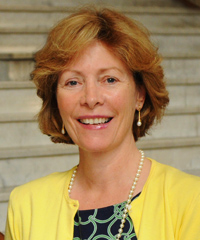
The completion of the report was celebrated Monday, Nov. 15, at a reception in which Flier; Nancy Tarbell, dean for academic and clinical affairs; and Liza Cariaga-Lo, assistant provost for faculty development and diversity at Harvard University, all publicly thanked the Task Force for its hard work, dedication and deep insight.
The Task Force, chaired by Tarbell, was charged by Dean Flier to define and prioritize faculty development and diversity needs and to develop both recommendations and a plan for implementing action items.
Over the following year and a half, the group looked closely at a host of issues relating to faculty development, such as barriers to recruiting women and underrepresented minorities, ways to promote a more inclusive academic community and how to better cultivate the careers of junior faculty members.
During Task Force meetings, themes emerged leading to the formation of three subcommittees that focused on search committees and expanding the applicant pool, mentoring and, finally, culture, community and communications.
Upon fulfilling its charge, the Task Force presented Flier with “A Framework for Action,” a full report and a summary of priority recommendations, which include:
- Creating an identifiable infrastructure to implement and sustain faculty development and diversity efforts, including an advisory committee to guide the Task Force recommendations and to coordinate with the HMS-affiliated institutions.
- Establishing programs to help new and existing faculty members advance their careers and feel more connected to the HMS community. This includes annual career conferences, mentoring, career support and orientations for new faculty.
- Improving search practices to help broaden recruitment efforts and create a more diverse faculty community. This includes more training for those involved in faculty searches; further diversifying medical education through more vigorous outreach to women and underrepresented minorities; and continuing to support pipeline programs.
- Developing an expansive communications outreach effort to promote the values, goals and programs of faculty development and diversity at HMS. Approaches include expanding the Academic and Clinical Affairs website to highlight and advance faculty development and diversity, as well as e-communications, video, print publications and online networking.
- Streamlining the faculty promotion process, an initiative that is well under way and that will be announced in the near future. This will involve continually reviewing faculty policies to boost diversity and ensure that HMS is a hospitable environment for everyone. This will also involve documenting and publicizing annual promotion rates, including information regarding minorities and women faculty.
- Applying metrics to ensure effective implementation of recommendations, such as producing annual faculty development and diversity reports for clinical and preclinical departments, and conducting ongoing reviews of HMS faculty policies with an eye toward enhancing diversity and enabling HMS to be a more inclusive and welcoming community.
Some of the key recommendations, including an orientation for new faculty and streamlining faculty promotions, are already being phased in. A junior faculty promotions website, launched in January of this year, allows promotion candidates to access secure online information showing exactly where they are in the process. It also delineates the expectations regarding the time and tasks remaining. “We are committed to doing everything possible to foster our exceptional faculty, representative of all the many cultures we serve,” said Tarbell.
HMS continues to demonstrate leadership in diversity and supporting underrepresented minority groups. This fall, Joan Reede, dean for diversity and community partnership, was one of six recipients of the NIH’s Pathfinder Award to Promote Diversity in the Scientific Workforce (read article). And Alvin Poussaint, faculty associate dean for student affairs, recently received the Nickens award, an honor that singles out individuals who have made exceptional contributions to diversity in medical education (see Nickens Award Honors Affirmative Action Hero).
“Diversity and excellence go hand in hand,” said Flier. “It is a prerequisite for world leadership and essential for transforming culture.” Flier conveyed his commitment to diversity and its priority at HMS in a statement posted on the HMS website. In the statement he writes, “To foster innovation and to build and bring about fresh, creative solutions that address the health needs of a pluralistic society, we must ensure that intellectually challenging problems are thoroughly examined through vigorous debate by individuals who together reflect the broadest possible range of experiences and perspectives.”
For more information on the Task Force and its recommendations, please visit the Office for Academic and Clinical Affairs.
For Dean Flier’s statement on diversity at Harvard Medical School, visit this page.