
Chronic pain disrupts the lives of one of every four people in the United States and costs the nation $80 billion annually in lost productivity. Yet treatments to counter persistent pain effectively have been lacking. That therapeutic dearth will now be addressed with the launch of the Pain Research Forum (http://www.painresearchforum.org). A joint effort of the Harvard NeuroDiscovery Center (HNDC) and the MassGeneral Institute for Neurodegenerative Disease (MIND), the Forum is an interactive virtual community for researchers and clinicians who study chronic pain.
 The online resource provides news, discussion forums, community information and research resources tailored to the pain research community, using the latest in web technology and social media to help speed the translation of basic knowledge into novel therapies for chronic pain.
“Highly interactive web communities are an increasing part of day-to-day communication for users of the Internet,” says Adrian Ivinson, director of the Harvard NeuroDiscovery Center. “But they are relatively rare in the research community. We think that is changing and expect this website to be an early agent for that change. We hope the Pain Research Forum will become an agora of information and ideas for researchers in the field and that their interactions will catalyze novel, collaborative, and ultimately successful approaches to the challenge of discovering and developing new treatments for chronic pain.”
Chronic or persistent pain burdens the lives of between 10 and 25 percent of the world’s people, percentages that are sure to increase as the world’s population ages. Unrelieved pain destroys quality of life and places a significant strain on health care systems, especially those in industrialized nations. And the toll on populations in developing countries is more profound as health care systems in many such nations lack access to even the most basic of pain treatments.
Despite 40 years of progress in understanding the molecular mechanisms and neurobiological underpinnings of pain, few discoveries have been translated into new treatments or other patient-relevant advances. Part of the problem stems from impediments that traditional institutional and geographic boundaries place on researchers in the field, preventing them from engaging in rapid communication, open debate and interdisciplinary collaboration, all elements critical to driving progress in a complex field.
“Pain is a fragmented clinical field in terms of both research and treatment,” says Joseph Martin, the Edward R. and Anne G. Lefler Professor of Neurobiology and Harvard Medical School, co-founder of HNDC, and a science advisor to the Pain Research Forum. “We hope this site will encourage researchers and clinicians to cross specialty and disciplinary boundaries to work together on improving the care of our patients.”
The site uses an open-source software platform, based on Drupal 7, that facilitates the reuse of the software by other research communities and information exchange and networking among related sites. All content is licensed for reuse under a Creative Commons license (http://creativecommons.org/licenses/by-nc-nd/3.0/).
Features of the site include news stories and a weekly roundup of recent publications in pain research. A research resources section explores topics in pain research and provides access to a human pain gene database. Visitors can register and receive member access to meetings, jobs and funding opportunities.
The site also will host online discussions on various topics; current ones include the barriers to progress in finding new treatments for pain, and on pain associated with Parkinson’s disease.
The Pain Research Forum is a free service supported by grants provided anonymously by two private foundations, with additional support from HNDC. The site is guided by a panel of prominent science advisors who include Allan Basbaum, University of California, San Francisco; Kathleen Foley, Memorial Sloan-Kettering Cancer Center, New York; Joseph Martin, HMS; Jeffrey Mogil, McGill University, Montreal, Quebec, Canada; and Anne Louise Oaklander, Massachusetts General Hospital and HMS.
—
The Harvard NeuroDiscovery Center at Harvard Medical School is a pioneering biomedical research initiative that fosters research collaborations that focus on accelerating the pace of progress from basic neuroscience research to the discovery of powerful treatments for a broad array of neurological diseases and conditions such as Alzheimer’s, Parkinson’s and other neurodegenerative diseases, as well as epilepsy, mental illness, pain and other disorders of the central nervous system.
The MassGeneral Institute for Neurodegenerative Disease, based at Massachusetts General Hospital, works to translate laboratory discoveries into prevention, treatments and cures for Alzheimer’s, amyotrophic lateral sclerosis, Huntington’s, Parkinson’s and other neurodegenerative diseases. MIND’s informatics program is a leader in developing web-based social media applications for rapid, agile, and interdisciplinary research communication.
Trending News
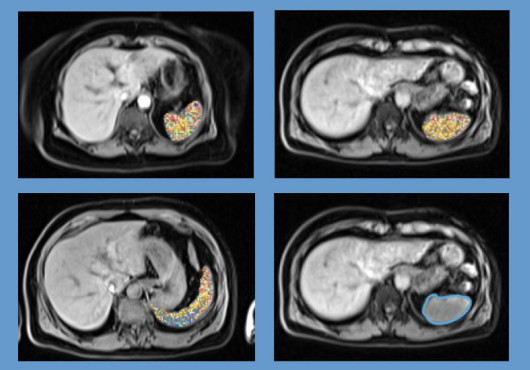
Research Provides Clues to Spleen’s Role in Coronary Artery Disease
Genetic variants may drive visible changes in the spleen that contribute to heart disease

Patient Who Received Pig Kidney Becomes First To Progress to Human Kidney Transplant
Study shows xenotransplantation can serve as a bridge for patients with end-stage kidney disease

Pilots, Flight Attendants Have Greater Risk of Radiation-Related Cancer Death Than Other Professions
Findings support efforts to protect U.S. aircrews from cosmic radiation exposure